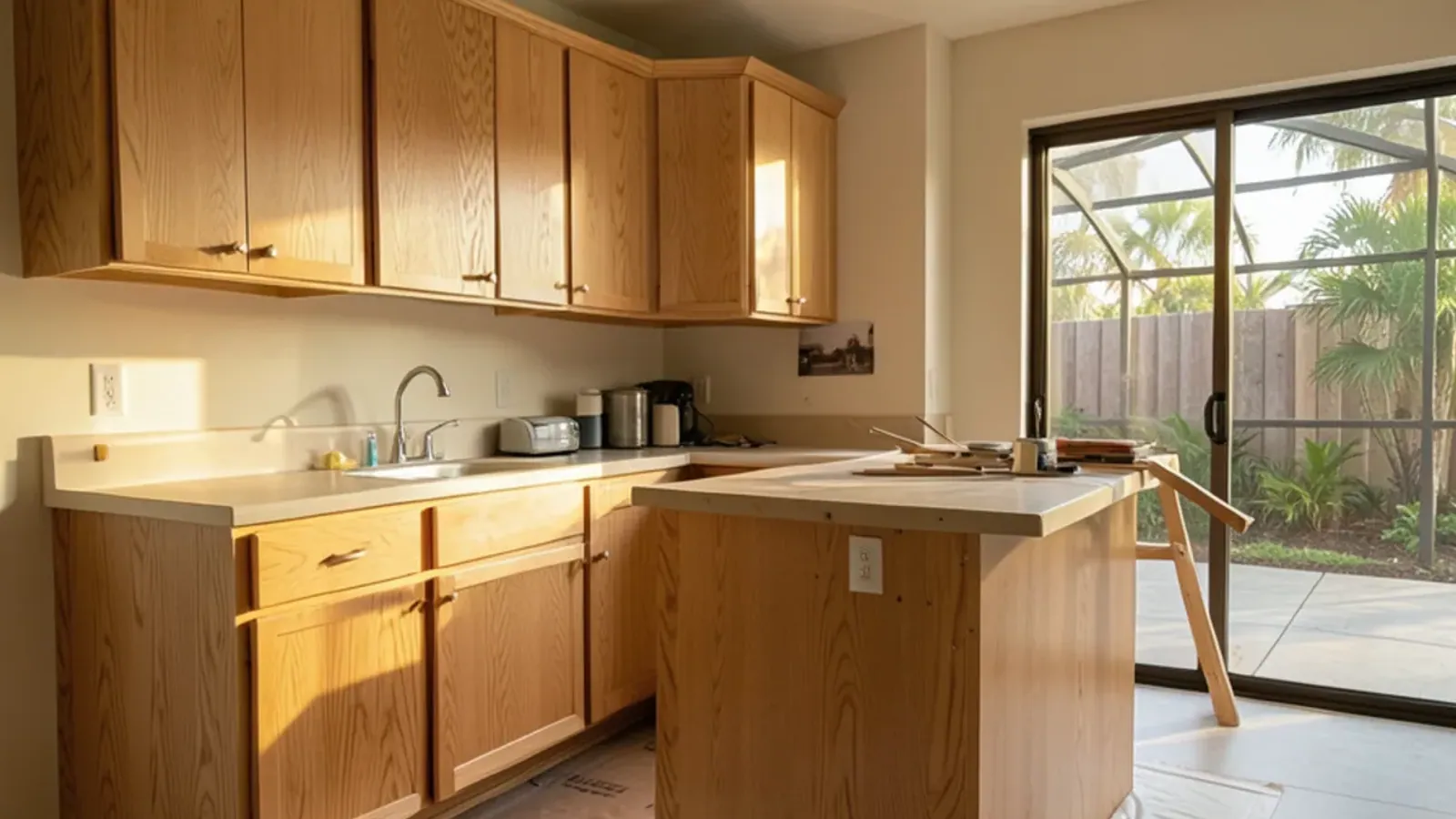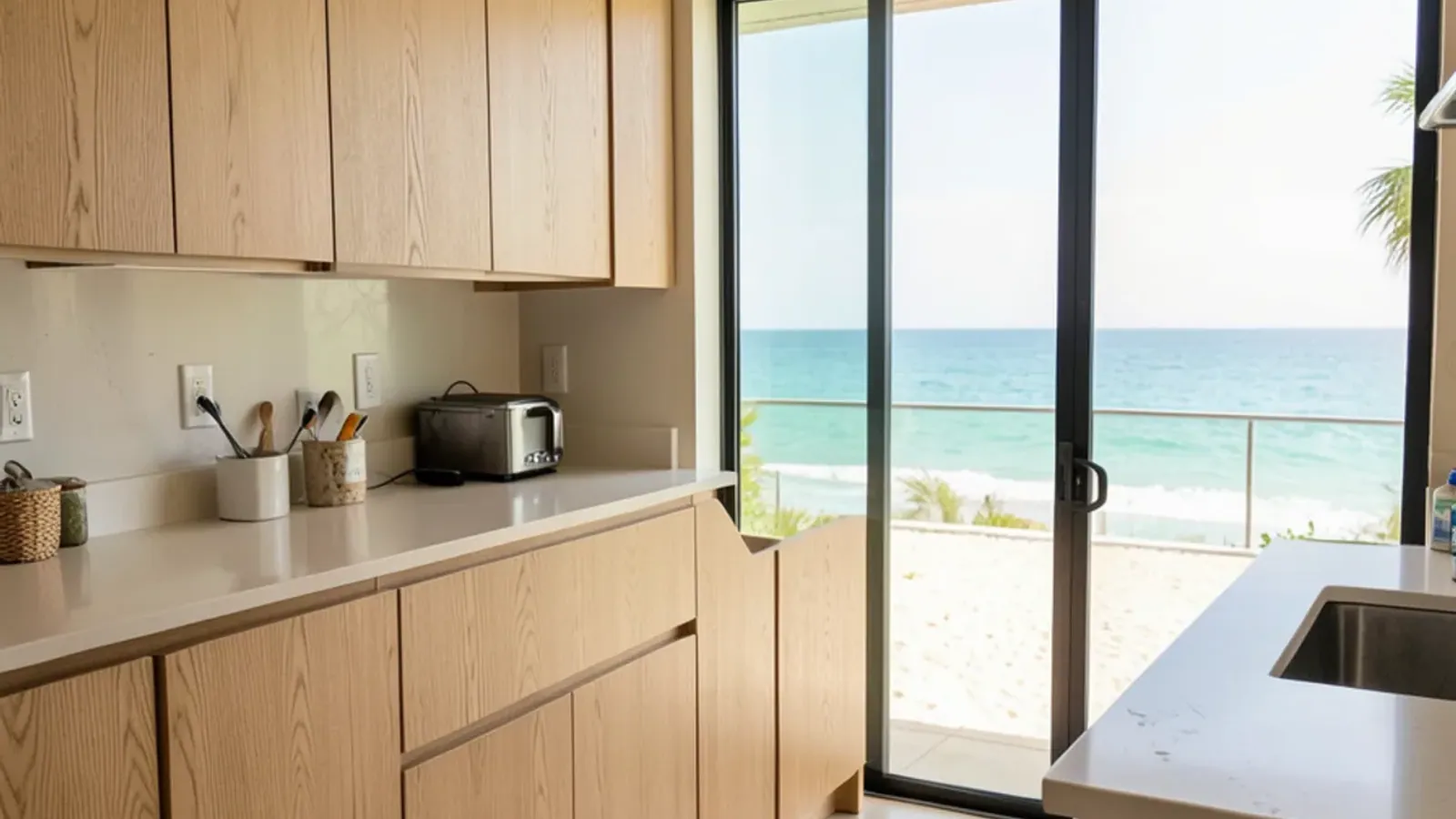
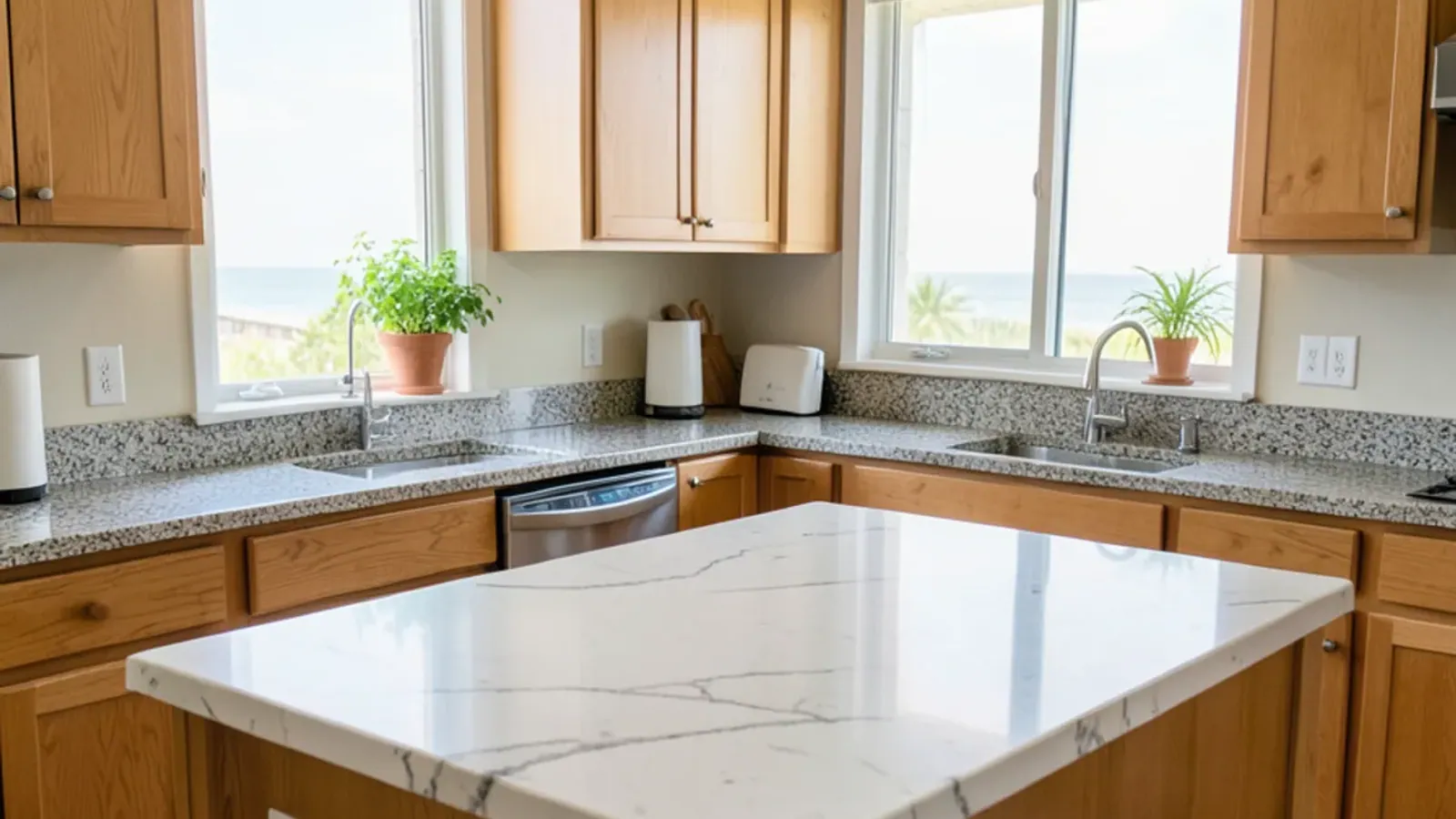
In the quartz vs granite decision for a Florida kitchen, quartz wins on low upkeep and stain resistance indoors, while granite wins anywhere strong sun reaches the counter, including lanais and outdoor kitchens. Quartz never needs sealing, but its resin binder can change color under UV; granite tolerates sun and heat well but needs periodic sealing.
We do not fabricate stone. We build and install the cabinets it sits on, then bring in a stone fabricator to template and install once our boxes are level and fixed. That vantage point shows us how each material behaves in real Gulf Coast kitchens, and where a choice made in a showroom causes trouble later.
Quartz vs granite at a glance
| Factor | Quartz | Granite |
|---|---|---|
| What it is | Crushed quartz bound with polymer resin | Quarried natural stone, cut into slabs |
| Sealing | None needed; non-porous | Needs sealing; recheck with a water test |
| Direct sun and UV | Standard resins can change color over time | Handles UV well |
| Hot pans | Manufacturers say always use a trivet | Resists heat well; trivets still wise |
| Stains | Very resistant | Good when sealed |
| Pattern | Uniform, repeatable | Every slab differs; choose yours in person |
| Outdoor kitchens | Only outdoor-rated lines | A common, proven choice |
Consumer Reports has found both materials among the most durable countertops it tests, so neither is a mistake indoors. The tiebreakers are sun, maintenance habits and the look you want.
Quartz is not quartzite
Slab yards also sell quartzite, which sounds like a cousin of engineered quartz and is not. Quartzite is a natural metamorphic rock formed from sandstone, with no resin binder, so it behaves like other natural stone in the sun and is usually sealed the way granite is. Because natural slabs vary, ask the fabricator for the properties of the stone you are actually buying rather than the category name.
How does Florida sun affect quartz countertops?
Quartz slabs are mostly ground stone held together by resin, and the resin is the sensitive part. One major quartz manufacturer states plainly that its regular surfaces use a resin relatively sensitive to UV, so their color will change if installed outdoors; it sells a separate outdoor line with a different resin for that purpose.
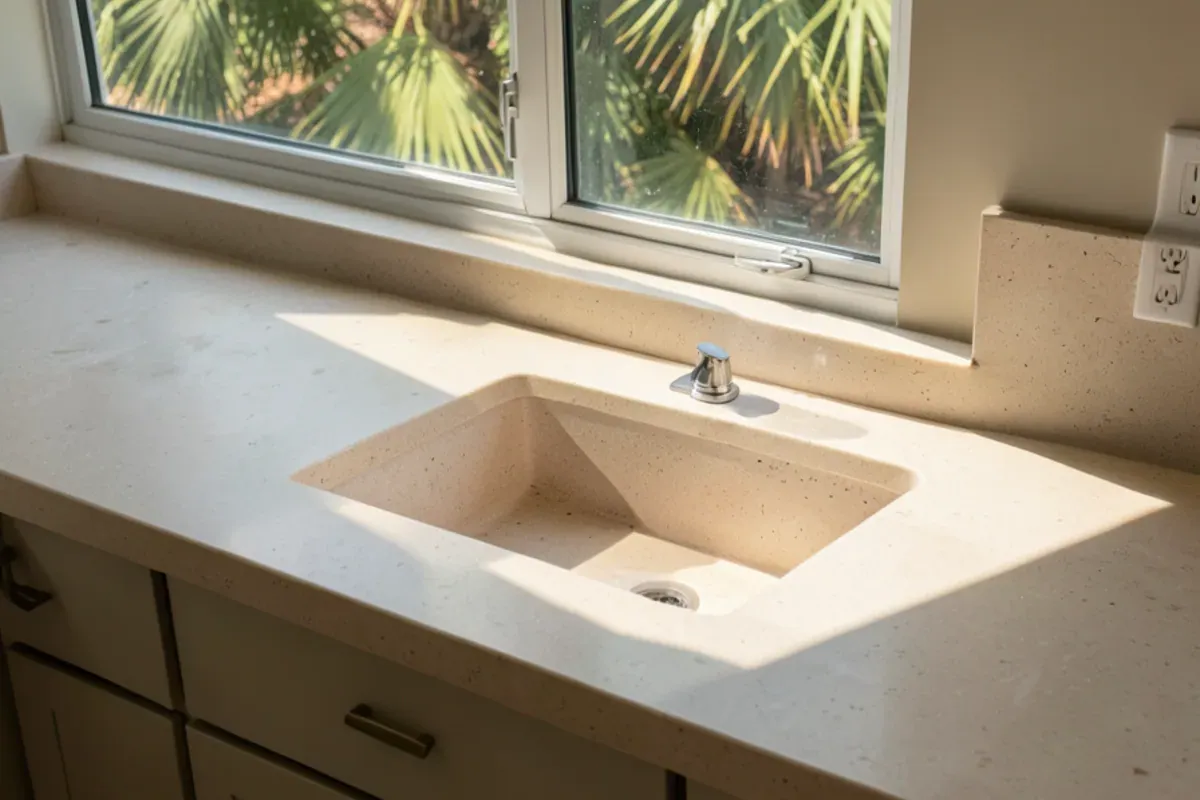
Indoors, the same concern applies wherever a counter takes hours of direct sun: a west-facing window over the sink, a pass-through bar to the lanai, or an island under a big slider in a Venice golf-community home. Low-E glass helps, but if a strip of counter bakes every afternoon, granite or an outdoor-rated surface is the safer pick for that run.
Heat, sealing and day-to-day care
Granite came through Consumer Reports' hot-pot testing well, and quartz did too, yet quartz makers still tell owners to always set hot cookware on trivets or pads. Sustained heat from a slow cooker or an electric griddle is the more common culprit than a quick pan.
Granite asks one chore of you: sealing. A simple check: leave a small pool of water on the busiest spot, usually beside the sink, for several minutes. If the stone darkens, it is time to reseal; if water beads, the sealer is still working. Light-colored and more porous granites need the test more often than dense dark ones.
- Clean both with mild soap or a pH-neutral stone cleaner.
- Skip bleach, ammonia and abrasive pads on either surface.
- Use cutting boards; both resist scratches, but knives dull fast on stone.
- Wipe up citrus, wine and oil promptly on granite until you know how your slab behaves.
What the cabinets underneath have to do
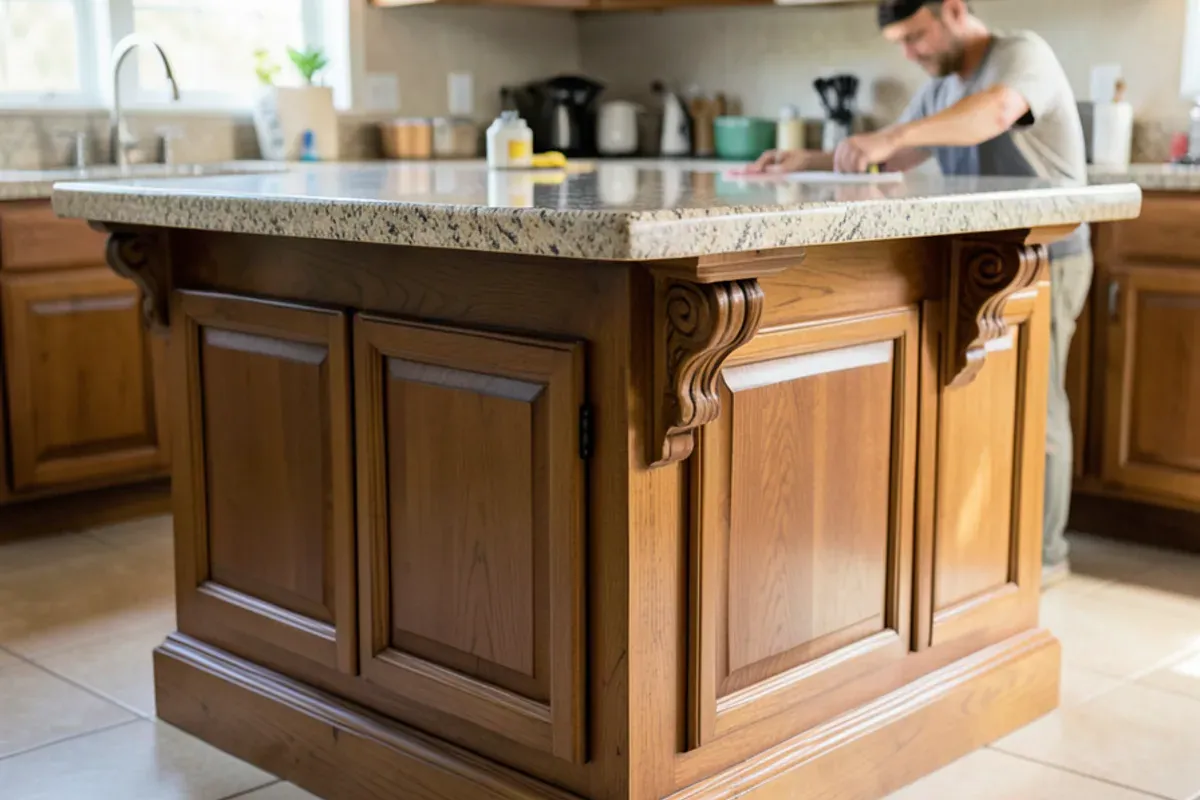
A stone top is only as good as the base it rests on. Both materials are heavy and unforgiving of a twisted cabinet, and an island with a seating overhang needs hidden steel or solid corbels sized to the slab. That is where cabinetry and countertop installation meet.
One more reason to keep cutting off-site: engineered quartz contains a high share of crystalline silica. A joint OSHA and NIOSH hazard alert covers the dust risk to fabrication workers, and the safer practice is wet cutting at the fabricator's shop with only minimal fitting in your home.
OSHA and NIOSH updated that alert in February 2026. As summarized by the American Industrial Hygiene Association, it notes that granite can contain up to 50 percent silica, that some engineered stone and quartzite carry the highest shares, and that OSHA's exposure limit is 50 micrograms per cubic meter over an eight-hour shift. Its recommended controls include tools that wet the stone, local exhaust ventilation and doing as much of the work as possible in the shop instead of on site. In practice, ask your fabricator which cutouts will be finished before the slab reaches your house.
When should you choose the countertop in a kitchen project?
Earlier than most people expect. The stone itself goes in near the end, but the decision shapes the cabinet drawings. Slab thickness sets the finished counter height, an undermount sink and a cooktop need their exact models before templating, and a seating overhang needs supports built into the island frame. Choosing the material during design lets us draw all of that once.
Pick material and edge during design
Quartz or granite, thickness and edge profile go on the working drawings alongside the sink and cooktop models.
Set and level the cabinets
We install, shim and fasten every run, and add blocking under seams and supports under overhangs.
Template visit
The fabricator measures the installed cabinets, and you approve the slab layout and seam locations.
Fabrication off site
Cutting, edging and sink and cooktop cutouts happen in the fabricator's shop.
Install and reconnect
The fabricator sets the tops; a licensed plumber reconnects the sink, and any gas or electrical hookups go to the matching licensed trade.
Backsplash and trim
With tops in place, the backsplash goes up and we return for panels, trim and final door adjustments.
Which top suits your kitchen in Venice or Bradenton?
The right answer changes with the house. A few patterns we see around the region:
- Older homes in the 1920s island district of [Venice](/service-areas/venice-fl/): quartz for the inside runs, unless a counter faces afternoon sun.
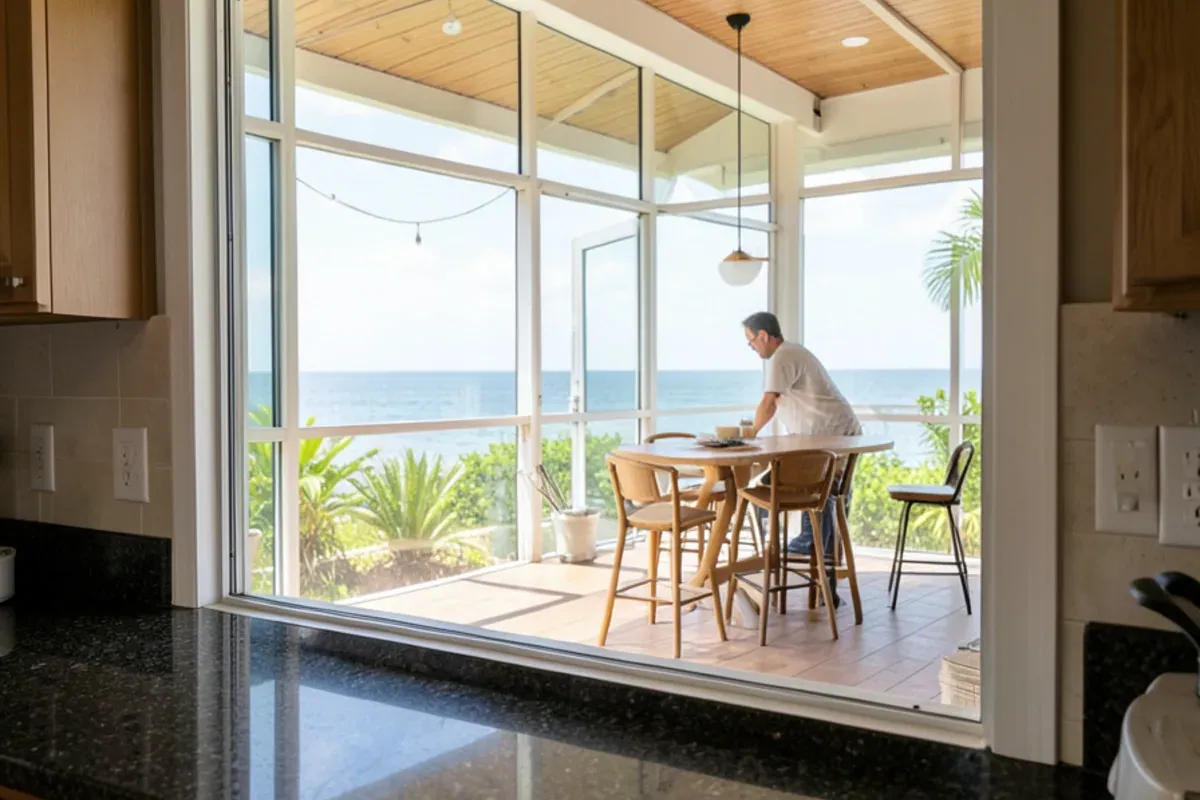
- Manatee River waterfront homes in [Bradenton](/service-areas/bradenton-fl/) with a pass-through to the lanai: granite carries across the opening without worry about UV.
- Rental or busy family kitchens: quartz, because nobody remembers to reseal.
- Outdoor kitchens: granite, or a quartz line the maker rates for outdoor use.
Whichever way you lean, look at full slabs before you commit. A four-inch granite sample cannot show the movement across a ten-foot island, and quartz can vary slightly from one production lot to the next, so ask the fabricator to hold the exact slabs for your job once you approve them.
The bottom line
Pick quartz when you want a clean, consistent look and zero sealing; pick granite when sun, heat or the outdoors is part of the picture. Either way, the cabinets underneath decide how long the top stays flat and tight. To plan cabinets and stone together, call our shop or send a message, and see how countertops fit into our kitchen remodeling in Sarasota.
Sources
- Caesarstone — Outdoor Collection FAQs (UV sensitivity of regular surfaces)
- Caesarstone — Care and Maintenance (heat caution)
- Consumer Reports — Best Countertops for Busy Kitchens
- OSHA/NIOSH — Hazard Alert: Worker Exposure to Silica during Countertop Manufacturing, Finishing and Installation
- American Industrial Hygiene Association — OSHA, NIOSH Urge Countertop Fabrication Shops to Adopt Silica Controls (March 5, 2026)