
Custom Cabinetry
Solid Wood Cabinets in Sarasota, FL
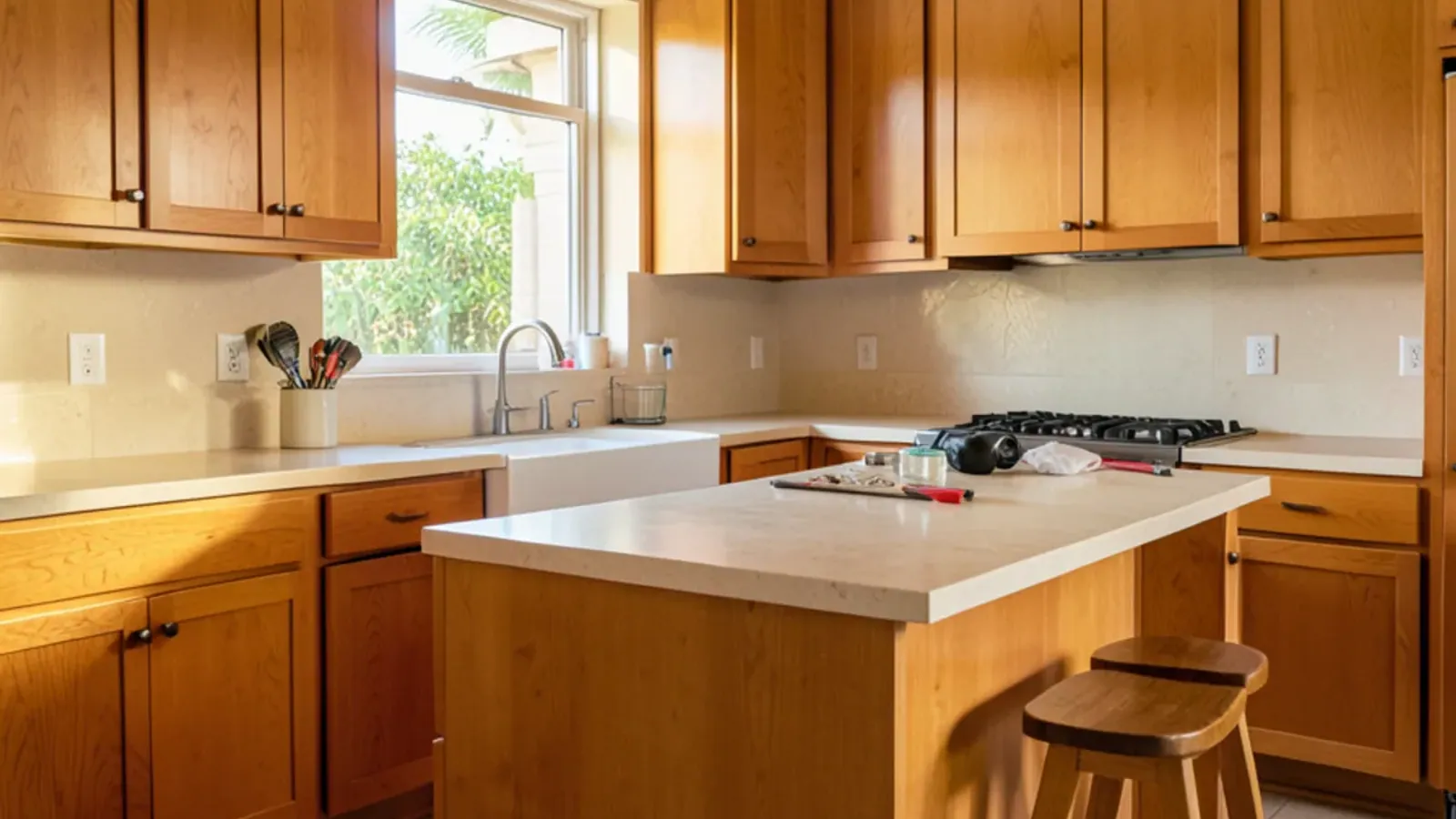
Hardwood frames, dovetailed drawers and no mass-produced MDF or particleboard boxes: cabinets built to ride out Gulf Coast humidity.
- Built in our Sarasota shop since 2011
- 4.4★ from 52 Google reviews
- 3D model before anything is built
- Solid-wood boxes, dovetail drawers
Florida humidity finds the weak point in a cabinet, and in most kitchens that weak point is a particleboard box. Our solid wood cabinets, built in Sarasota, replace it with hardwood face frames joined by mortise and tenon, dovetailed drawer boxes and real wood construction throughout. Solid-wood construction is the heart of our custom cabinetry work.
Below we compare box materials honestly, explain the joinery, cover species choices and what we do to manage seasonal wood movement, and lay out what solid wood adds to the price.
Why does particleboard fail in a Florida kitchen?
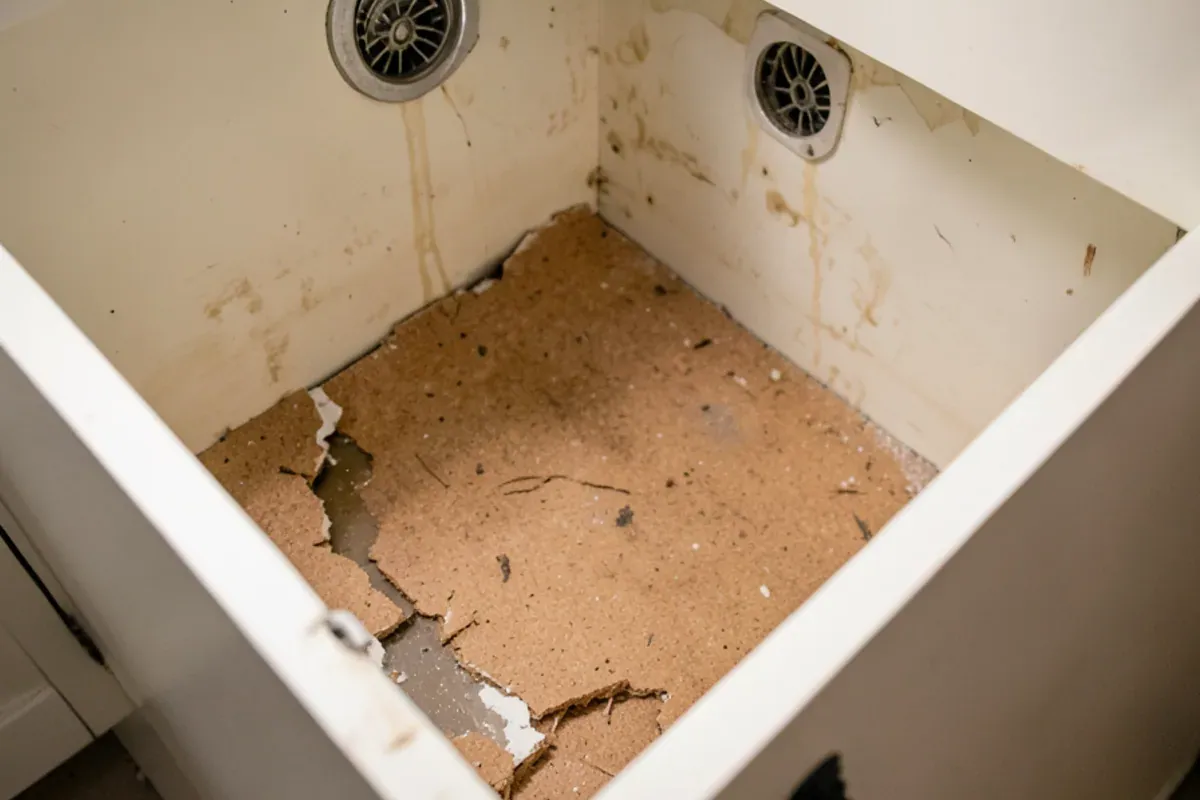
Particleboard is wood chips pressed together with resin. It is flat, cheap and fine in a dry room. Its problem is water. When moisture gets in through a raw edge, a screw hole or a nicked laminate, the particles swell and the board never fully shrinks back. The surface bubbles, edges crumble, and hinge screws lose their grip.
Our climate supplies that moisture in many ways: a slow drip under the sink, a dishwasher seal that fails, wet mops at the toe kick, months of high humidity in a seasonal home with the air conditioning set high, and, after Ian, Helene and Milton, storm water. The pattern is laid out step by step in why cheap cabinets swell in Florida humidity.
How to tell your boxes are going: laminate bubbling along the sink-base floor, hinge screws that spin without biting, shelf pins pulling out of the side panels, a toe kick that crumbles when the mop hits it, and a musty smell when the sink door opens. Any two together usually mean water has been working on pressed board for a while.
Plywood vs. particleboard cabinets vs. solid hardwood
Cabinet boxes come in a handful of materials. Here is how they compare in a humid house:
| Material | How it is made | Behavior when damp | Repairability |
|---|---|---|---|
| Particleboard | Wood particles glued together with resin, usually under laminate or melamine | Swells at edges and screw holes; damage is permanent | Poor; swollen sections are replaced |
| MDF | Fine wood fibers pressed into dense sheets | Smooth and paintable, but edges wick water and swell | Limited; swollen edges rarely recover |
| Plywood | Thin wood veneers glued in alternating grain directions | Far more stable; holds screws better than particle-based boards | Moderate; sections can be patched |
| Solid hardwood | Boards milled from the tree | Expands and contracts with humidity, so it must be built to move | High; can be reglued, planed, refinished |
Our position is simple: we leave factory-made MDF and particleboard carcasses to the big-box aisles. The specific box construction for your job is written into your drawings so you know exactly what you are getting.
The drawings list every part with its material: box sides, backs, shelves, drawer bottoms and the sink-base floor, not only the doors you see. Nothing pressed or particle-based hides behind a hardwood front.
Mortise and tenon face frames and dovetail drawer cabinets
Joinery is where the strength of a cabinet lives. Glue and staples hold for a while; interlocking joints hold for decades.
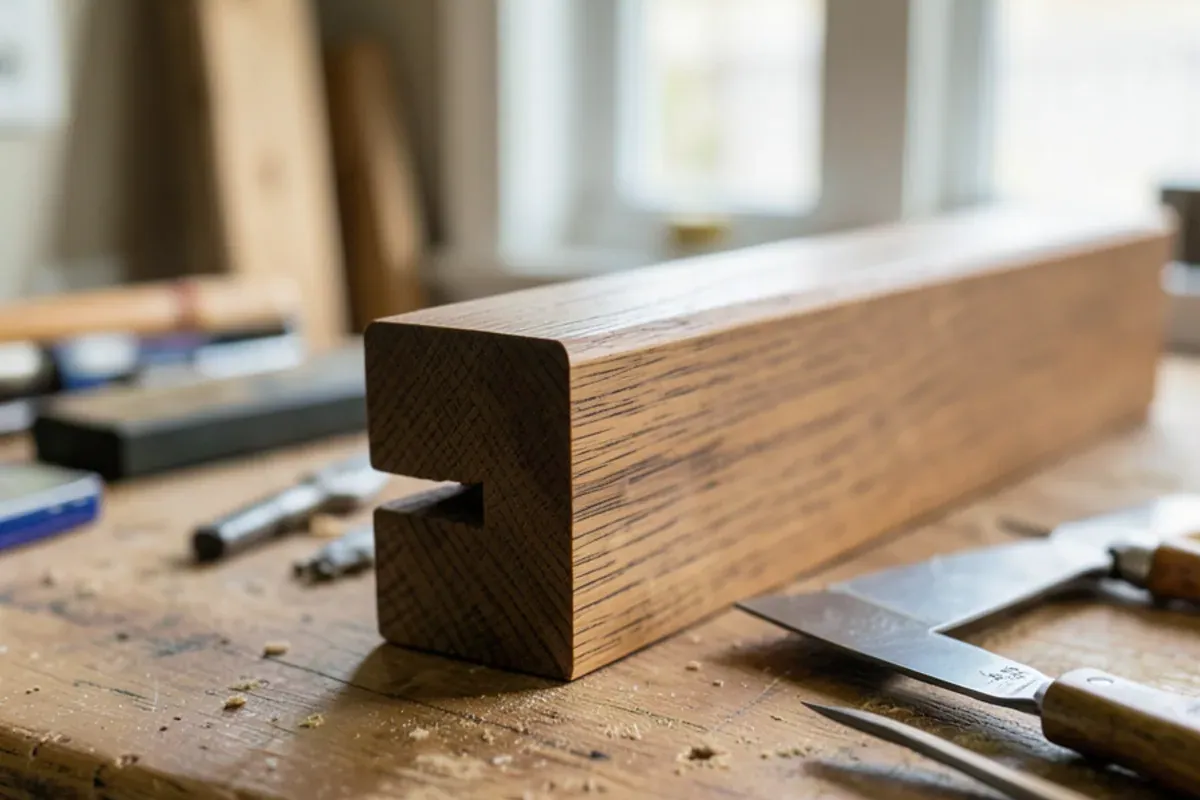
Mortise and tenon face frames
Each rail ends in a tongue, the tenon, that fits a matching slot, the mortise, cut into the stile. Glued, the joint has wood-to-wood surface on several faces, so the frame stays square when the box is loaded and when humidity swings. The face frame then stiffens the whole cabinet and gives hinges solid hardwood to bite into.
Dovetailed drawer boxes
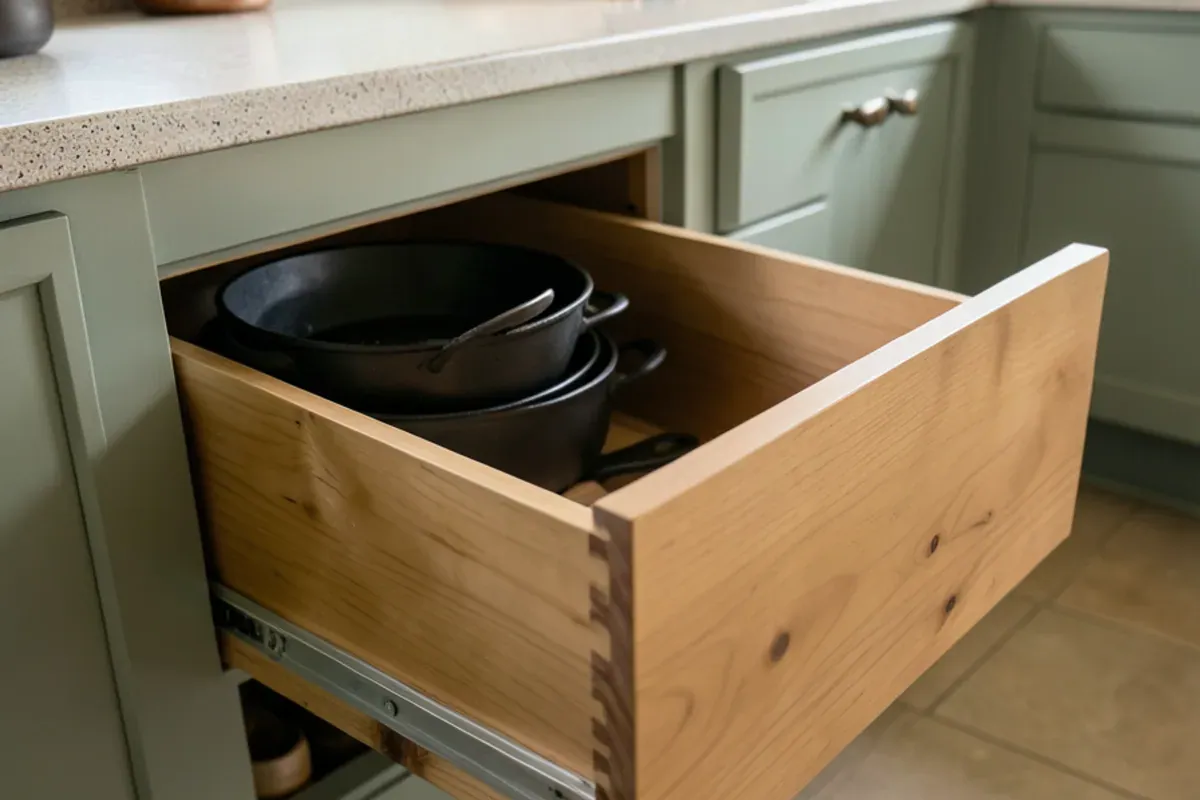
Dovetails interlock like fingers, and their angled shape resists the exact force a drawer sees: someone pulling the front while the contents push back. A dovetailed hardwood box carries cast iron and stacked dishes year after year without the front working loose.
Hardwood kitchen cabinets: choosing a species
Our lumber comes from domestic and exotic hardwoods, and endangered species are off the table. Domestic options cover most kitchens:
- Maple: tight, even grain that takes paint smoothly; also lovely in a clear finish.
- Cherry: warm color that deepens noticeably with sunlight over the first years.
- White oak: strong grain, pale color, and a good match for coastal and modern rooms.
- Walnut: rich brown that suits islands, bars and accent pieces.
- Hickory and alder: more rustic grain and color variation.
Exotic species work well for accent pieces and doors when you want a color or figure domestic woods cannot give. We show you physical samples in your chosen finish before anything is milled.
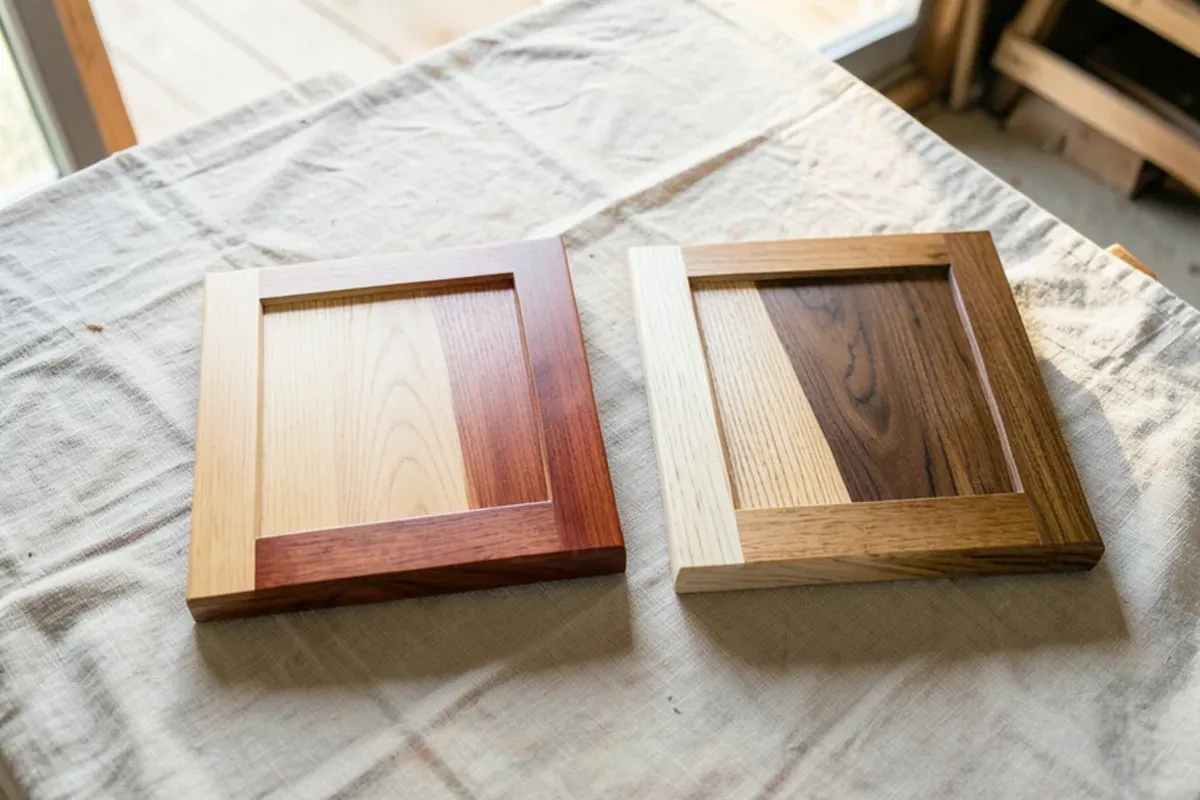
How do we make humidity resistant cabinets for Florida?
Solid wood moves across its grain as humidity changes. Fighting that movement cracks panels; designing for it keeps cabinets quiet and square. Our approach:
- Door panels float in grooves rather than being glued tight, so they can expand and shrink freely.
- Frame stock is chosen for straight, even grain, which moves less than wild or knotty boards.
- Milling happens in stages, so parts can settle before final fitting.
- A durable finish slows moisture exchange, especially at the sink base and around the dishwasher.
- Small scribe allowances at walls leave room for seasonal movement without visible gaps.
From rough lumber to an installed cabinet
Measure and draw
We measure the room and prepare working drawings and a 3D model for your approval.
Select lumber
Boards are chosen for grain, color and stability, with frame stock picked separately from panels.
Mill
Rough lumber is flattened, squared and cut to size in our Lewis Ave shop.
Cut joinery
Mortises, tenons and dovetails are cut and dry-fitted before glue-up.
Assemble and finish
Frames, boxes, doors and drawers are assembled, sanded and finished.
Install
We set, level, scribe and trim the cabinets in your home and adjust every door.
Solid wood cabinets in Sarasota: where the money goes
Solid wood cabinets cost more than stock particleboard cabinets because of material and labor, not markup. The drivers:
- Species and grade of lumber, plus the yield lost to defects
- Hours of milling and joinery for each frame and drawer
- Door construction, especially inset frame-and-panel doors
- Finish system and number of coats
- Size of the kitchen and number of doors and drawers
Around here, a few choices move the figure most. Paint-grade maple costs less than clear white oak or walnut, where every board shows. Waterfront kitchens often get extra finish coats at the sink and range walls, and matching an existing species in a built-in adds sampling time.
Against that, consider replacement cost. Hardwood cabinets can be repaired, reglued and refinished; our cabinet repair service exists because that is possible. Swollen particleboard usually just gets thrown away. If you prefer a contemporary look with frameless boxes, see modern European cabinets.
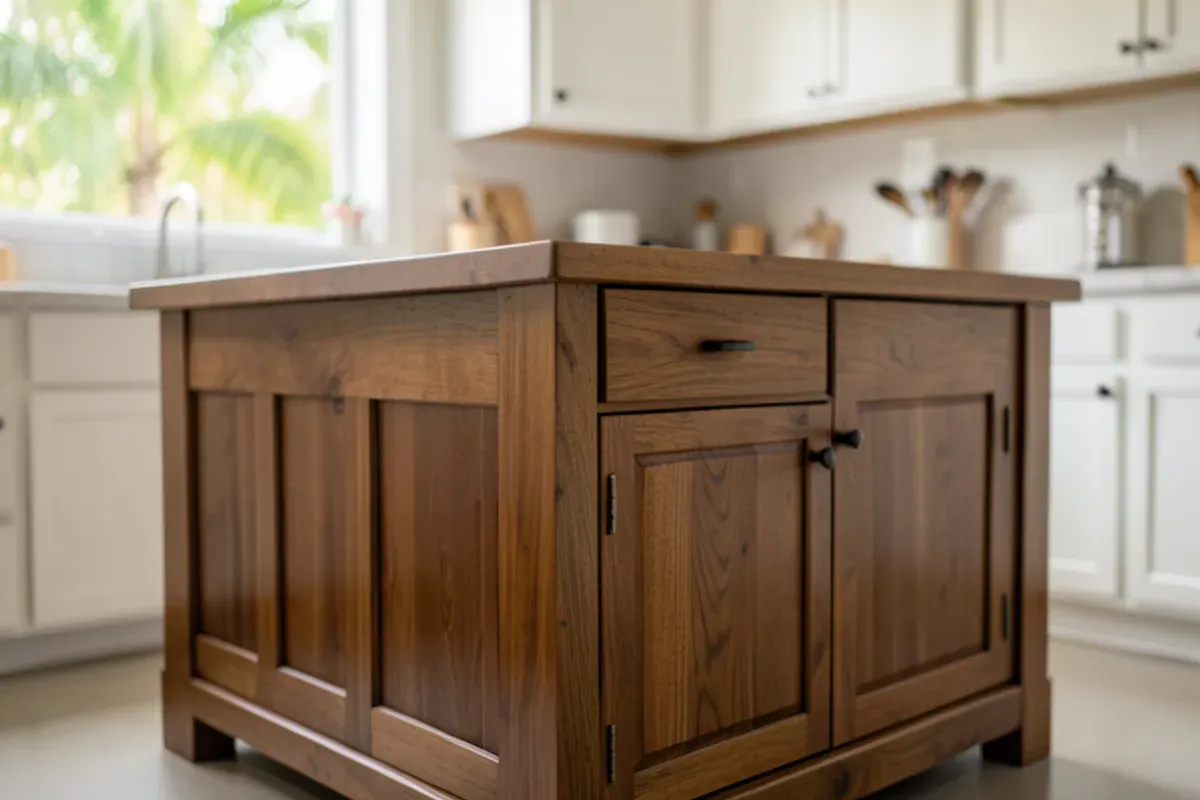
Why SRQ Woodworks
Why homeowners choose us for solid wood cabinets
No particleboard boxes, ever
Factory MDF and particleboard boxes stay out of our builds; your drawings name exactly what goes in.
Joinery you can see
Open any drawer and look at the dovetails; check any face frame for mortise-and-tenon joints.
Domestic and exotic species
A wide range of hardwoods, with restricted and endangered species excluded.
Built in Sarasota since 2011
Every cabinet is milled and assembled in our shop at 1121 Lewis Ave.
Repairable when a leak happens
A hardwood sink base that takes on water can be dried, reglued or rebuilt to match in our shop, a second chance pressed board almost never gets.
Request a quote
Start your solid wood cabinets project
Call first if you can: a quick conversation about the room, the timing and what you have in mind is the fastest way to a measure and drawings. Or send the form and the shop will call you back.
Where we work
Humidity and salt air hit hardest near the water, so solid-wood construction makes a real difference on Siesta Key, in Gulf-front condos on Longboat Key, around the island district of Venice and among the cottages of Anna Maria. We build and install across Sarasota and Manatee counties from our shop.
- Solid Wood Cabinets in Siesta Key, FLSeasonal homes closed through the summer sit in humid air for months, which is exactly when pressed-board boxes swell and hardwood does not.
- Solid Wood Cabinets in Bradenton Beach, FLGround-floor kitchens took Helene's surge and then Milton in fall 2024; rebuilt cabinets here need joinery that can be dried and reglued.
- Solid Wood Cabinets in Punta Gorda, FLCanal homes that weathered Charley in 2004 and Ian in 2022 favor cabinet materials that survive a leak or a storm without swelling.
- Solid Wood Cabinets in Apollo Beach, FLCanal-front homes on Tampa Bay sit in flood zones, so box material is a real decision rather than a catalog default.
- Solid Wood Cabinets in Vamo, FLBayfront kitchens on Little Sarasota Bay breathe salt air every day, and hardwood frames hold hinge screws where particleboard crumbles.
- Solid Wood Cabinets in Cortez, FLBayfront cottages and condos around the historic fishing village need cabinets that tolerate damp air and wet feet at the sink.
- Solid Wood Cabinets in Englewood, FLOld Lemon Bay fishing-village cottages have small kitchens where one solid hardwood sink base outlasts several pressed-board replacements.
- Solid Wood Cabinets in Manasota Key, FLMostly seasonal Gulf-front condos and homes, where a dishwasher drip can go unnoticed for weeks while owners are away.
- Solid Wood Cabinets in Palmetto, FLWaterfront homes out toward Snead Island face Manatee River humidity that tests every box joint and drawer bottom.
- Solid Wood Cabinets in Mango, FLMango homes on rural-residential lots near I-4 sit through long humid summers, where solid-wood boxes outlast particleboard.
FAQ
Solid Wood Cabinets questions
Why do particleboard cabinets swell in Florida kitchens?
Particleboard is glued wood particles, and once water reaches a raw edge or screw hole, those particles swell and stay swollen. Kitchens here get water from sink leaks, dishwasher failures, mopping and months of humid air in closed seasonal homes. That combination is why swollen sink bases and sagging hinges are so common in Sarasota-area kitchens.
Which hardwoods do you use for boxes, frames and doors?
Frames and doors can be built in maple, cherry, white oak, walnut, hickory or alder, or in exotic hardwoods; we never use endangered species. Box construction is real wood, never mass-produced MDF or particleboard, and the exact materials for each part are written into your working drawings. You choose from finished samples before milling.
Do solid-wood cabinets cost much more than stock cabinets?
Yes, they cost more up front, because hardwood and hand-fitted joinery take more material and shop hours than pressed board and staples. The difference narrows over time: solid-wood cabinets can be repaired and refinished instead of replaced after a leak or a hard decade. We price from your drawings, so you see exactly what drives your number.
Will solid wood crack or warp in our humidity?
Not when it is built to move. Door panels float in their frames, frames use stable stock, and parts are given time to settle between milling and final fitting. The real risk comes from extremes, such as a house left unconditioned all summer. Keep the air conditioning running at a moderate setting and solid wood handles Gulf Coast seasons well.
Can solid-wood cabinets be repaired after water damage?
Often, yes. Hardwood that gets wet can usually be dried, reglued and refinished, and individual parts such as a sink-base floor or a drawer box can be rebuilt to match. Particleboard rarely gets that second chance. For storm-related damage, our water-damaged cabinet repair page explains how we assess what can be saved.
Living Well Crafted
Planning solid wood cabinets? Talk it through with the shop.
- Built in our Sarasota shop since 2011
- 4.4★ from 52 Google reviews
- 3D model before anything is built
- Solid-wood boxes, dovetail drawers