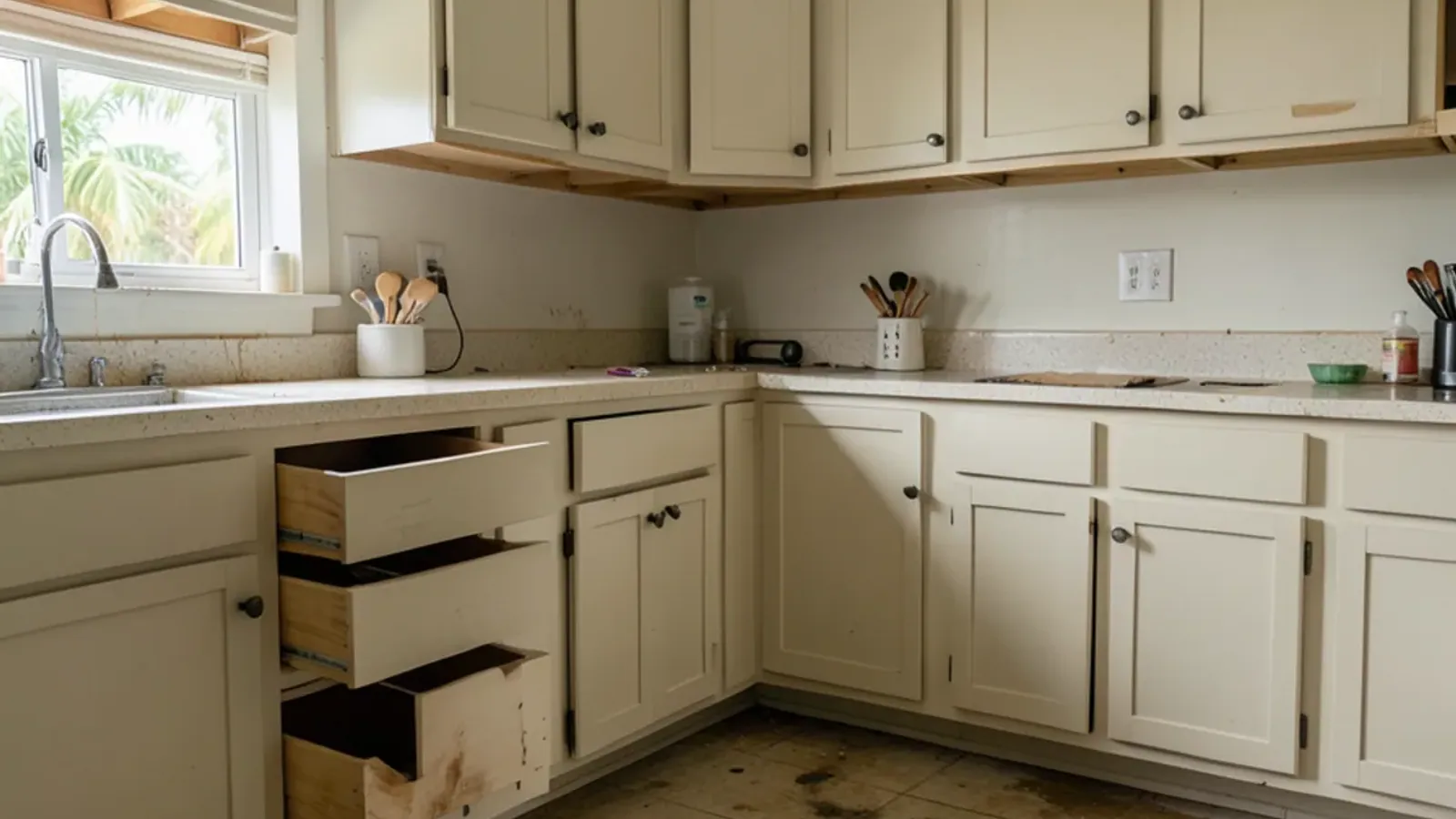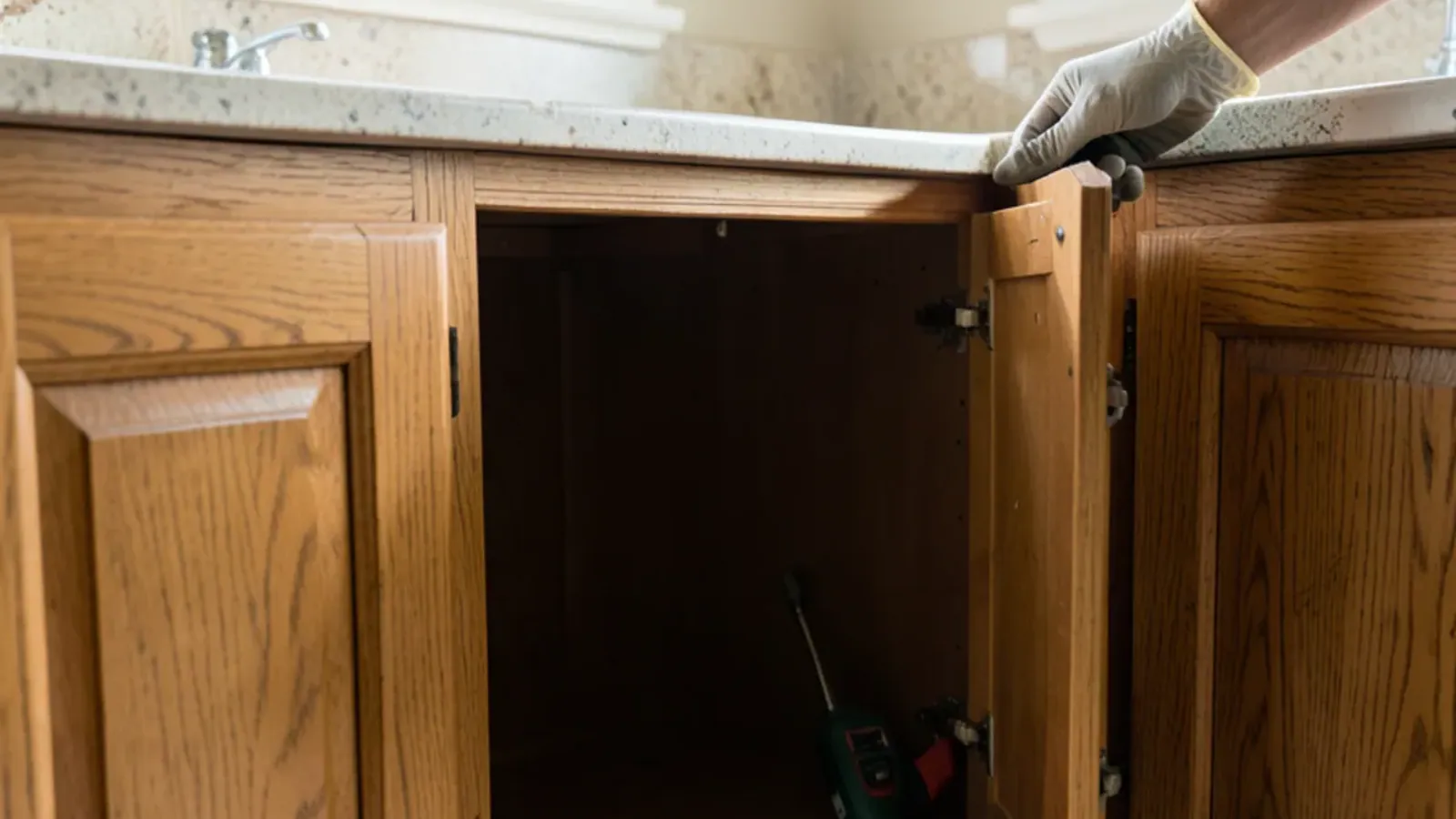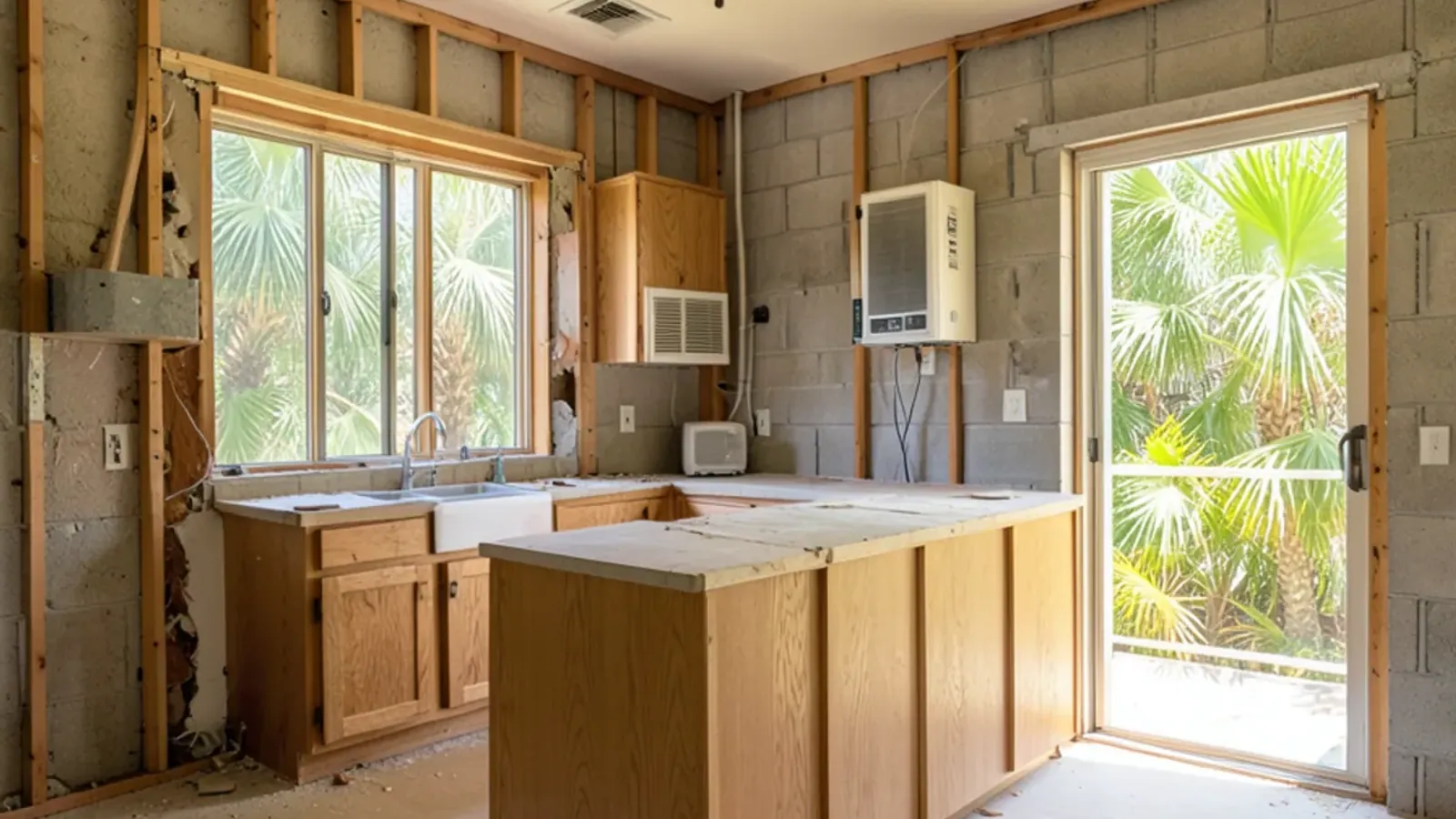
Good hurricane prep in the kitchen comes down to four things: record what you have, know how to shut off water and power, get valuables and small appliances off the floor and out of base cabinets, and line up the trades you would need afterward.
Done once at the start of the season, the list takes an afternoon and pays off whether a storm brings a few inches of water or none.
The Atlantic hurricane season runs from June 1 to November 30, according to the National Hurricane Center. With the 2026 season nearly over, this is a good moment to set up next year's plan while the lessons are fresh. Here is the kitchen-specific checklist we would hand a neighbor who stopped by the Lewis Ave shop.
Hurricane prep for the kitchen starts with a record
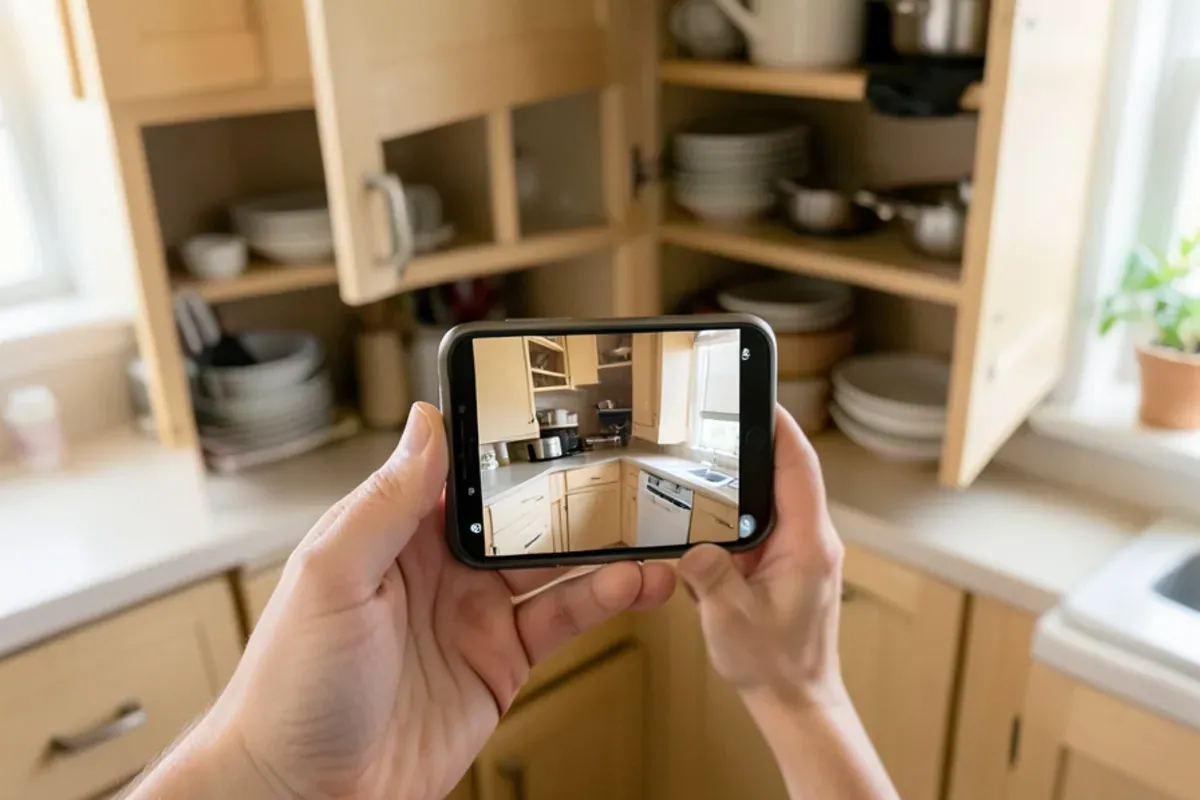
FEMA and Ready.gov both recommend photographing your property before a storm and keeping copies of insurance documents somewhere safe and digital. In a kitchen, a thorough record also helps whoever rebuilds the cabinets if a lower run is lost.
- Video a slow walk around the kitchen with every door and drawer open
- Close-ups of a door edge, a drawer corner and the inside of one base cabinet, so construction and wood species are on file
- Overall dimensions of each cabinet run, the ceiling height and the countertop overhang
- Model and serial number labels on the refrigerator, dishwasher, range and microwave
- Paint or stain names and sheen, if you know them
- Your policy declarations pages, saved to a password-protected cloud folder
Check your coverage while you are at it. FEMA notes that most homeowners policies do not cover flooding and that a new NFIP flood policy typically has a 30-day waiting period, so buying one when a storm is already in the Gulf is too late.
Do you know where your kitchen shut-offs are?
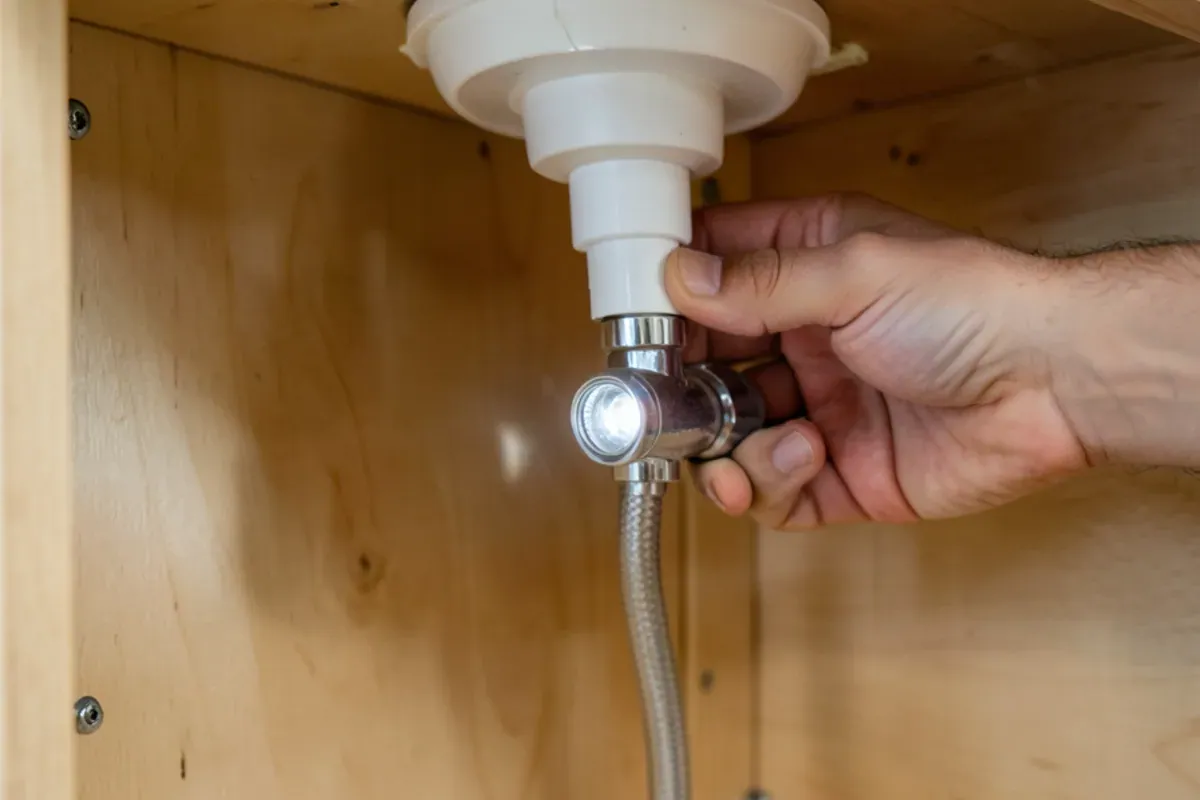
Ready.gov suggests learning how to turn off water, gas and electricity before you ever need to, and FEMA advises shutting those utilities off if local officials order an evacuation. Walk the kitchen and find each one now, in daylight, without a storm bearing down.
| Shut-off | Where it usually is | Tip |
|---|---|---|
| Sink supply valves | Inside the sink base, on hot and cold lines | Turn each once a year so it does not seize |
| Dishwasher supply | Under the sink or behind the toe kick | Note which valve feeds it |
| Ice maker and filter lines | Behind the refrigerator or under the sink | Small valves corrode quickly near the coast |
| Main water valve | Where the line enters the house or at the meter | Keep the right tool where you can find it |
| Gas range valve | Behind the range | Have a licensed gas contractor or the utility show you |
| Kitchen circuits | Main electrical panel | Label breakers clearly before the season |
If a valve will not turn, or a panel is unlabeled, have a licensed plumber or licensed electrician deal with it before June rather than after a storm.
Should you empty the lower cabinets before a storm?
If your home is in an evacuation zone or has flooded before, yes. Base cabinets are the first thing water reaches. Move anything you cannot easily replace, such as heirloom dishes, cookbooks, stand mixers and paperwork, into wall cabinets or upstairs. Bag electronics and small appliances and set them high.
Empty the refrigerator of anything that will spoil quickly if power goes out for days, and freeze containers of water to keep the freezer cold longer. Propping cabinet doors open is not necessary before a storm, but after any water intrusion, opening every door and drawer is the first step to drying.
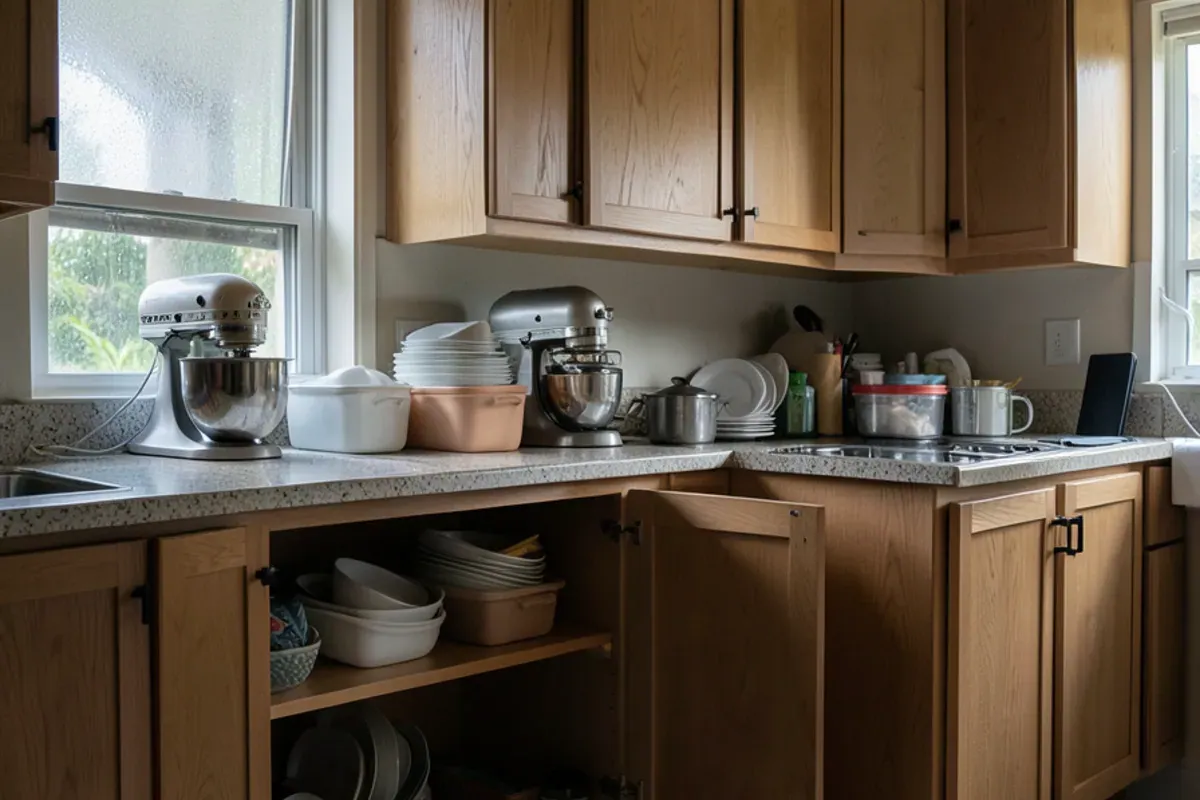
Under-counter appliances sit at the same height as the base cabinets and cannot be lifted out of the way. For a built-in beverage refrigerator, a drawer microwave or an undercounter ice maker, the realistic steps are a photo of the model label now and a note of which breaker feeds it.
What should a storm-season pantry hold?
Ready.gov's basic disaster supply kit is mostly a kitchen list: water, food and the tools to use them without power. One pantry shelf set aside each June covers the core of it:
- Water at one gallon per person per day for several days, for drinking and sanitation, as Ready.gov recommends
- Several days of non-perishable food that needs no refrigeration
- A manual can opener
- An appliance thermometer in the refrigerator and another in the freezer, so you can tell afterward whether food stayed cold
- Lidded plastic bins for the paperwork and small items you move out of the base cabinets
Where that shelf lives matters as much as what is on it. Keep the supplies in a pantry cabinet's upper shelves or in wall cabinets, never in the base cabinets that the first few inches of water reach, and rotate the food and water when you refresh this checklist each season. If water reaches the base run anyway, flood-damaged cabinet replacement covers rebuilding it to match the wall cabinets above.
Why line up the trades before a hurricane?
After a regional storm, everyone calls the same short list of companies at once. Having names and numbers saved, and a sense of who does what, helps you move as soon as it is safe. A kitchen recovery usually involves:
- A water-mitigation company for extraction and drying
- A licensed mold remediator, if growth appears
- A licensed plumber and licensed electrician to clear the systems
- A licensed general contractor for walls, framing and permits
- A cabinet maker for measuring, documenting and rebuilding cabinetry
- Your insurance agent and, for condos, the association manager
Condo owners on Longboat Key and Siesta Key should also ask their association now about post-storm work rules, elevator access and contractor insurance certificates, since those requirements still apply after a storm.
After the storm passes
Stay out of a flooded kitchen until the power is off and it is safe to enter. The CDC advises against stepping into standing water to reach the breaker panel; call an electrician instead. Then photograph everything before cleanup begins and start drying within the first day or two.
Refrigerator, freezer and cooking without power
CDC food-safety guidance says a closed refrigerator keeps food safe for 4 hours without power, a full freezer for 48 hours and a half-full freezer for 24. Throw out refrigerated perishables after 4 hours without power or a cold source such as ice. Grills, camp stoves and generators stay outdoors during an outage: CDC warns never to use them inside the home or garage, and to keep a generator more than 20 feet from any window, door or vent.
Our storm-damaged kitchen repair page explains how we measure, document and rebuild cabinetry once the drying and licensed trades are finished. For step-by-step help in the first days, read our guide to flooded kitchen cabinets.
The bottom line
A storm-ready kitchen is mostly about information and access: good photos, known shut-offs, valuables up high and a list of who to call. Set it up once, refresh it each June, and you will be in a far stronger position if water ever comes in. If you want help planning cabinetry that is easier to dry and rebuild, call us or use the contact page.
Sources
- National Hurricane Center — Tropical Cyclone Climatology
- Ready.gov — Hurricanes
- FEMA — Six Ways to Prepare Your Home for a Hurricane
- FEMA — Flood Insurance
- CDC — What to Do to Protect Yourself From Electrical Hazards
- Ready.gov — Build A Kit
- CDC — Keep Food Safe After a Disaster or Emergency
- CDC — Prevent Carbon Monoxide Poisoning