To rebuild a kitchen after a hurricane, work in sequence: settle what the adjuster needs to see, dry the structure out, confirm permits and any floodplain review, let licensed trades finish plumbing, electrical and drywall, and only then set new cabinets and countertops.
Ordering cabinetry too early, or installing it before the walls are truly dry, is the most common way a storm rebuild goes sideways.
We build and install custom cabinets from our shop on Lewis Ave in Sarasota, working alongside the plumbers, electricians and general contractors who handle the rest of a rebuild. This guide lays out the full sequence as we see it from the cabinetry side, with the lessons the last three big storms drove home.
What Ian, Helene and Milton taught Gulf Coast kitchens
Hurricane Ian came ashore in Southwest Florida in late September 2022, and the National Hurricane Center described its surge along that coast as catastrophic. Inland flooding followed; the Myakka River corridor through North Port and the canal neighborhoods of Port Charlotte saw kitchens flooded from below and roofs opened from above.
Two years later the coast got a double hit. Helene made landfall in the Big Bend in September 2024, yet its surge still damaged structures along coastal Sarasota County. Milton followed in October 2024, making landfall near Siesta Key as a Category 3 storm, according to the NHC's report.
For kitchens, the practical lessons from those storms are consistent:
- Cabinets set back in over damp framing or slab can trap moisture and invite mold behind the new boxes.
- A detailed record of the old kitchen makes both the claim and the matching of surviving cabinetry easier.
- After a regional storm, trades book up quickly, so contacts lined up in advance are worth having.
In what order should a hurricane kitchen rebuild happen?
Every house is different, but the order of operations rarely changes. Here is the sequence we plan cabinetry around:
Document and report
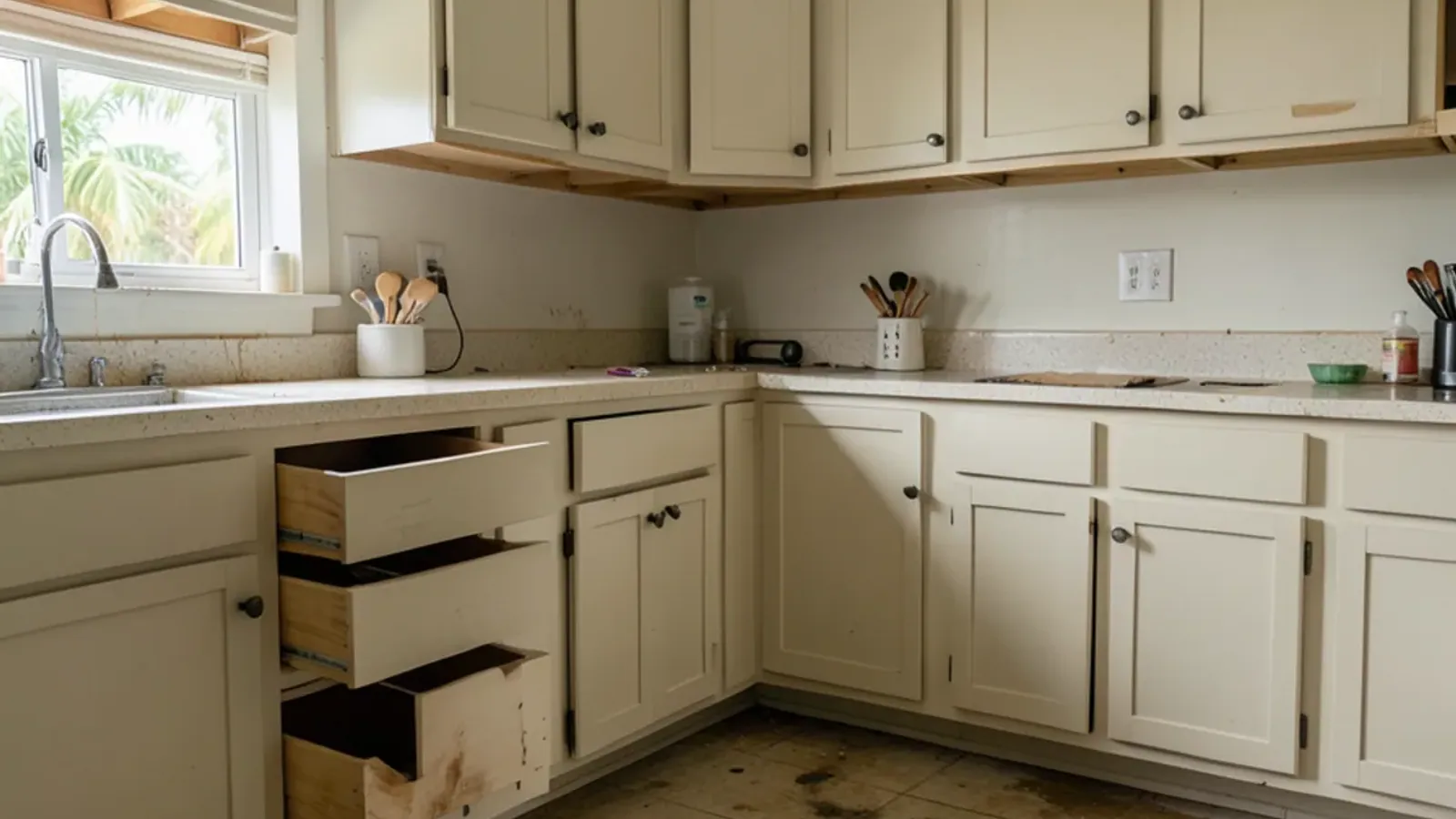
Photograph the kitchen, keep samples of damaged material and report the claim. Florida's Department of Financial Services notes that hurricane claims carry notice deadlines, so do not wait for the rebuild plan to file.
Dry out and remediate
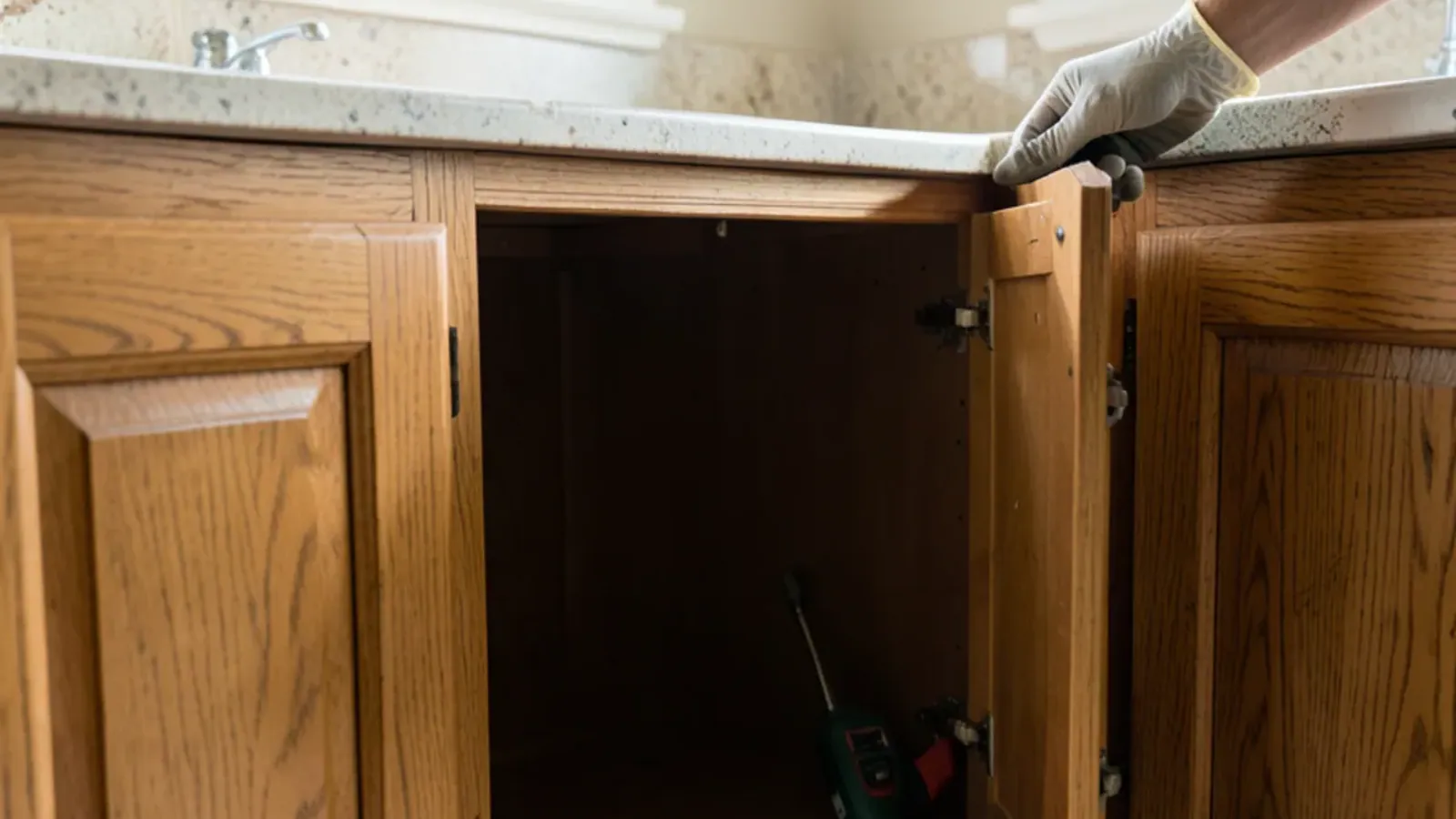
A water-mitigation crew removes wet drywall, insulation and flooring and dries the structure. If mold is present, a licensed mold remediator handles it.
Floodplain and permit check
In a mapped flood zone, the local building department may need to decide whether the home is substantially damaged before major repairs are permitted.
Rough-in by licensed trades
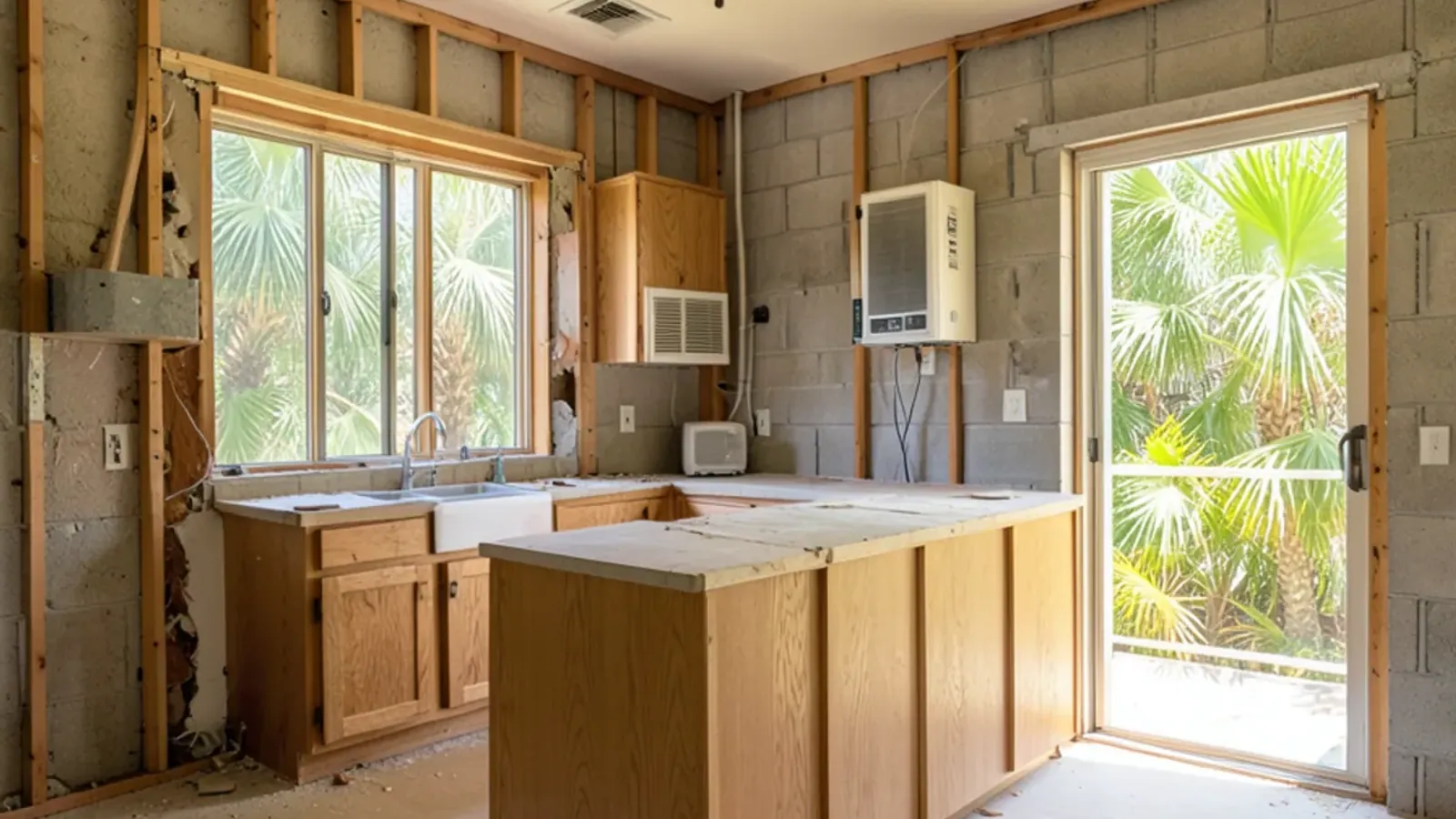
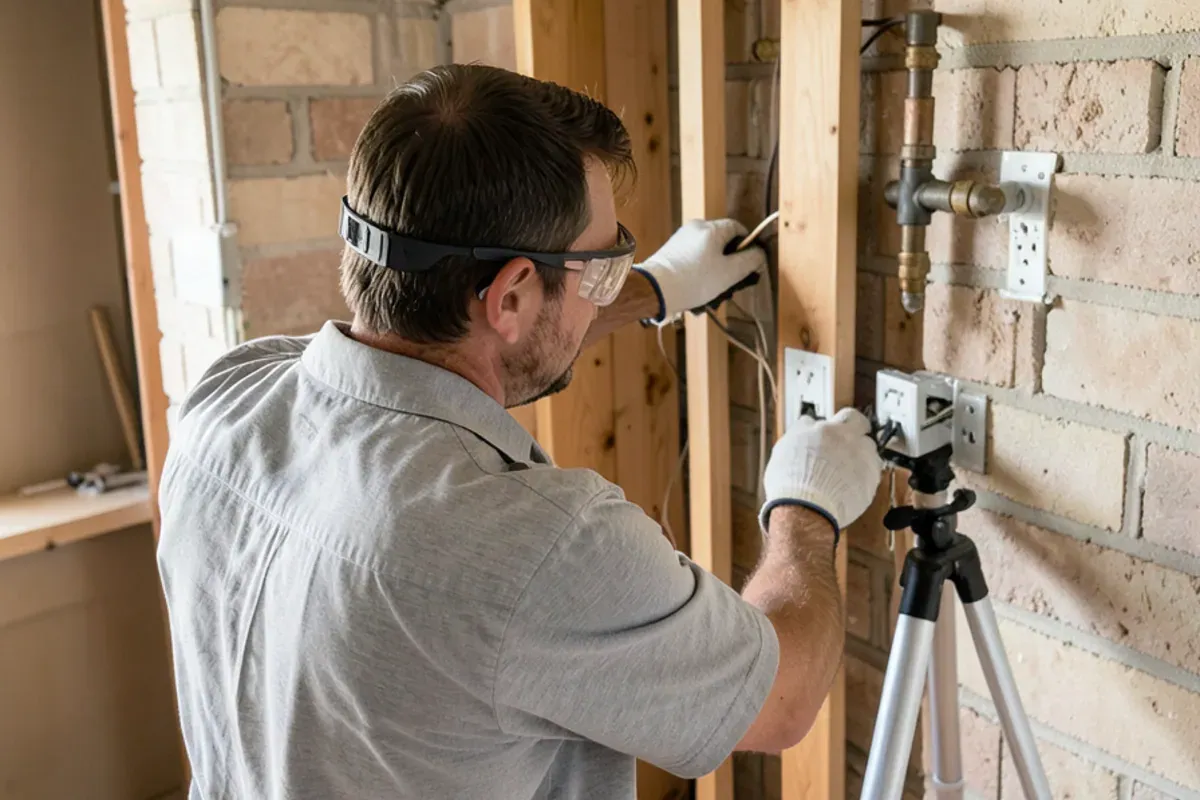
A licensed plumber and licensed electrician repair or relocate lines and outlets, and a licensed general contractor coordinates framing or wall changes.
Drywall, then measure
Cabinet measurements are taken on finished walls, not on studs, so the boxes fit the room that actually exists.
Design, build and install cabinets
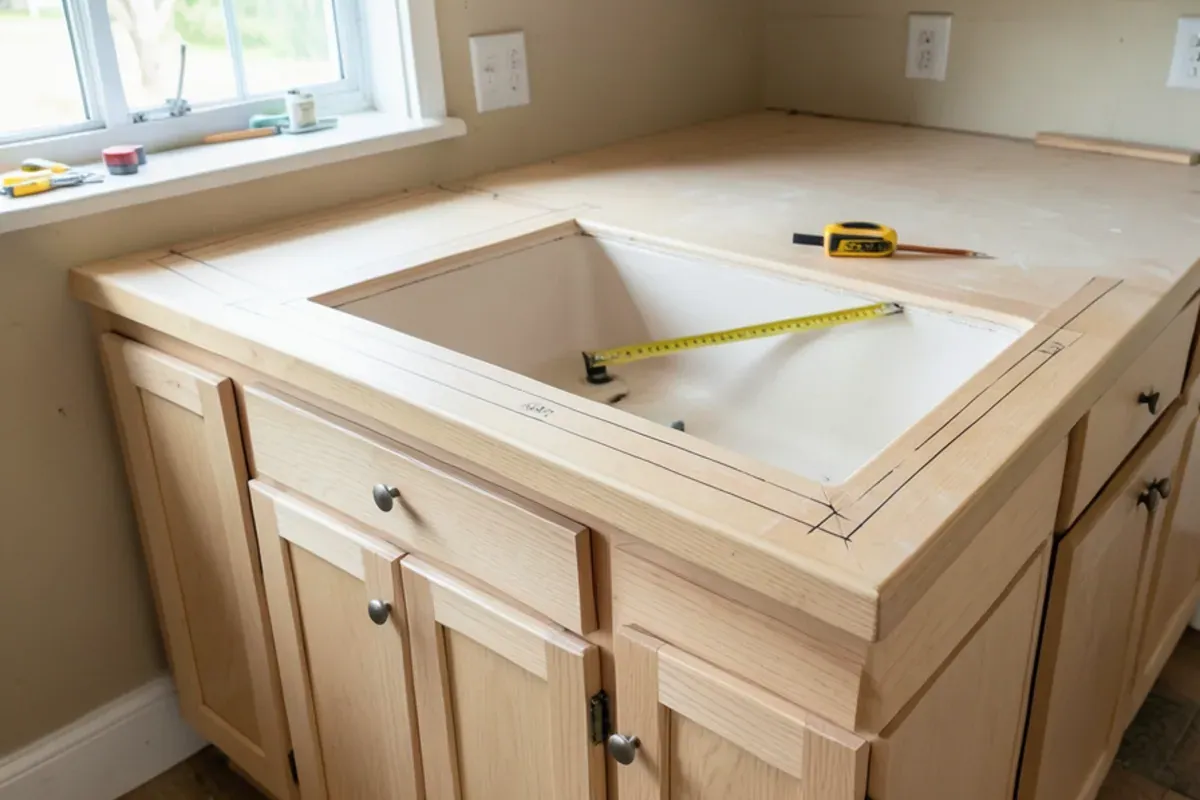
Working drawings and a 3D model are approved, the cabinets are built and installed, and the stone fabricator templates the counters on the set boxes.
Who handles which part of the rebuild?
Storm rebuilds involve more hands than an ordinary remodel, and confusion about who does what costs weeks. This is how the work usually divides:
| Task | Who usually handles it |
|---|---|
| Claim documentation and scope of loss | Homeowner and adjuster, with estimates from each trade |
| Water extraction, drying, tear-out | Water-mitigation company |
| Mold assessment and removal | Licensed mold assessor and remediator |
| Plumbing, gas, electrical repairs | Licensed plumber, gas contractor, licensed electrician |
| Walls, framing, permits for structural work | Licensed general contractor |
| Cabinet design, build and installation | Cabinet shop |
| Stone countertops | Stone fabricator, templated on installed cabinets |
Our part is the cabinetry: measuring, documenting what was there, designing the replacement and building it. Our hurricane kitchen rebuild page describes that scope in more detail.
How do you vet trades when everyone is hiring at once?
After a regional storm, the scramble for trades draws in people who should not be doing the work. Florida's DBPR states in its hurricane guide that unlicensed construction activity becomes a third-degree felony during a declared state of emergency, and the agency repeats its license-check warnings every season. Before anyone signs, run through this list:
- Look up each contractor on DBPR's MyFloridaLicense.com search or its free app, by name or license number, before you sign anything
- Ask who will pull each permit, and confirm that name matches the license you looked up
- Get scope, price and payment schedule in a written contract rather than a text message
- Know the deposit rule: under section 489.126, Florida Statutes, a contractor paid more than 10 percent of the price up front on residential work must apply for permits within 30 days and start within 90 days of the permits issuing, unless you agreed in writing to a longer period
- Remember that out-of-state contractors still need a Florida license from DBPR to work on your home, whatever credentials they hold elsewhere
We build and install the cabinetry; the plumbing, wiring, gas and wall work around it belongs to licensed trades, and theirs are the licenses worth checking. If the house also sits in a mapped flood zone, read how the FEMA 50 percent rule affects a kitchen rebuild before the scope is settled.
Rebuild the kitchen after a hurricane to recover faster next time
A rebuild is a chance to make the next storm less expensive. None of these choices make a kitchen floodproof, but they shorten the cleanup and improve the odds of saving parts of it.
- Solid wood boxes and face frames instead of particleboard, so a short soaking is a repair rather than a replacement
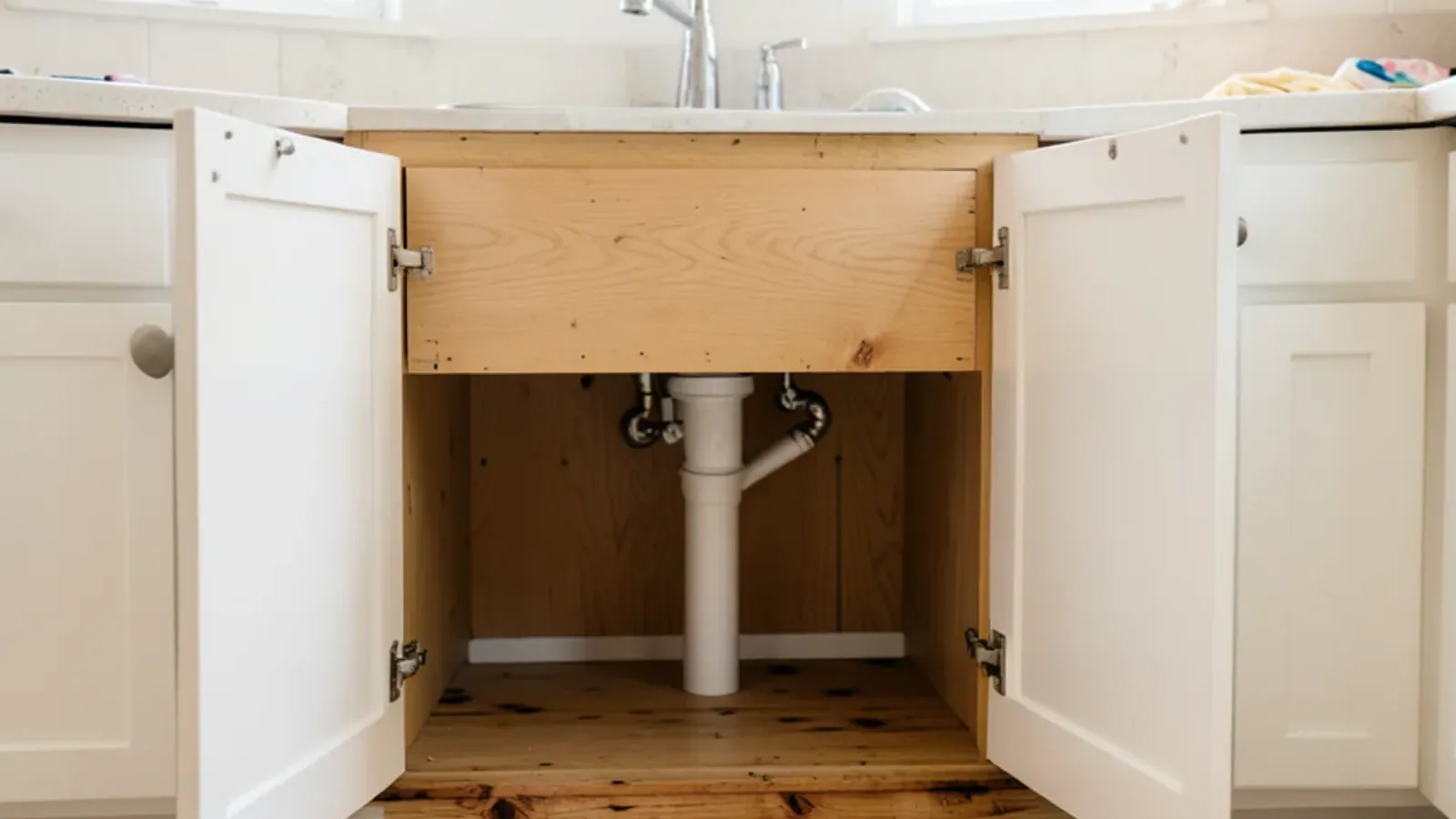
- Removable toe kicks, so drying crews can reach the cavity under the cabinets without breaking anything
- Finish on every face of the box, including the underside and back, to slow water uptake
- Small appliances, cookware and valuables planned into wall cabinets and upper pantry shelves
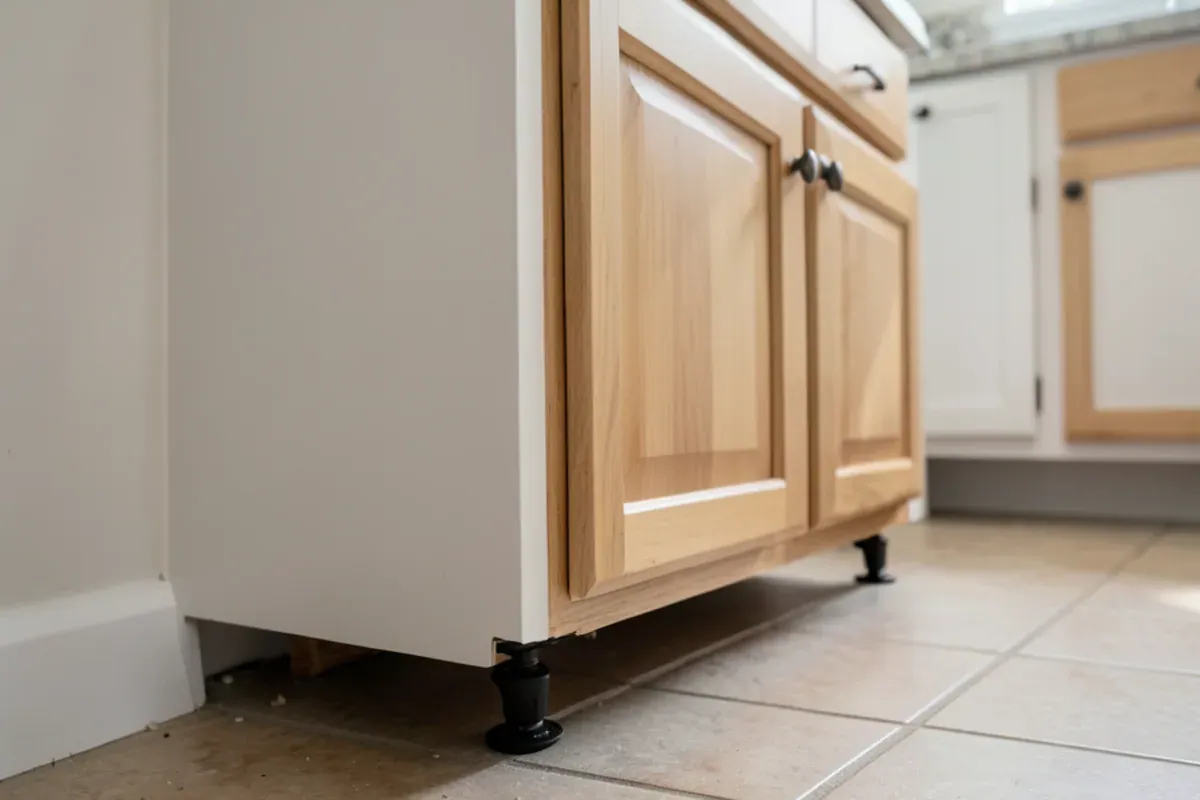
- Adjustable leveling legs where the floor and design allow, which lift the box bottom off the slab
How long does the cabinetry portion take?
We do not quote storm timelines in a blog post, because they depend on things outside anyone's control: how fast the house dries, when the permit and floodplain review clear, and how booked the trades are. What we can say is what drives our part. Design decisions, approved drawings and finish selections set the start of the shop build. Countertop templating cannot happen until the cabinets are installed, and the top has to be fabricated before the sink and cooktop can be reconnected.
Storm rebuilds move fastest when the homeowner settles door style, wood species and finish while the house is still drying, so drawings are ready by the time the drywall is finished. For a broader look at the process, see our storm-damaged kitchen repair overview.
Decisions to settle while the walls are open
- Keep the old footprint or move the sink and range, which brings the plumber and electrician back in
- Wood species, door style and finish, matched to surviving uppers or chosen fresh
- Exact appliance models, because their spec sheets set panel widths and cutouts
- Sink and faucet, which the stone fabricator needs before templating
- Countertop material, since a heavy stone top and a walnut top call for different support
The bottom line
A hurricane rebuild rewards patience in the right places: dry the house properly, let each licensed trade finish, and use the waiting time to make design decisions. When you are ready to plan the cabinetry for a storm-damaged kitchen, phone the shop or write to us from the contact page.
Sources
- National Hurricane Center — Tropical Cyclone Report: Hurricane Ian (AL092022)
- National Hurricane Center — Tropical Cyclone Report: Hurricane Helene (AL092024)
- National Hurricane Center — Tropical Cyclone Report: Hurricane Milton (AL142024)
- Florida Department of Financial Services — Homeowners Insurance Overview
- FEMA — Substantial Damage Quick Guide
- Florida DBPR — Hurricane Guide
- The Florida Senate — 2025 Florida Statutes, section 489.126 (moneys received by contractors)
- Florida DBPR — Mold-Related Services FAQs