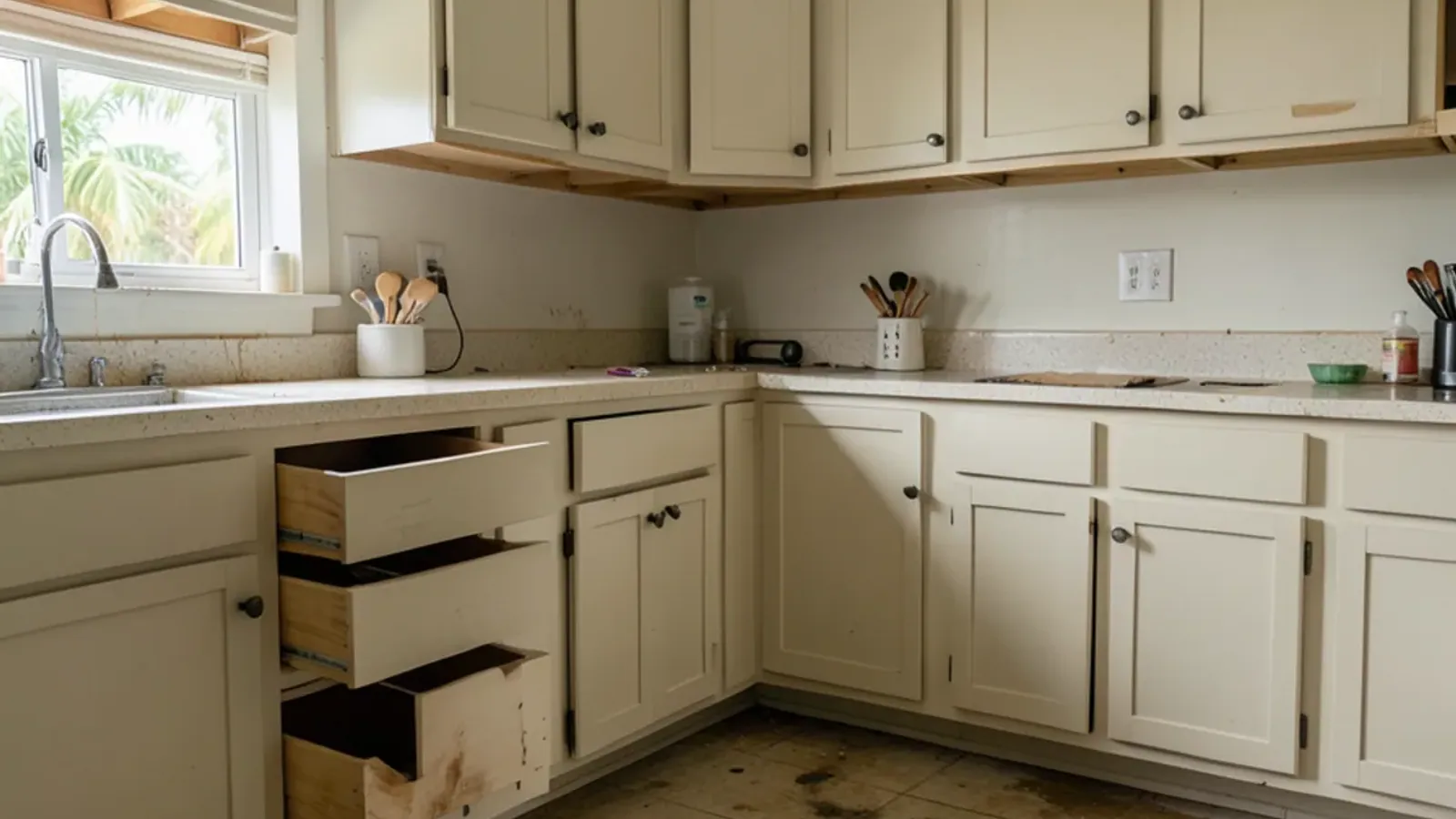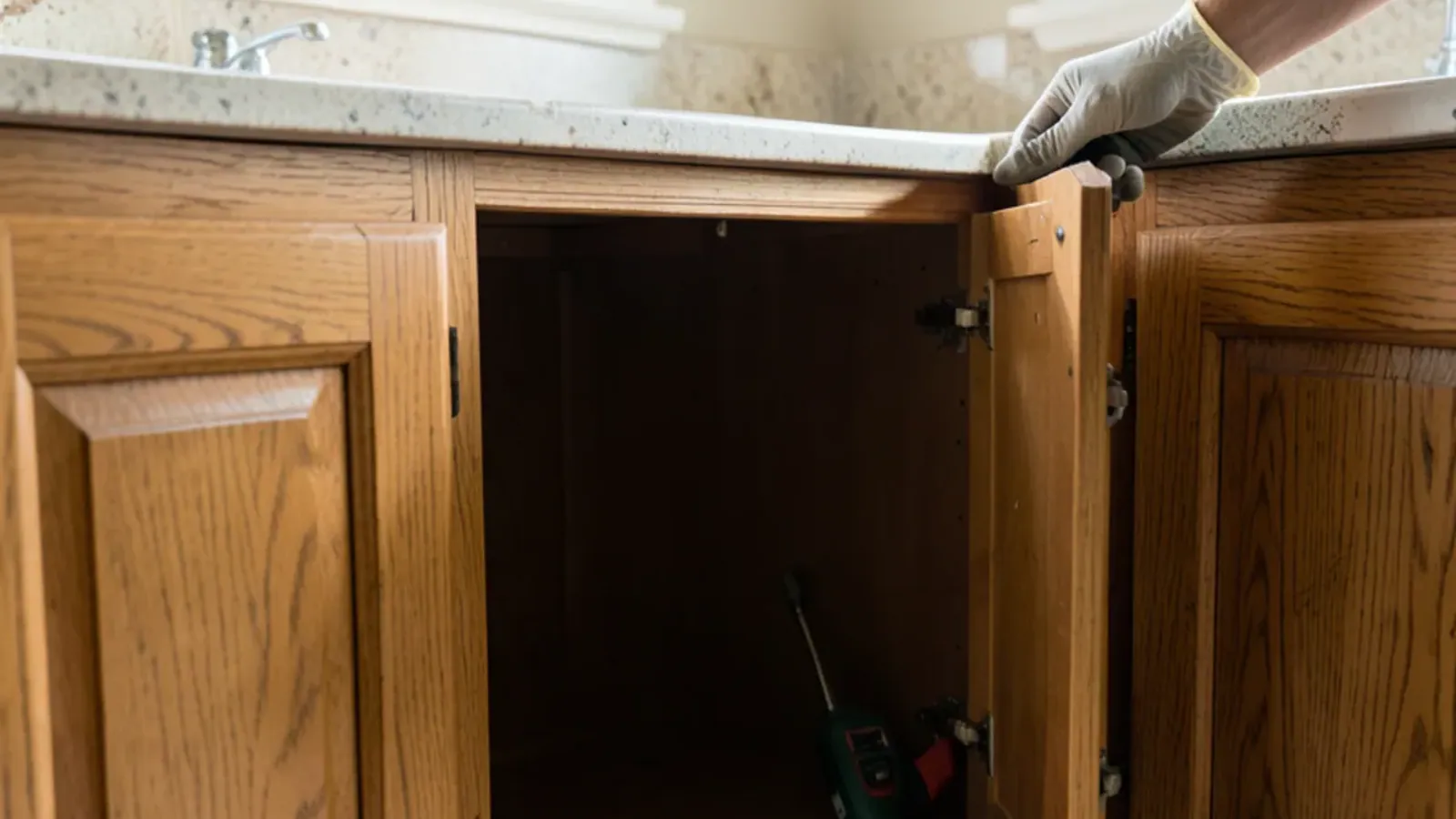
Sink base cabinet water damage usually starts long before anyone sees a puddle: a slow drip from a supply line, trap or dishwasher hose soaks the cabinet floor a little at a time until it sags, smells musty or peels at the edges.
Catch it early, have a licensed plumber stop the leak, and the repair is often just a new cabinet floor rather than a new kitchen.
A sink base sits under more plumbing than any other cabinet in the house, so it is usually where hidden water damage shows up first. From our cabinet shop in Sarasota, here is how to spot the warning signs, find the source and decide what kind of fix the cabinet needs.
Early signs of sink base cabinet water damage
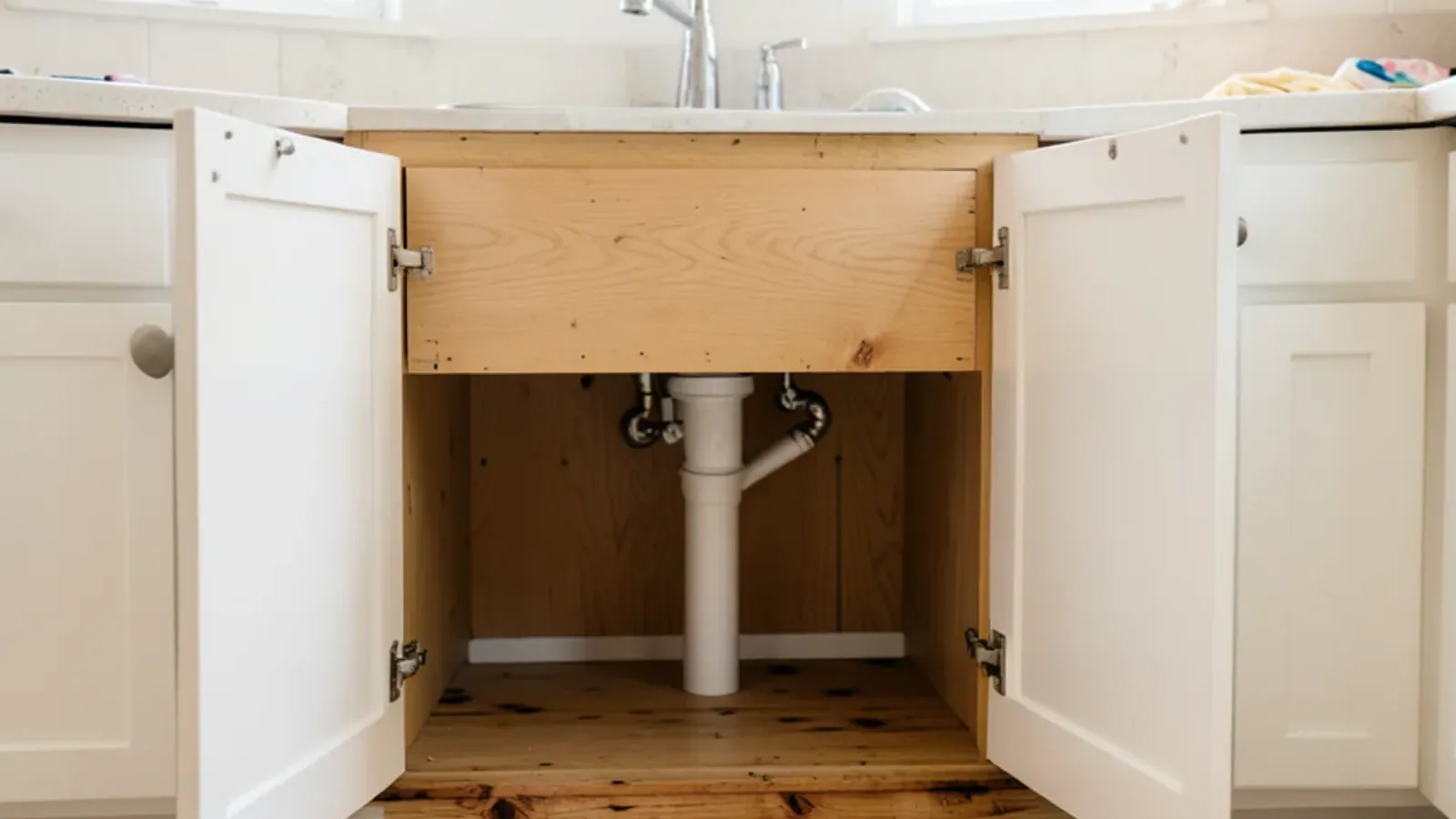
Leaks under a sink are rarely dramatic. The water drips onto the cabinet floor, wicks into the edges and evaporates just slowly enough to stay unnoticed. Open the doors and look for any of these:
- A cabinet floor that flexes, dips or feels spongy when you press on it
- A musty or sour smell that comes back after cleaning
- Laminate or contact paper lifting at the front edge or corners
- Dark rings, white mineral crust or rust marks around the drain and supply lines
- Swollen bottom edges on the doors or the face frame rail
- Buckled or discolored flooring in front of the sink or next to the dishwasher
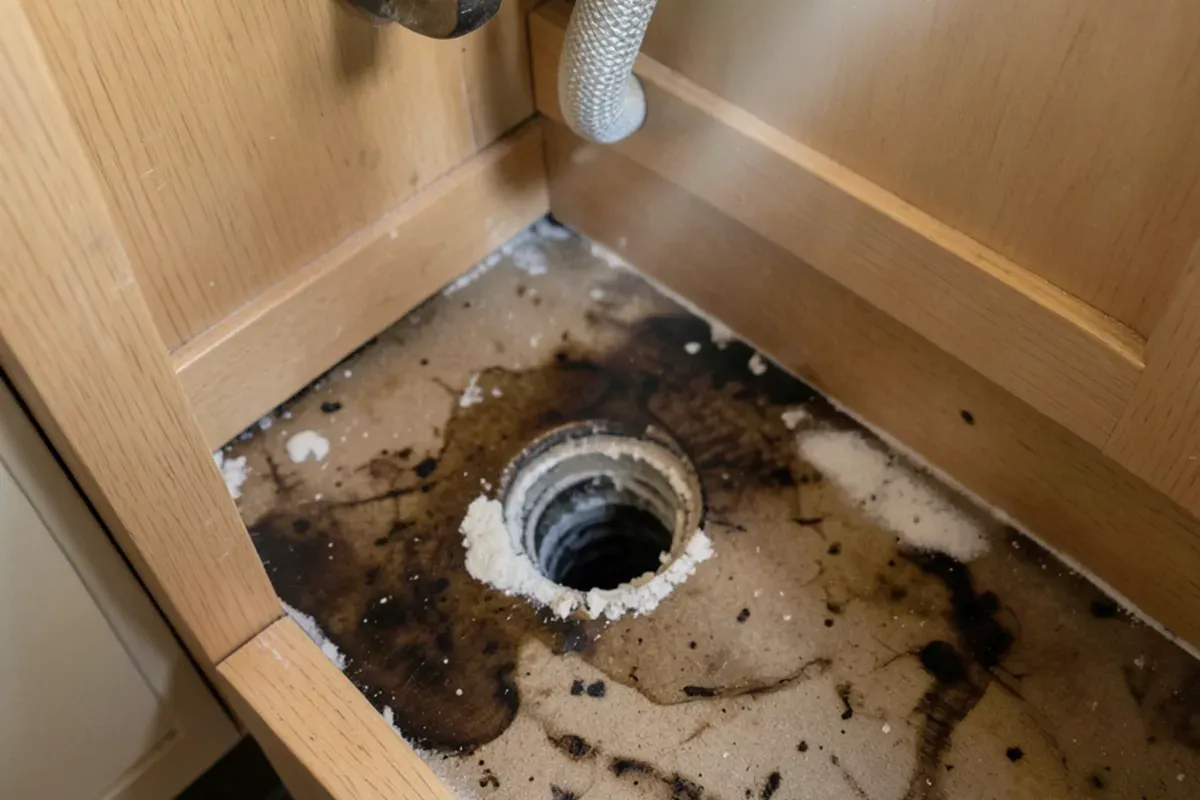
Where do sink-base leaks come from?
The space under a kitchen sink is crowded. Any one of these connections can weep for months before failing outright:
| Source | What to look for |
|---|---|
| Hot and cold supply lines | Moisture at the compression nuts or a braided hose bulging near the valve |
| P-trap and slip joints | Drips that appear only while the sink drains |
| Dishwasher drain hose | Water at the disposal or air-gap connection after a cycle |
| Garbage disposal | Wet residue at the bottom housing or the sink flange |
| Faucet base and sprayer hose | Water running down the faucet shank inside the cabinet |
| Sink rim seal | Staining on the cabinet top edge directly under the countertop |
| Filter or ice-maker lines | Damp tubing joints and push-fit connectors |
Finding and fixing the leak is a plumbing job. A licensed plumber should repair the connection before anyone rebuilds the cabinet, or the new floor will be wet within weeks.
Faucet leaks deserve a closer look than they usually get. EPA WaterSense figures that a faucet dripping once per second wastes more than 3,000 gallons a year, and when the drip comes from the base or the sprayer hose rather than the spout, that water runs down the shank onto the cabinet floor instead of into the sink.
A ten-minute leak check you can do tonight
- Empty the sink base completely and dry the floor with a towel.
- Lay a sheet of paper towel flat under each connection and the trap.
- Run hot water for two minutes, then fill and drain the sink.
- Start a short dishwasher rinse cycle and watch the drain hose.
- Check the paper towels with a flashlight for any wet spots.
- For hidden leaks, use EPA's WaterSense test: read your water meter before and after a two-hour stretch with no water use. Any movement suggests a leak somewhere in the house.
EPA's WaterSense program estimates an average household's leaks can waste more than 9,300 gallons a year. Under a sink, the bigger cost is the cabinet and the subfloor, along with the mold risk that comes with persistent moisture. EPA's mold guidance says mold rarely takes hold when damp materials are dried inside a 24-to-48-hour window, and a slow leak never gives the cabinet that chance.
Why do builder-grade sink bases fail first?
Most production kitchens use melamine-faced particleboard for the cabinet floor and sides. The melamine sheds water from its face, but the raw edges and the holes drilled for plumbing do not. Water finds those openings, the particleboard swells and the floor sags under the weight of cleaning supplies.
That is a familiar story in newer communities. Many Lakewood Ranch homes have builder-grade kitchens less than ten years old, and in Palmer Ranch the original builder kitchens from the 1990s and 2000s are now 15 to 30 years old. Either way, the sink base is usually the first cabinet to show its age.
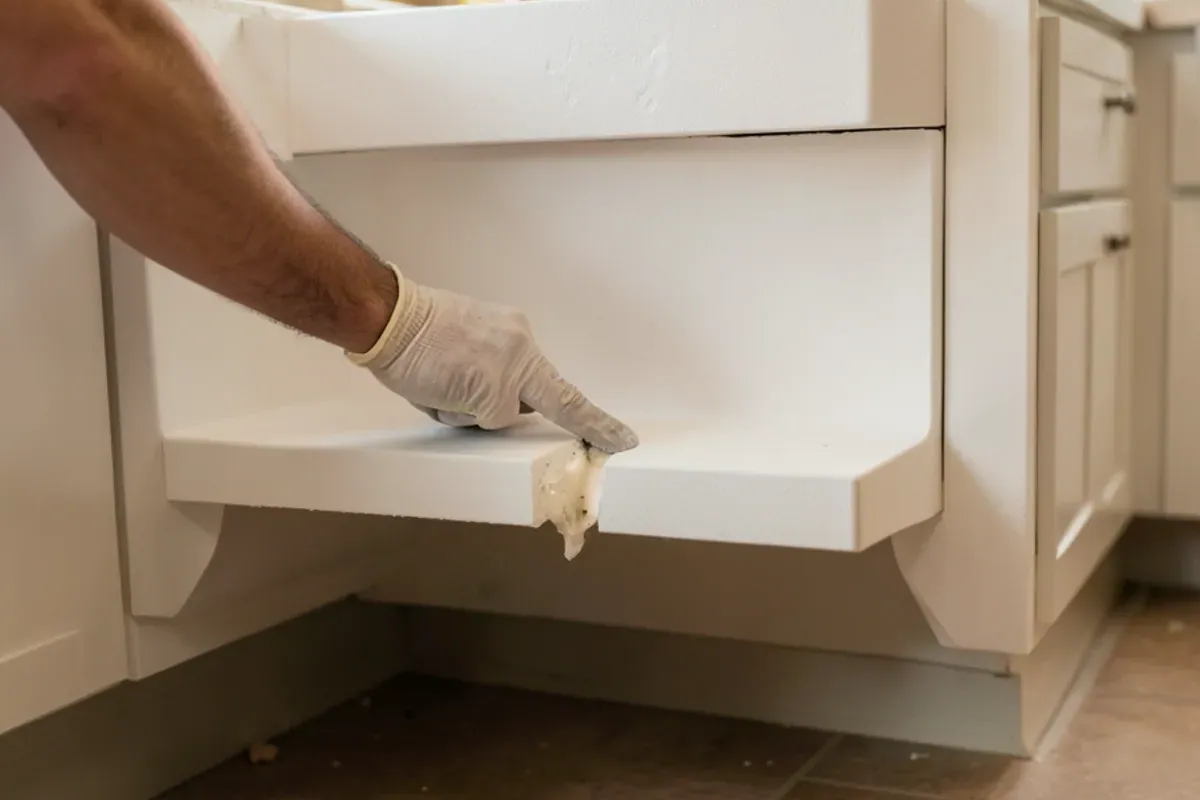
Repair the cabinet floor or replace the whole sink base?
If the sides, face frame and doors are still firm, rebuilding the floor is usually enough. If the side panels have swollen at the bottom or mold has grown on the inside faces, the box should be replaced. Our water-damaged cabinet repair page explains both options.
| Option | When it fits | What it involves |
|---|---|---|
| New cabinet floor | Sides, face frame and doors are firm; damage stops at the floor panel | Cut out the old floor, fit a panel sealed on every face and edge, reinstall the toe kick |
| New floor plus a side or back panel | One side or the back has swollen or delaminated near the bottom | Rebuild the damaged panel to its original size and blend the finish where it shows |
| New sink base box | Both sides swollen, mold inside the box, or particleboard throughout | Build a replacement to the existing face-frame width so it drops into the run |
Swapping a whole sink base under a stone countertop is the delicate part. An undermount sink is fastened to the underside of the stone, and the top spans the opening where the box used to stand, so the plumber disconnects the drain and supplies first and the top is braced before the old cabinet comes out.
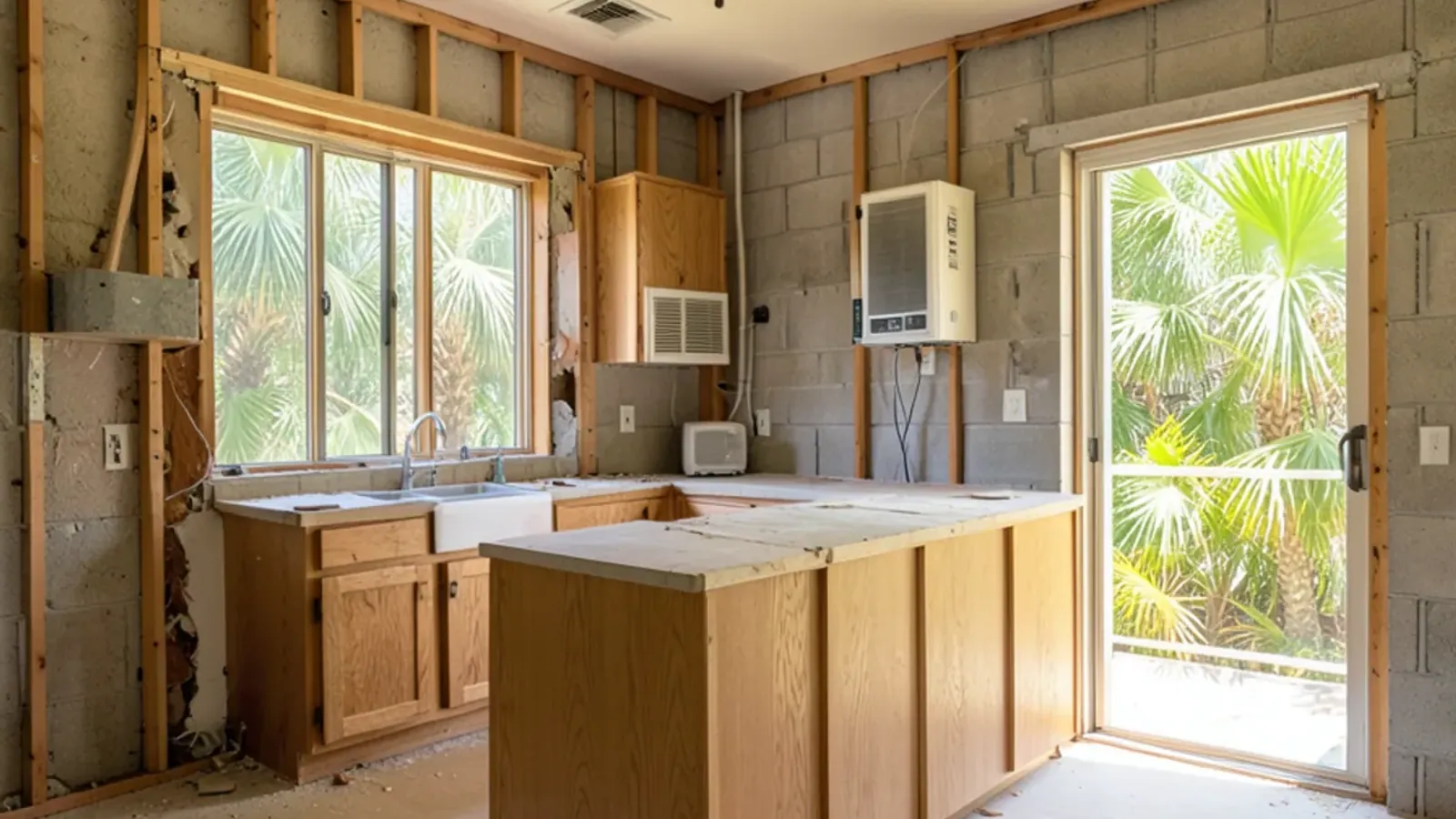
Mold behind the cabinet or inside the wall changes the order of work. A licensed mold remediator should clear it before the cabinet goes back. For larger storm or flood losses, see our storm-damaged kitchen repair overview.
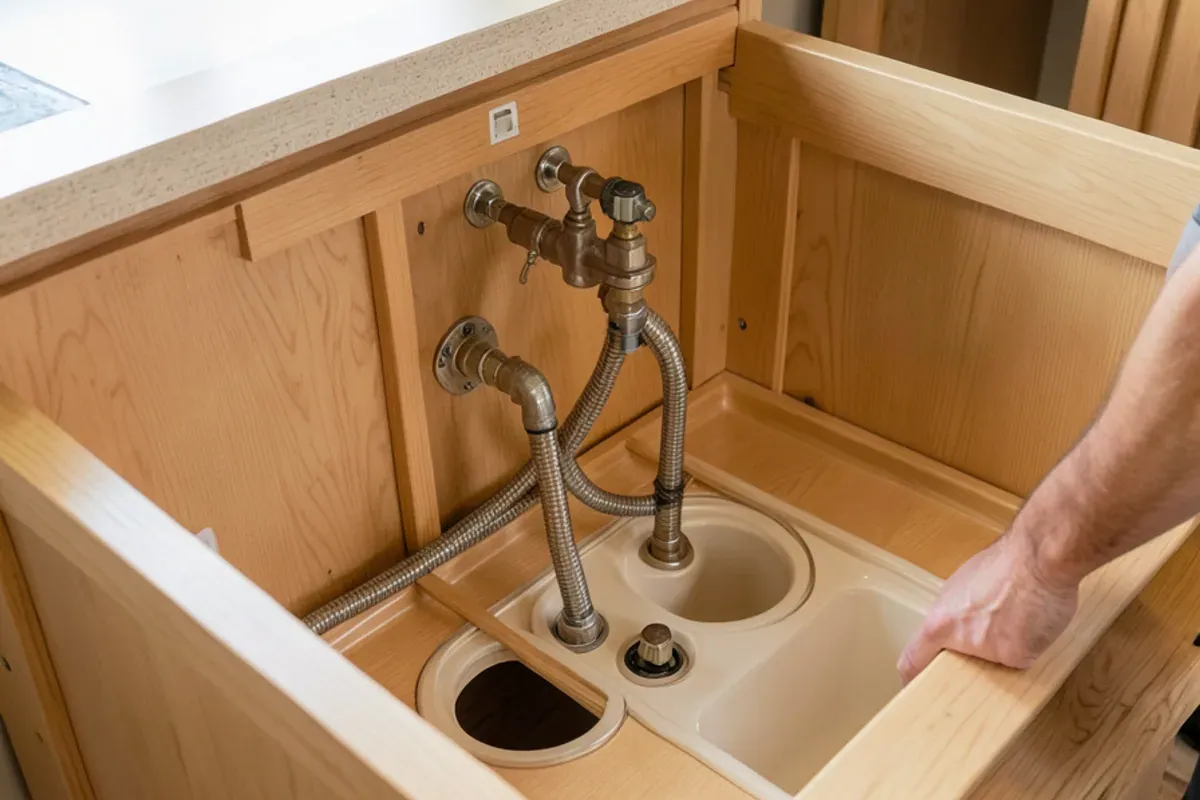
How do you keep the next leak from ruining the cabinet?
A rebuilt sink base is only as durable as the habits around it. These are the measures that turn a months-long drip into a same-week discovery:
- A battery leak sensor on the cabinet floor at the low corner, where drips collect first
- Shut-off valves that actually turn; a licensed plumber can swap seized multi-turn valves for quarter-turn ones
- New supply lines whenever the faucet is replaced, instead of reusing the old hoses
- A look under the sink after any dishwasher, disposal or filter installation, when the connections were last disturbed
- Nothing stored tight against the trap, where a bottle pushed to the back can knock a slip joint loose
Slow leaks matter on the insurance side as well, because policies often treat gradual seepage differently from a sudden burst. Our guide to whether insurance covers water-damaged cabinets explains how the water source shapes a claim.
The bottom line
A sink base takes more water abuse than any other cabinet in the house, and it rarely complains until the floor is already soft. Check it a few times a year, fix leaks quickly with a licensed plumber, and rebuild with sealed edges when the time comes. If yours is already sagging, give us a call or fill in the contact form to arrange a look.