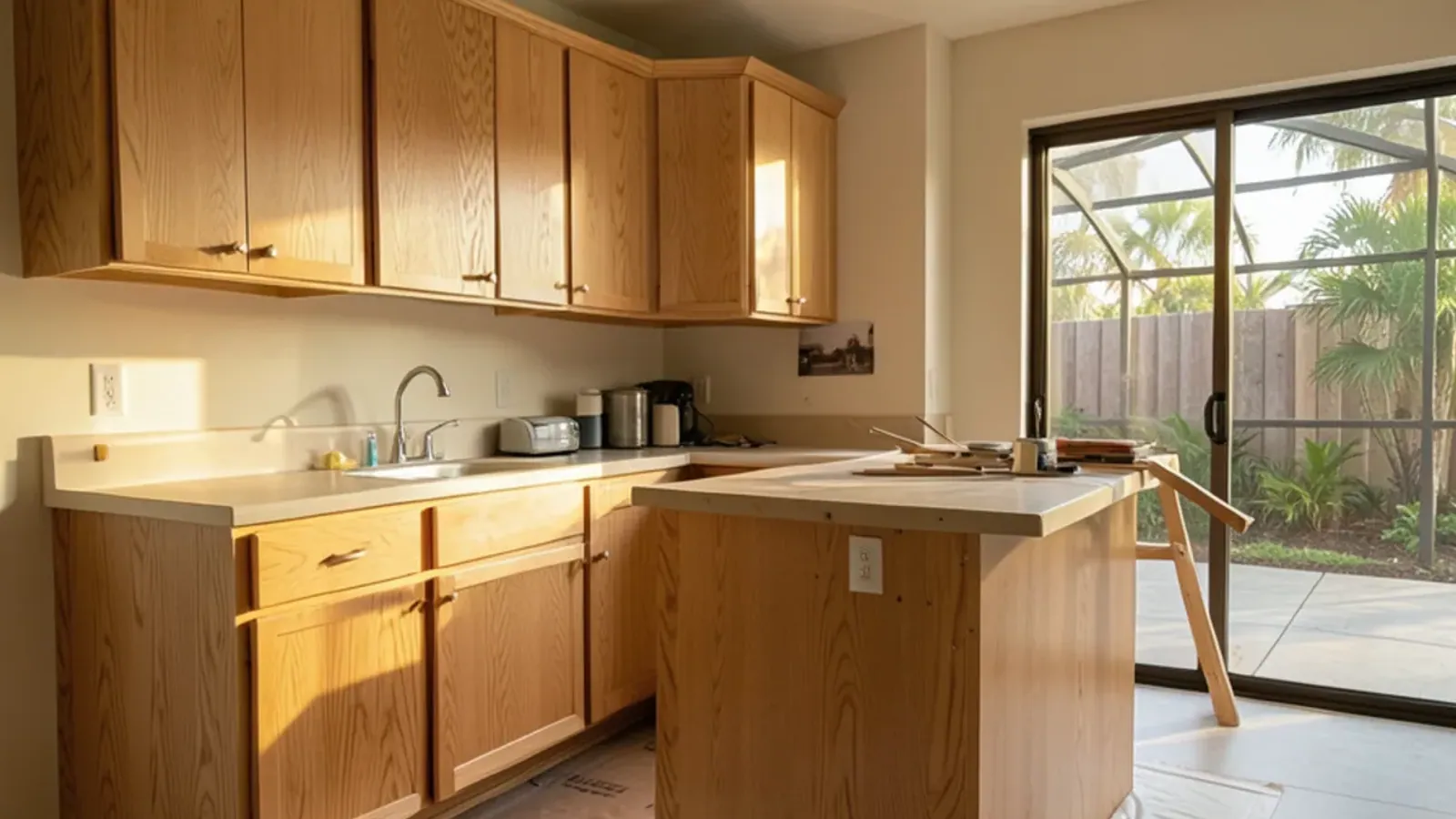
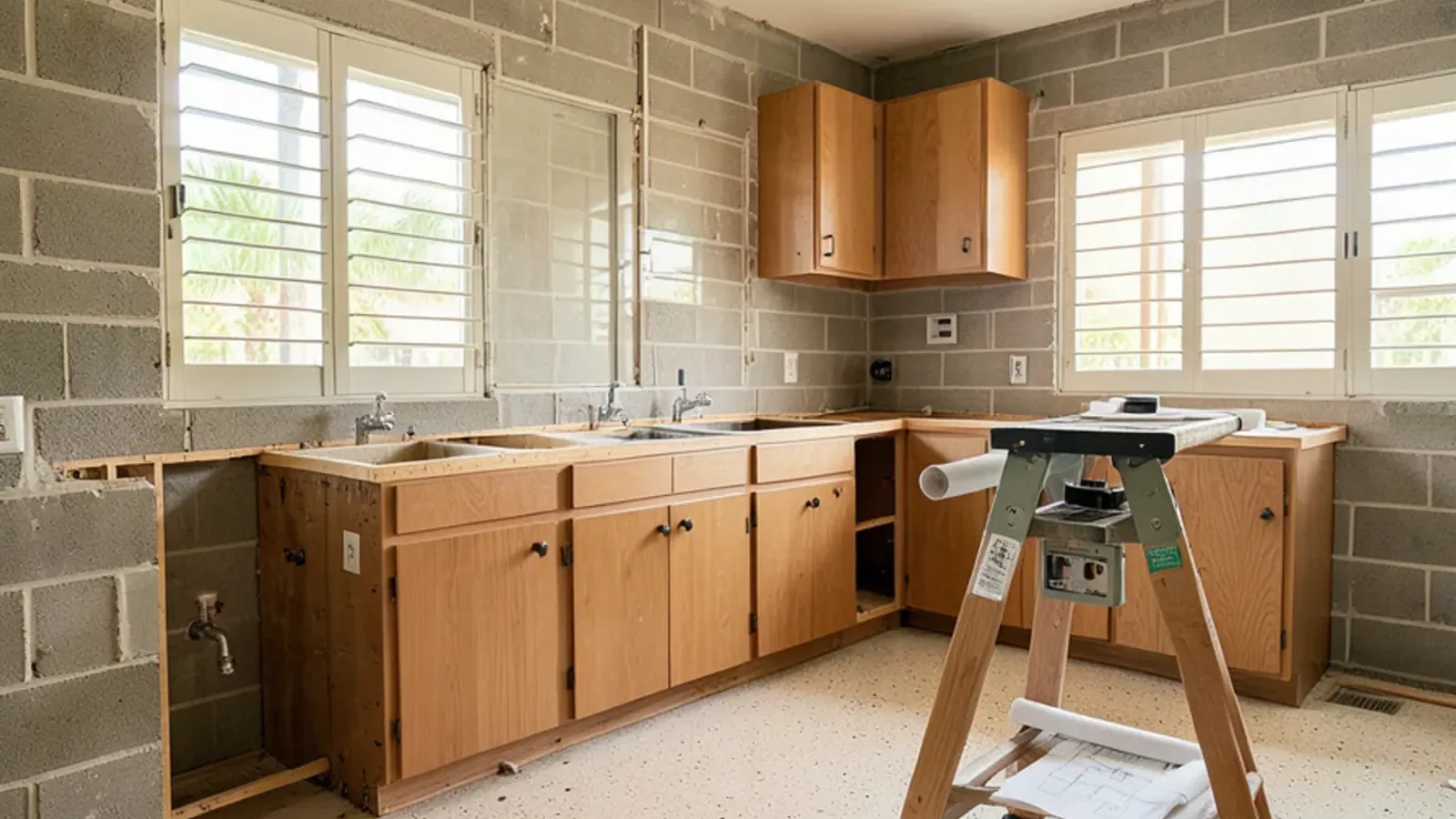
Whether you need a kitchen remodel permit in Sarasota County depends on what the work touches. Relocating a sink, adding circuits, running a gas line or removing a wall requires a building permit and licensed trades under the Florida Building Code, while replacing cabinets in the same footprint is sometimes handled as minor work.
Which office issues it depends on the address: unincorporated land goes to the county, while Sarasota, Venice and North Port each run a city building department and Longboat Key has a town department. Rules change and every department reads them a little differently, so treat this as orientation and confirm your project with the building department that serves your address. For kitchen remodeling in Sarasota, we design, build and install the cabinetry; licensed plumbers, electricians and general contractors handle the permitted trade work, and we plan our drawings so their scope is clear from day one.
Which Building Department Handles Your Kitchen?
Start with the jurisdiction, because a permit from the wrong office is no permit at all. Your property tax bill or the county property appraiser's record shows whether the parcel sits inside a city or town.
- Unincorporated Sarasota County: areas such as Siesta Key, Southgate, Gulf Gate and much of the land outside city limits. The county's building division takes applications electronically through its online portal.
- City of Sarasota: downtown, the barrier-island neighborhoods inside city limits and older districts such as Laurel Park. The city has its own building division and its own permit guidelines.
- City of Venice: the island and the neighborhoods within city limits, with a separate building department.
- City of North Port: the county's largest city by population, with its own building division.
- Town of Longboat Key: one town building department for the whole island, even though it spans Manatee and Sarasota counties.
When Does a Kitchen Remodel Need a Permit?
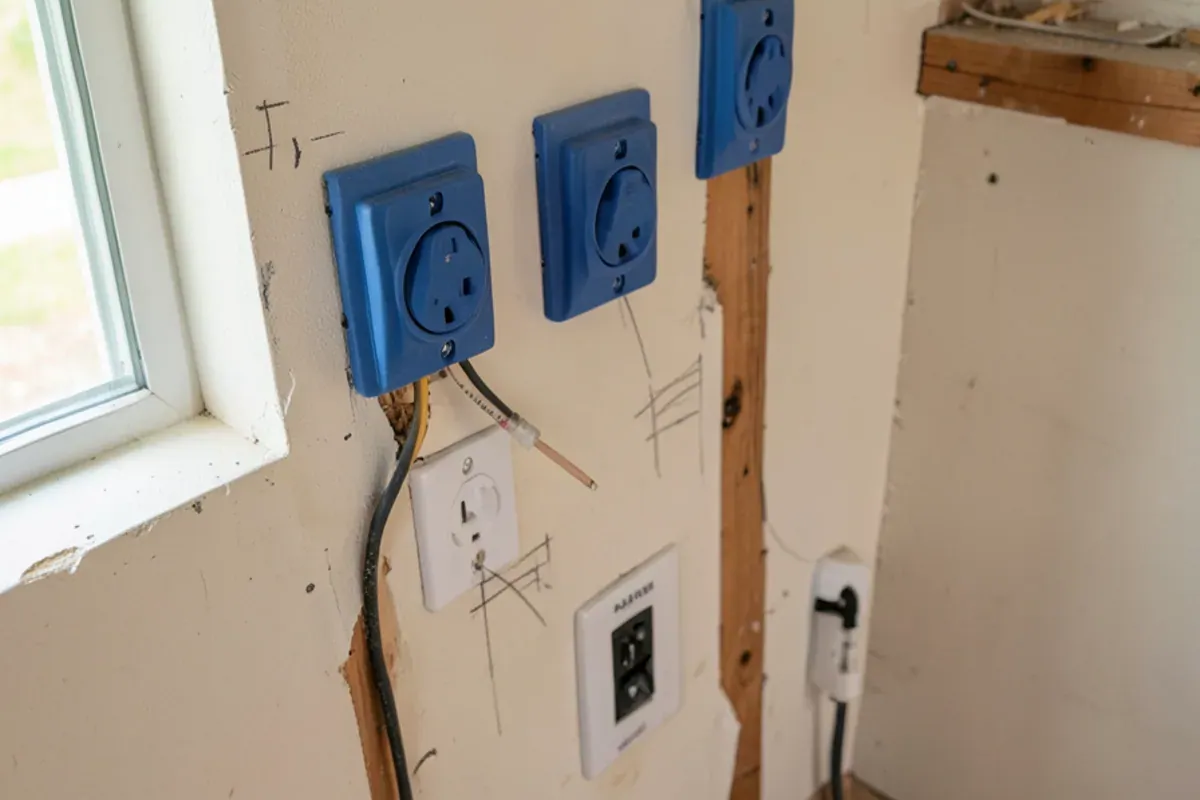
The Florida Building Code's administrative chapter requires a permit before anyone constructs, alters, repairs or demolishes a building, or installs, alters or replaces electrical, gas, mechanical or plumbing systems regulated by the code. Section 105.2 then lists narrow exemptions, mostly portable equipment and simple leak repairs that do not rearrange pipes or fixtures.
The edition matters too. The Florida Building Commission's current code is the 8th Edition (2023), in effect since December 31, 2023, and the state revises it on a regular cycle. Departments generally review an application under the edition in force on the day it is submitted, so plans drawn a year earlier may need updating if a new edition takes effect in between.
| Kitchen work | Permit typically required? | Who does the regulated work |
|---|---|---|
| New cabinets and tops in the same layout, no trade changes | Varies; some departments treat it as minor work, others permit it once fixtures are disconnected and reset | Cabinet installer; a licensed plumber resets fixtures |
| Relocating the sink or dishwasher | Yes, plumbing | Licensed plumber |
| New circuits, moving the range, island outlets | Yes, electrical | Licensed electrician |
| New or moved gas line | Yes, gas or plumbing | Licensed plumbing or gas contractor |
| New ducted range hood through a wall or roof | Usually, mechanical or building | Licensed trades as the department directs |
| Removing or opening a wall | Yes, building | Licensed general contractor, often with an engineer |
The City of Sarasota's published guidelines, last revised in December 2020, add a local exemption for repairs valued under $1,000 that involve no structural or trade work. A kitchen remodel will exceed that, but it shows how narrowly the exemptions are written.
Who Pulls the Permit: You or a Licensed Contractor?
Florida's contractor licensing law, Chapter 489 of the Florida Statutes, administered through the Department of Business and Professional Regulation, generally requires a licensed contractor for permitted construction work. Section 489.103(7) carves out an owner-builder exemption with firm conditions.
- The house must be your own one- or two-family residence, built or improved for your own use rather than for sale or lease.
- You must personally supervise all work not done by licensed contractors, and you cannot hand that supervision to an unlicensed person.
- You sign the permit application yourself, plus a disclosure statement provided by the building department.
- If you sell or lease the property within one year after the work is completed, the law presumes you did the work for sale or lease, which breaks the exemption.
In practice, most kitchen remodels that move plumbing or wiring run under a licensed general contractor, or under trade permits pulled separately by a licensed plumber and electrician. Taking on the owner-builder role also means taking on responsibility for inspections, code compliance and anyone you hire.
There is also a minor-work exemption in section 489.103(9) for casual or inconsequential jobs where the total contract price for labor and materials is under $2,500. It does not apply when the job is part of a larger project, and splitting a project into small contracts to stay under the figure is expressly ruled out. A kitchen remodel cannot be broken into pieces to avoid hiring licensed trades.
What Changed With Florida's New Small-Project Exemption?
House Bill 803, signed in May 2026 and effective July 1, 2026, created a limited permit exemption for certain work under $7,500 on single-family homes. Sarasota County published Bulletin 2026-0002 explaining who qualifies and how to document the exemption. Local summaries of the law describe exclusions for structural, plumbing, electrical, mechanical and gas work and for properties in flood hazard areas, and they bar splitting a larger job into smaller ones to get under the threshold.
For most kitchen remodels this changes little, since the work rarely stays under that figure and usually involves at least one trade. Ask your building department in writing before relying on it.
What Paperwork Comes With a Permitted Kitchen Remodel?
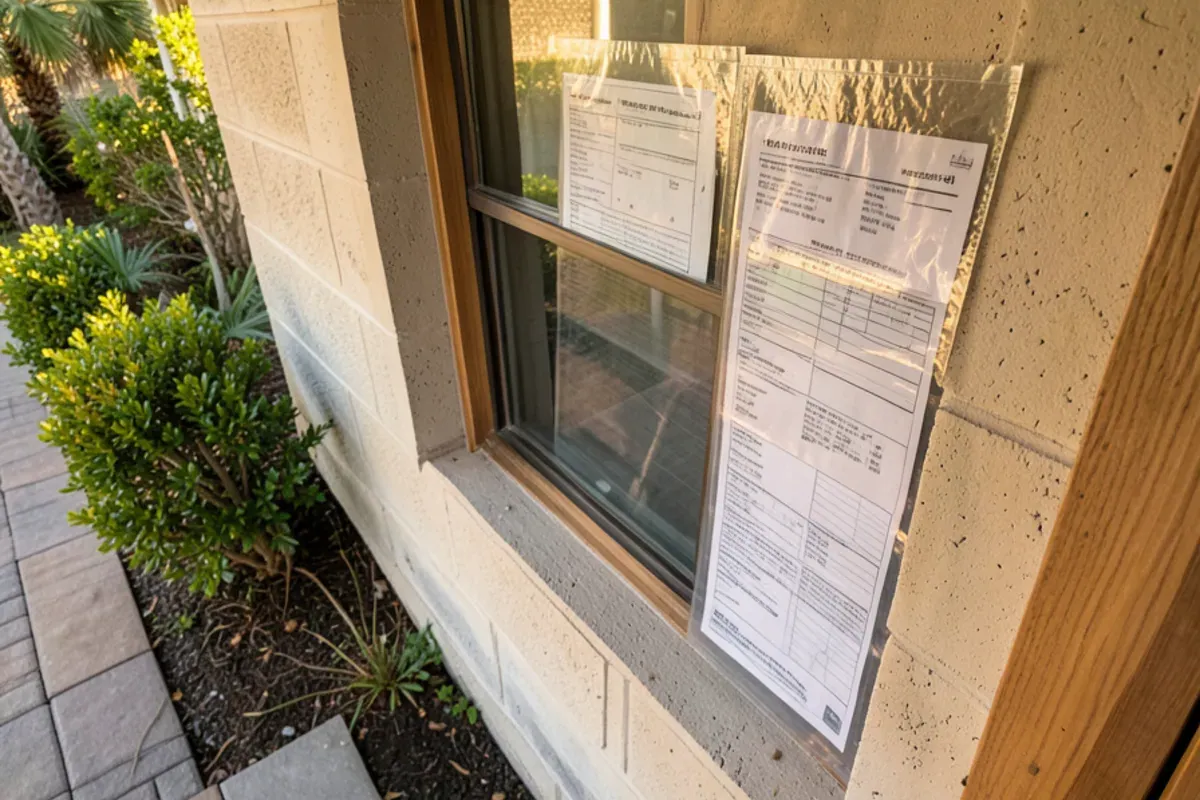
The permit is one document among several. The one owners most often miss is the notice of commencement, a form created by Florida's construction lien law in Chapter 713 of the Florida Statutes. The notice of commencement form used in Sarasota County states that it is not required for contracts under $5,000, and that it must be recorded and posted on the job site before the first inspection.
- Notice of commencement: signed by the owner, notarized and recorded with the Sarasota County Clerk and Comptroller; a copy stays posted at the house.
- Its expiration date: one year from recording unless the form names a different date. The form warns that owner payments made after it expires can be treated as improper and may mean paying twice.
- Permit card and approved plans: kept on site where inspectors can find them at each visit.
- Owner-builder disclosure statement: only if you pulled the permit yourself under section 489.103(7).
- Inspection results: rough-in approvals before walls close, then the final that closes the permit. Keep copies with the house records.
If a remodel will run longer than a year, ask the contractor of record to set a later expiration date on the notice from the start. If a loan pays for the work, the form itself advises talking with your lender or an attorney before recording it.
A Kitchen Remodel Permit Sequence That Fits the Cabinet Build
Measure and draw
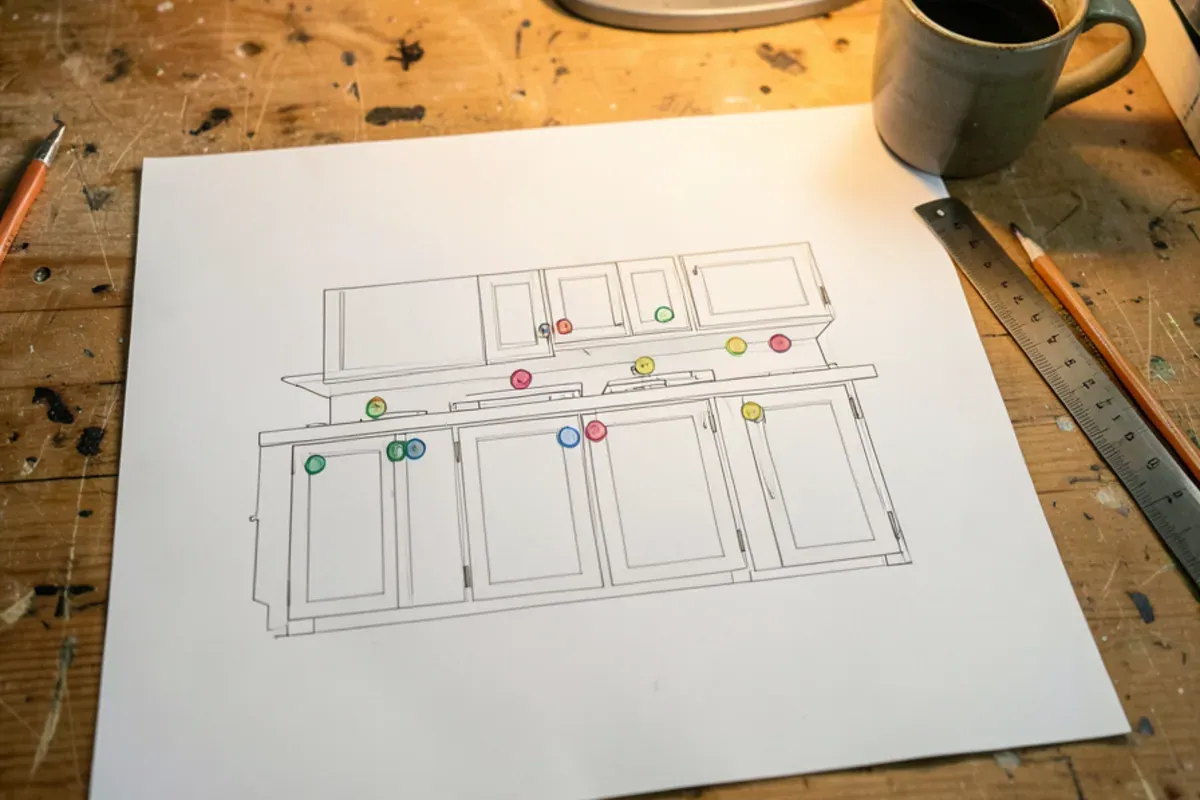
Field measurements, working drawings and a 3D model fix the layout and mark every fixture and outlet.
Trades price and apply
Licensed trades or a general contractor price from the drawings and submit permit applications.
Shop build during review
The Lewis Ave shop builds the cabinets while plans are under review, so neither waits on the other.
Record and post the notice
Once the permit issues, the notice of commencement is recorded and posted at the house, ahead of the first inspection.
Demolition and rough-in
Old cabinets come out, trades rough in plumbing and wiring, and the department inspects before walls close.
Install and finish
We install cabinets, the fabricator templates and sets stone tops, trades set fixtures, and final inspection closes the permit.
Flood-zone homes add one more consideration. Under the FEMA and National Flood Insurance Program substantial-improvement rule, large remodels in a special flood hazard area can trigger elevation requirements, which matters in parts of North Port flooded by Hurricane Ian in 2022 and in low-lying neighborhoods of Sarasota. Our kitchen design and 3D renderings process gives the department and the trades a clear set of drawings to work from.
The bottom line
Permits feel daunting mostly when the scope is fuzzy. Once the drawings show exactly what moves, the building department, the trades and the cabinet shop are all working from the same page. If you are planning a kitchen and want that plan drawn first, call the shop or fill in the contact form.
Sources
- City of Sarasota Building Division — Building Permit Requirement Guidelines: When do I need a Permit? (rev. 12/2020)
- Florida Senate — Florida Statutes § 489.103, Exemptions (2025)
- Florida Senate — CS/CS/HB 803 (2026), Building Permits and Inspections
- Sarasota County 311 Knowledge Base — Permit exemption for work under $7,500 (Bulletin 2026-0002)
- Sarasota County Planning and Development Services — Building
- City of Fort Lauderdale — Permitting Updates: Florida House Bill 803 Quick Guide
- City of North Port / Sarasota County — Notice of Commencement form (Form IPS02, rev. 01/13/15)
- Florida Building Commission — Florida Building Code, 8th Edition (2023), effective date