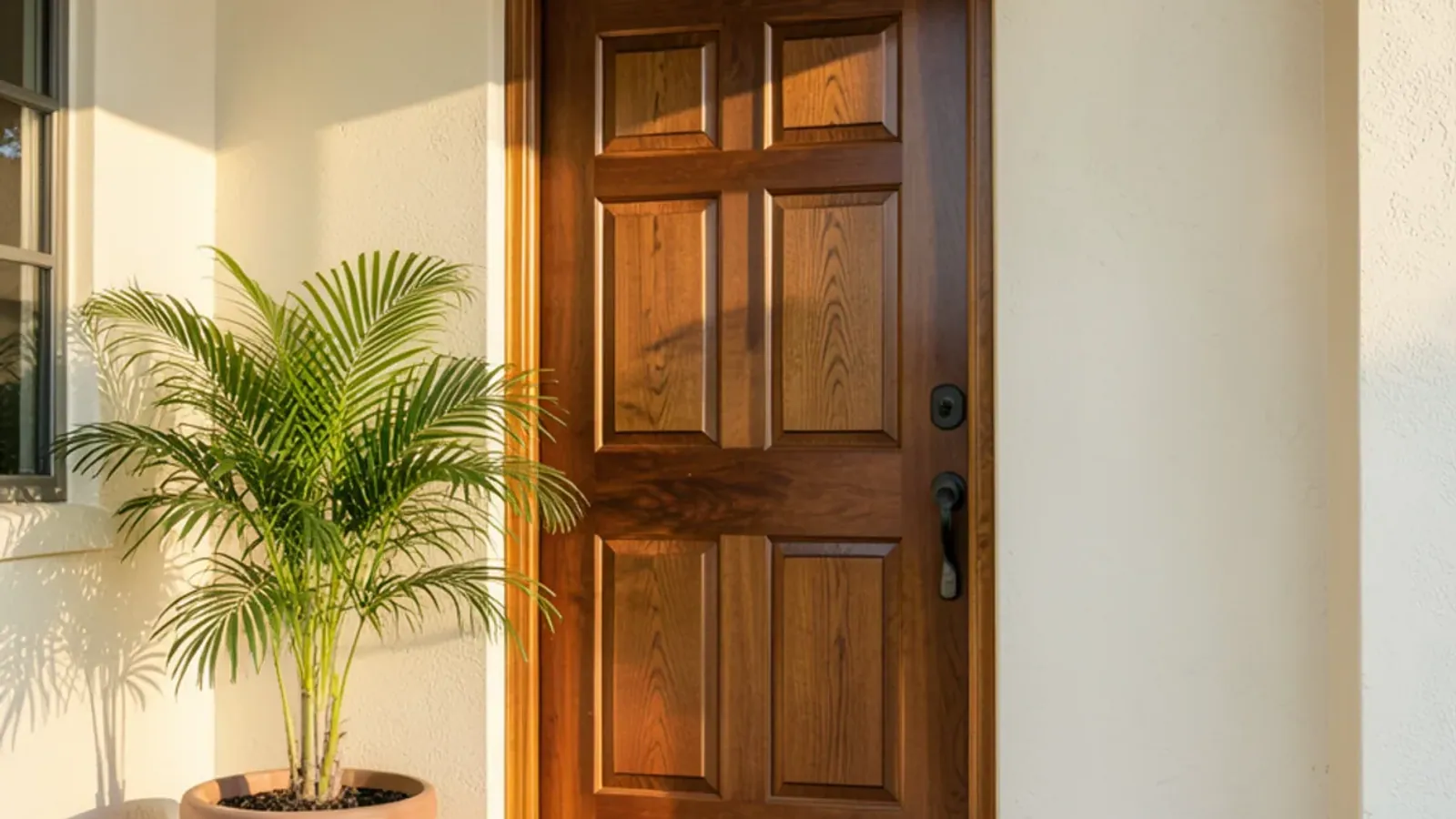
A wood front door in Florida sun stays handsome when it carries a finish with UV inhibitors and gets a light recoat before that finish starts to crack, not after. Ultraviolet light passes through clear coatings and degrades the wood surface underneath, so the film loses its grip and peels even when it still looks shiny from the curb.
The fix is less about finding a miracle product and more about a schedule matched to how much direct sun your door takes. This guide walks through why doors fail, which finishes hold up, and a recoat routine that fits Gulf Coast homes.
Why does Florida sun destroy a clear door finish so fast?
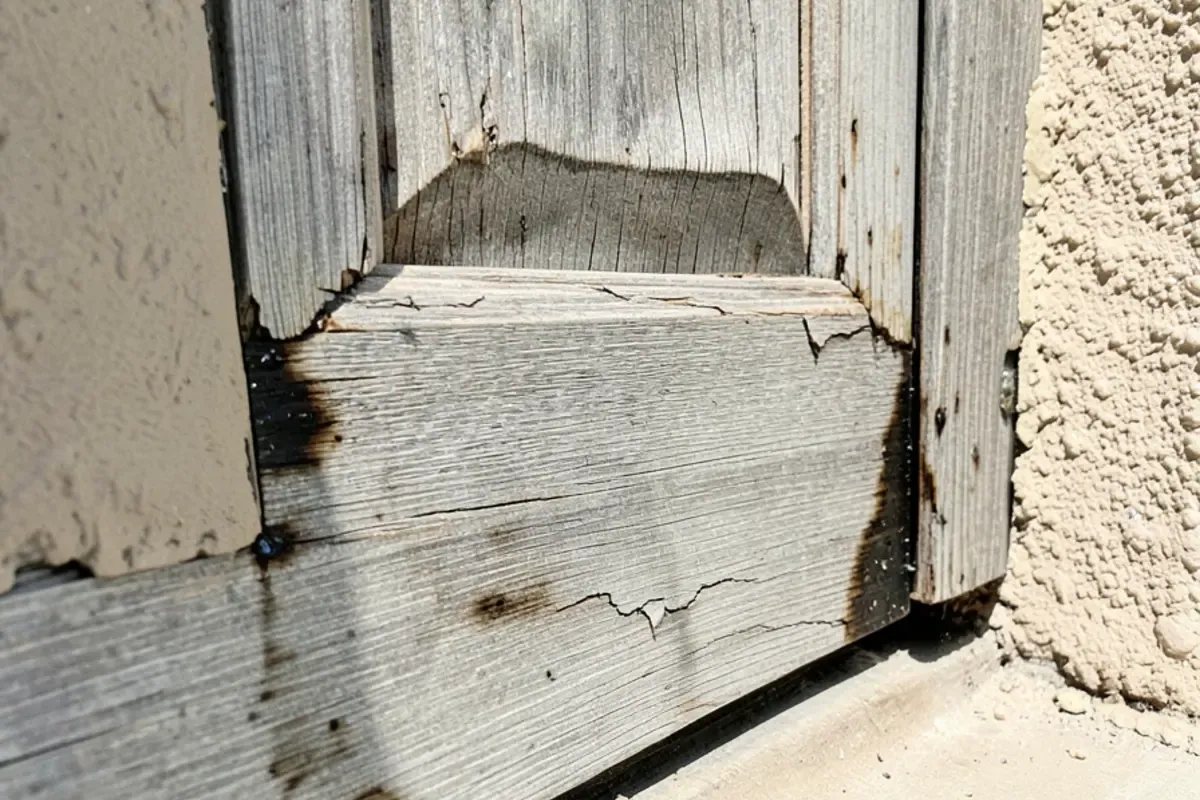
Clear finishes let light through by design, and that is their weakness. The Wood Handbook published by the USDA Forest Products Laboratory explains that UV radiation breaks down lignin at the wood surface. Under a varnish, that damaged layer turns weak and powdery, and the film has nothing sound left to hold. It lifts in flakes, usually first on the lower panels and bottom rail, where sun and splash-back from rain combine.
Once the film opens, water reaches bare wood. Rain soaks in, the wood swells and shrinks through each wet-dry cycle, and dark water stains spread from the cracks. Cassens and Feist, writing for the same lab about exterior wood across the humid South, add heat and mildew to that list, both close to constant through a Gulf Coast summer.
Finish options for a sun-facing entry
Every exterior finish trades looks against protection. Pigment blocks UV far better than any clear additive, a point the Forest Products Laboratory makes about clear exterior finishes in general, so the more of the grain you want to see, the more often you will be recoating.
- Spar varnish or spar urethane with UV blockers. The classic clear look with a flexible film. Minwax's technical page for its Helmsman spar urethane recommends three coats on exterior surfaces and a yearly check, and states plainly that no clear exterior finish protects wood permanently.
- Marine-grade varnish built up in many thin coats. Deeper gloss and more UV absorber per square inch. Slower to apply, and it rewards the owner who keeps up with maintenance.
- Penetrating oil-based or semi-transparent stain. Soaks in rather than forming a film, so it weathers by fading instead of peeling, and renews with a clean and a fresh coat. Shows less depth and gloss.
- Paint. The most UV protection and the longest interval between visits, at the cost of hiding the wood altogether.
On a mahogany or oak door that someone chose for its grain, we usually build a UV-inhibiting spar finish and plan the upkeep around it rather than giving up the look.
Setting a recoat schedule by exposure
The calendar matters less than what the sun does to your particular entry. Use the sheen as the signal: when the lower half looks dull or chalky next to the top, it is time for a scuff and a fresh coat, before cracks appear.
| Exposure | Inspect | Typical action |
|---|---|---|
| West or south face, no overhang, afternoon sun | Every spring and fall | Scuff-sand and recoat as soon as the lower panels dull |
| Partial sun under a modest overhang | Each spring | Light recoat when sheen fades unevenly |
| Deep porch, north face or full shade | Each spring | Clean and inspect; recoat less often |
| Any exposure with cracks, peeling or gray wood | Now | Strip affected areas and refinish before water damage spreads |
A maintenance coat over sound finish is a short job. A door left until the film peels needs stripping, sanding out gray wood and rebuilding every coat, which takes far longer and removes some of the door each time.
Which months suit a door recoat on the Gulf Coast?
Late fall through spring. The National Weather Service office for Tampa Bay dates the region's rainy season from mid-to-late May into mid-October, with the peak from July through early September, when sea breezes build storms most afternoons. A finish needs dry hours to set: Minwax's directions for its Helmsman spar urethane call for at least 6 hours before sanding and recoating, and 24 hours after the last coat before normal use. A single afternoon downpour can undo that on an exposed entry.
Think of the year as two inspections and one working window. Look the door over in October, once the storms ease, to see what the summer did; plan any recoat for the drier months that follow; then check it again in spring before the heat returns. Within a day, timing still matters. We work a sun-facing door while it sits in shade, since a film brushed onto a hot panel can skin over before it levels, and we start early enough that the last coat is dry before evening dew settles on it.
Can a door be refinished while it stays on its hinges?
Usually, yes. Our door refinishing work is done on site, with the door masked, prepped and finished in place. The exception is the top and bottom edges, which take the most moisture and are invisible from either side; sealing them properly can mean lifting the door briefly.
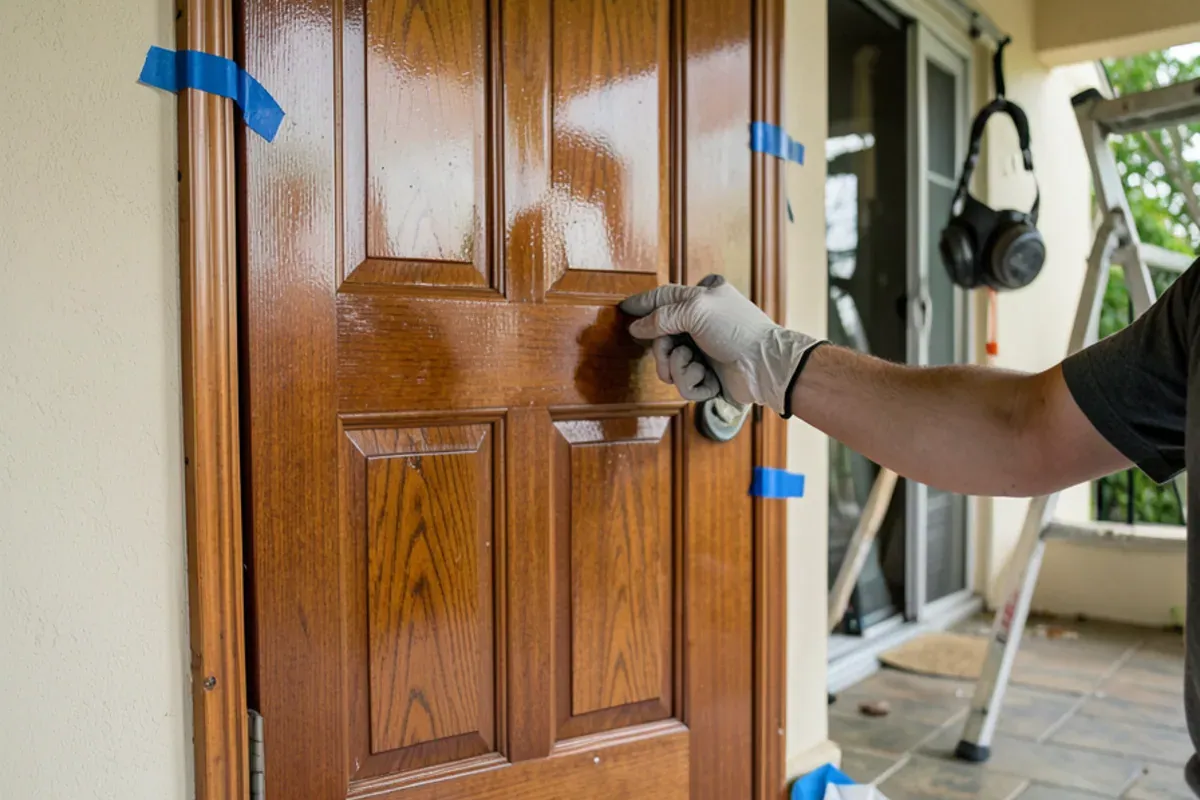
We refinish entry doors for homes in Osprey, where bayfront houses on Little Sarasota Bay face open water and long afternoon light, and in Venice, from the 1920s island district out to newer gated golf communities, where entries on open lots catch the full western sun.
What an on-site door refinishing visit involves
A maintenance coat and a full refinish follow the same order; the difference is how much old finish comes off in the third step.
Protect the entry
Drop cloths go over the threshold and porch floor, and hinges, lockset, glass and weatherstrip are masked or removed.
Wash and dry
Mild soap and water clear salt film, pollen and cobwebs from panels and moldings, and the door dries fully before any abrasive touches it.
Scuff or strip
Sound finish gets a light scuff with very fine 220-grit paper, the grit Minwax specifies between coats. Cracked or peeling areas are stripped and sanded back past the gray wood.
Seal the edges
Top and bottom edges and any open joints get finish too. The Helmsman directions call for enough on bare wood to seal edges, joints and end grain, the paths water uses to get in.
Build thin coats
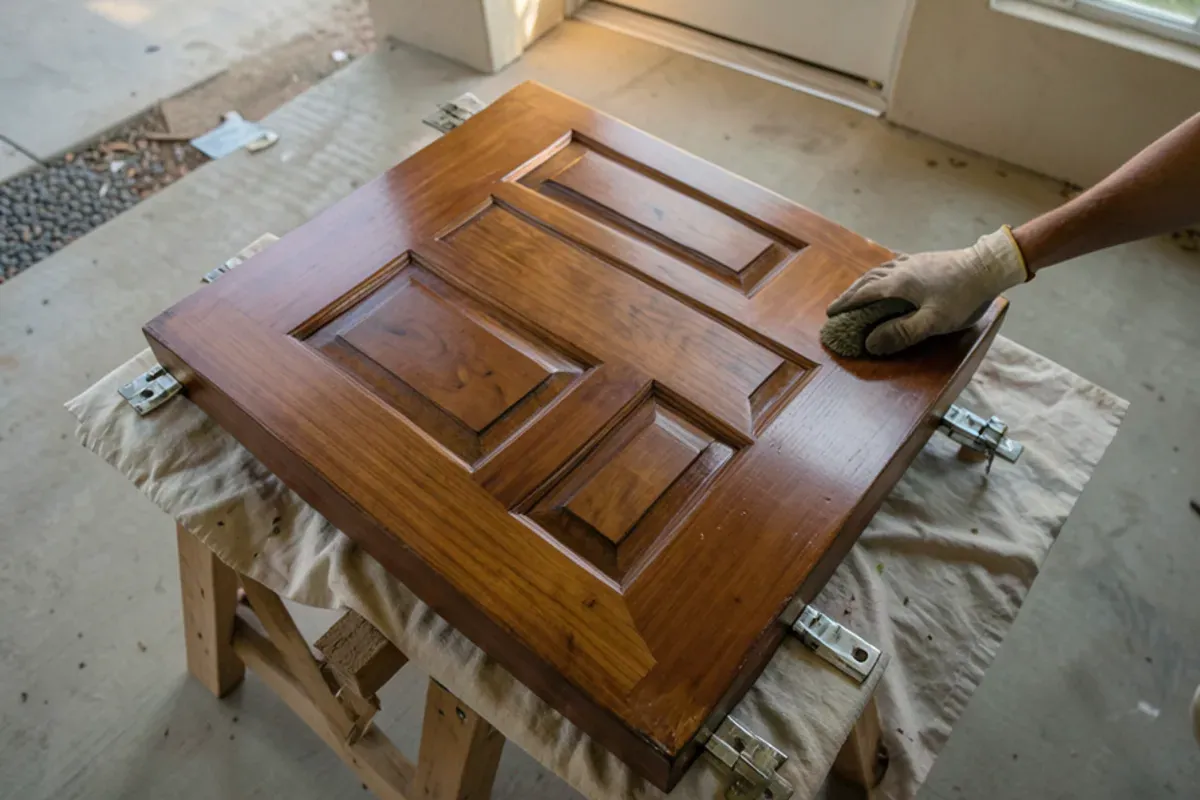
Each coat is brushed thin and left to dry before a light sanding and the next coat. Exterior work gets three coats, the count Minwax recommends outdoors.
Unmask and hand back
Hardware goes back on once the finish is hard enough to handle, and we tell you when the door can return to everyday use.
Habits that extend a door finish
- Wash the door gently with mild soap and water a few times a year to clear salt film, pollen and grit that hold moisture.
- Keep sprinklers aimed away from the entry; daily overspray on the bottom rail shortens finish life.
- Check the weatherstrip and threshold so wind-driven rain cannot sit against the bottom edge.
- Ask before adding a glass storm door over a dark-stained door, since trapped heat can bake the finish behind it.
- Touch up nicks and scratches promptly so water never reaches bare wood.
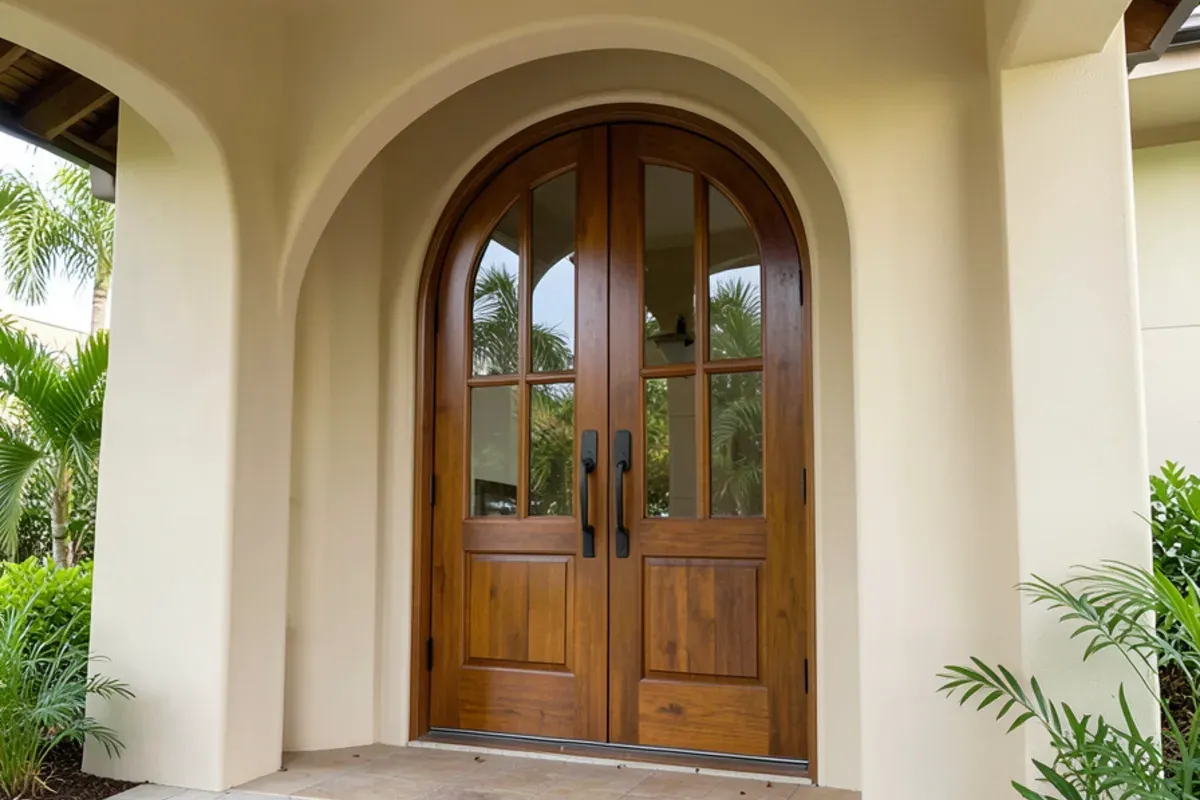
If the door itself is beyond saving, replacement is a different job: an exterior door generally needs a permit and a unit that meets Florida Building Code wind-load requirements, installed by a licensed contractor. For finish work on other wood pieces around the house, see our furniture refinishing and restoration services.
The bottom line
A wood entry door can handle Gulf Coast sun for decades when it gets a UV-inhibiting finish, sealed edges and a recoat before the film fails. Watch the lower panels, keep water off the bottom edge, and treat a dull sheen as your reminder. If your door is already peeling or graying, call the shop to set up an on-site look and a plan for refinishing it.
Sources
- USDA Forest Products Laboratory — Wood Handbook: Wood as an Engineering Material, FPL-GTR-282 (2021), Chapter 16, Finishing Wood
- USDA Forest Products Laboratory — Exterior Wood in the South: Selection, Applications, and Finishes, FPL-GTR-69 (1991)
- USDA Forest Products Laboratory — Best of Both Worlds: Clear Exterior Finishes (2000)
- Minwax — Indoor/Outdoor Helmsman Spar Urethane product information
- National Weather Service Tampa Bay — Florida Thunderstorm Season