Most gray teak can be restored, because the weathering stops a hair below the surface and the oily heartwood underneath is still sound. To restore teak furniture you clean off the gray fibers and mildew, sand lightly to fresh wood, repair loose joints or rusted fasteners, and then choose whether to oil it, seal it or let it silver again.
That last choice matters more on the Gulf Coast than almost anywhere, because strong sun and steady humidity punish the wrong finish within a season. Here is how we approach a weathered set, and what each finish asks of you afterward.
What is the silver-gray layer on old teak?
It is weathered wood, not rot. The USDA Forest Products Laboratory's Wood Handbook describes weathering as a surface process: sunlight breaks down lignin in the outermost cells, rain rinses the loosened fibers, and what remains turns gray. The erosion it causes is slow, measured over decades rather than seasons, so the wood a few strokes of sandpaper below is usually untouched.
Teak resists this better than most species because its heartwood is dense and naturally oily, but no wood is immune. What does change from set to set is what rides along with the gray:
- Black or green speckles, which are mildew feeding on dirt and old oil in the surface
- Fine surface checks across the grain on seat slats and arms that face the sun
- Raised, fuzzy grain where someone used a pressure washer
- Orange or black streaks around screws and bolts that have started to rust
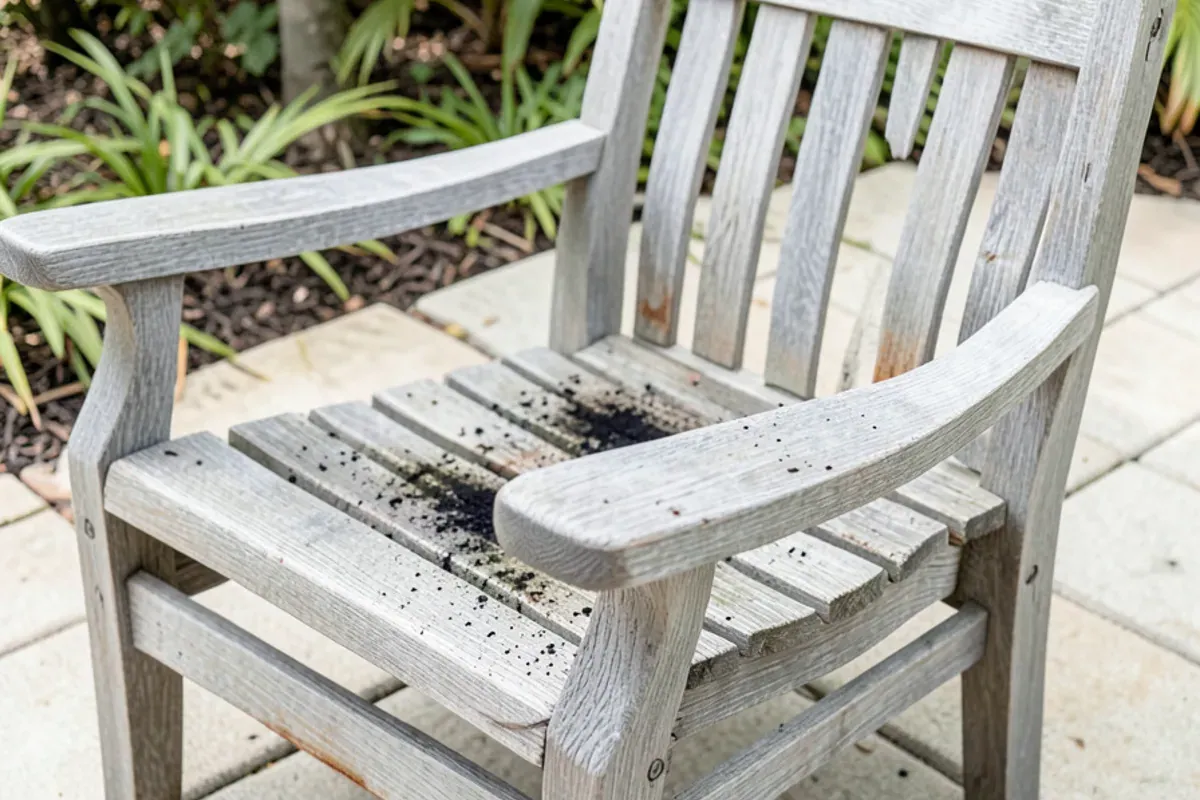
How a weathered set comes back on the bench
Our teak furniture refinishing follows the same order on almost every set, from a single bench to a dining table with eight chairs.
Check the structure first
We rack each chair and table base to find loose tenons, split slats and corroded hardware. Finishing over a wobbly joint just traps the problem.
Clean without blasting
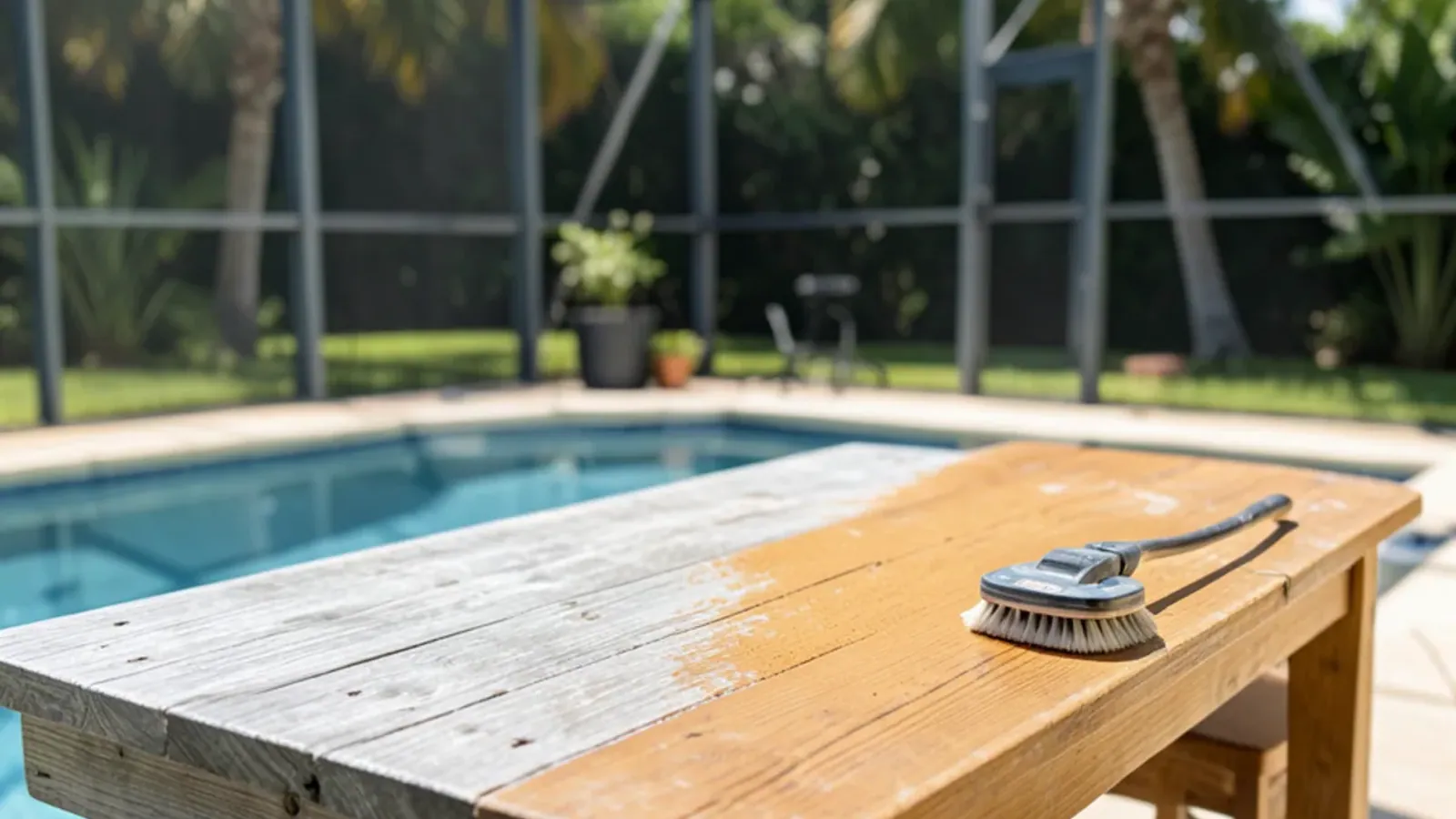
A soft brush and a two-part teak cleaner or a mild detergent wash lift gray fibers and mildew. High-pressure water tears out the softer bands of grain and leaves a corduroy surface.
Sand to fresh wood
Light sanding with the grain removes the last of the gray and the raised fibers. Slats, arms and tabletops get the most attention, since hands and forearms touch them.
Repair and refasten
Joints are cleaned of old glue and wiped with solvent, because teak's natural oil can stop new glue from bonding. Rusted screws come out and stainless steel goes in.
Finish to the plan you choose
Oil, a UV-inhibiting sealer, or nothing at all, depending on how much upkeep you want and where the set will live.
Which brushes, cleaners and screws are safe on teak?
Many of the dark streaks on outdoor teak were put there by metal. The Forest Products Laboratory's note on iron stain lists steel wool, wire brushes and iron tools among the ways traces of iron end up on wood, where they react with extractives and turn blue-black or gray the first time the surface gets wet. A careful owner can do a lot of damage with the wrong scrubber.
- Synthetic abrasive pads and nylon or natural-bristle brushes, never steel wool or a wire brush
- Stainless steel screws and bolts, which the same FPL note calls the best choice for fasteners, particularly screws
- Not shiny electroplated galvanized screws, which carry the thinnest zinc coat, or dull-gray mechanically galvanized ones, whose coating contains iron
- Household bleach, well rinsed, for mildew spots, and oxalic acid for iron streaks, since each does little for the other
- A sealer whose label lists a mildewcide; FPL researchers report that finishes with synthetic mildewcides resist mildew growth better
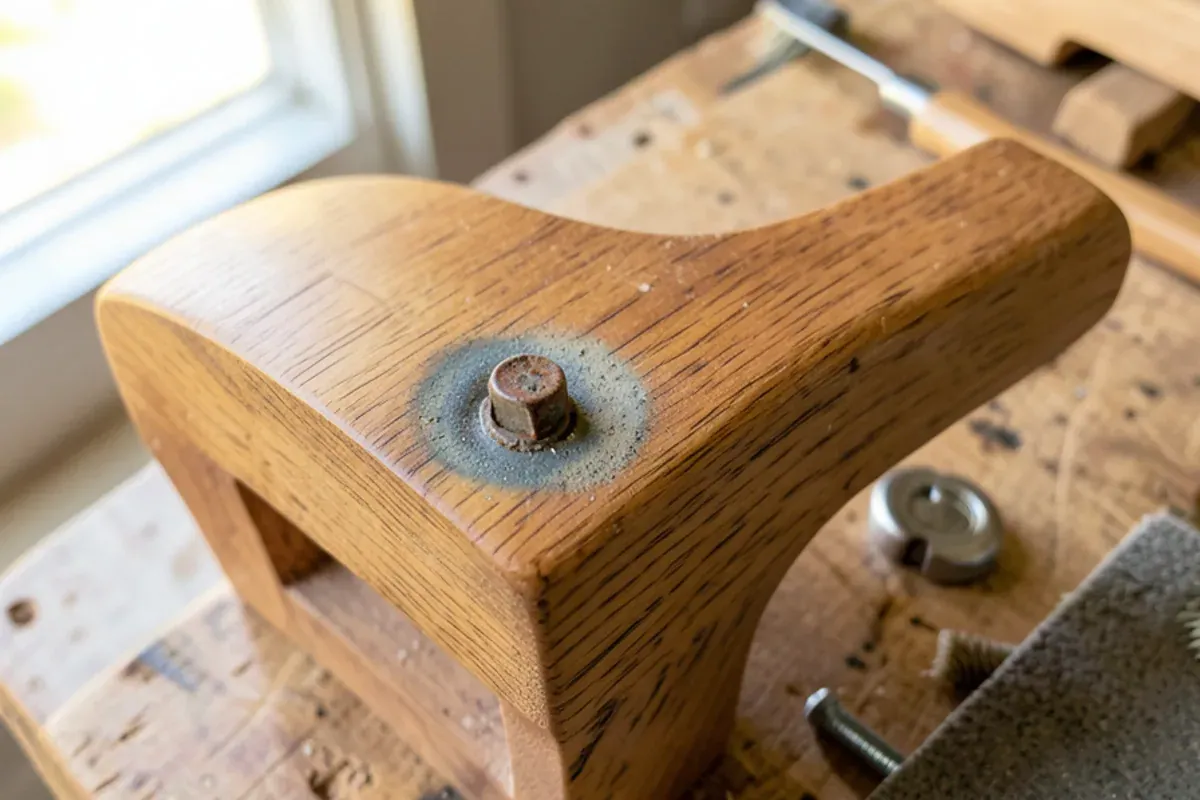
Telling the two marks apart is easy once you have seen both. A dark halo that hugs a screw head or a bolt is iron. A scatter of dots across the open face of a slat is mildew. If a bolt is rusted into its hole, we drill it out, treat the stain, and fit stainless hardware so the streak does not come straight back. Cracked slats and racked frames go through the same bench as our furniture repair work.
Oil, sealer or natural silver: which suits a Florida lanai?
A Forest Products Laboratory article on clear exterior finishes notes that penetrating finishes are easier to renew than film-forming ones, which often need heavy prep or full removal once they fail. That trade-off shapes the three options below.
| Option | Look | Upkeep | Florida drawbacks |
|---|---|---|---|
| Teak oil | Rich and dark at first | Frequent reapplication as it fades | Can stay tacky in humidity and give mildew something to feed on |
| UV-inhibiting teak sealer | Natural honey tone, low sheen | Clean and refresh when color starts to dull | Needs a well-cleaned surface; some products darken the wood slightly |
| No finish (let it silver) | Even driftwood gray | Periodic washing only | Surface checks and mildew spotting still need a cleaning now and then |
| Film varnish | Glossy, deep brown | High: scuff and recoat before it cracks | Peels in strong sun if neglected and must then be stripped |
A Forest Products Laboratory report on exterior wood in the humid South warns that mildew thrives on finished and unfinished wood alike in warm, damp climates. For most of our customers, a sealer with UV inhibitors is the practical middle ground: it holds color longer than oil and is far easier to renew than varnish.
Island balconies, pool decks and screened lanais
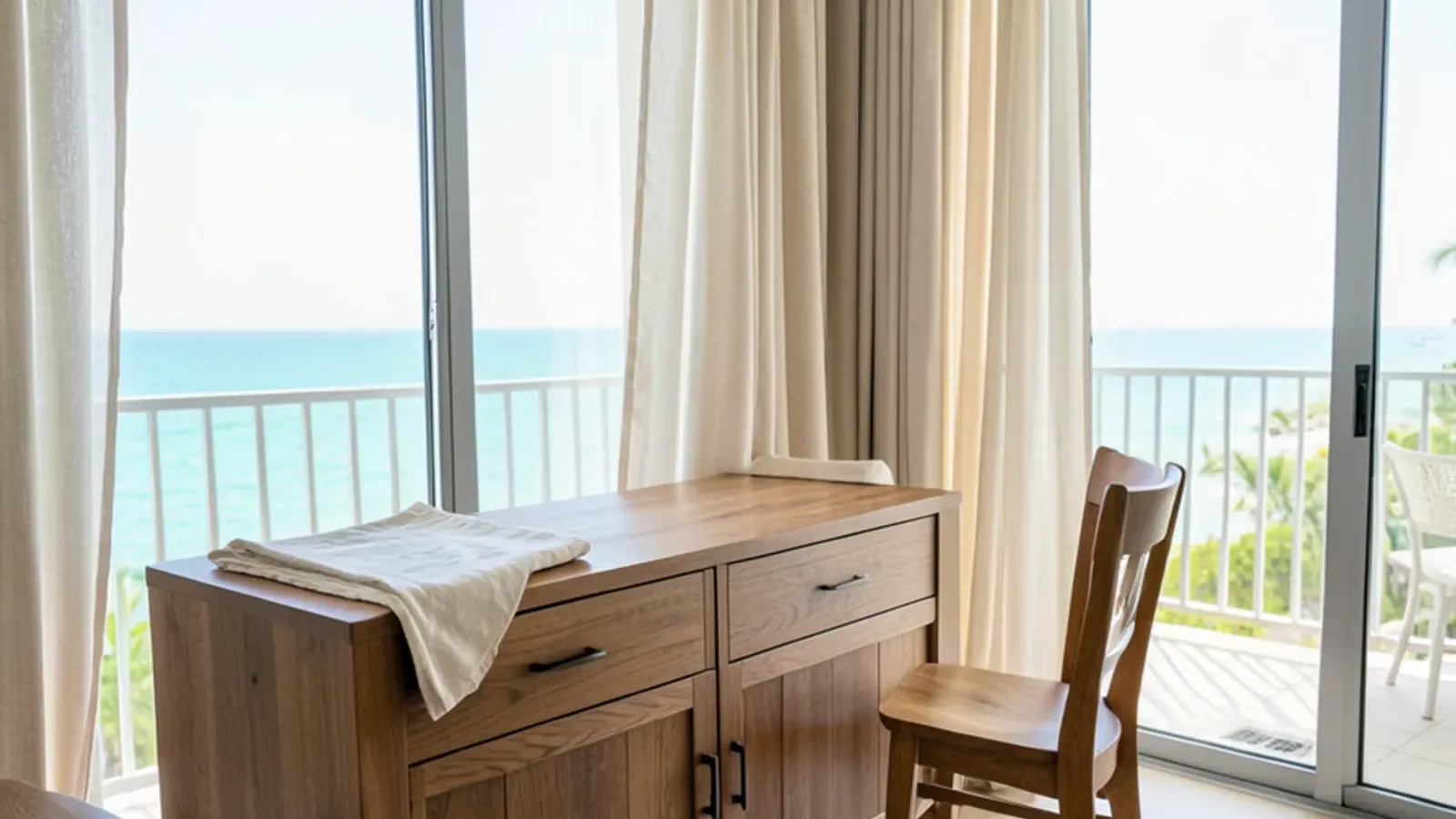
Where the set lives sets the pace of the gray. On a Gulf-front balcony on Longboat Key or Siesta Key, salt spray dries on the surface, wind drives sand into the grain, and afternoon sun hits the furniture full on. The same set under a screened lanai roof a few miles inland holds its finish far longer than it would on an open deck.

Rinse salt off with fresh water after windy weeks, keep pool chemicals from pooling on slats, and use covers that breathe. Plastic sheeting traps humidity against the wood and grows mildew faster than open air does.
What should happen to a teak set when a storm is coming?
Get it inside. NOAA's Office of Response and Restoration advises keeping a list of yard items, patio furniture among them, to bring indoors in case of hurricane-force winds or flooding. A solid teak dining set is heavy and slow to move, so decide before the season starts where each piece will go, whether that is a garage, a storage closet or a living room, and how many hands it takes to carry the table.
Pieces that rode out a storm outdoors, or sat in floodwater, need a little care before they go back in service:
- Rinse salt, sand and debris off every surface with fresh water from a garden hose, not a pressure washer.
- Let the set dry in open, moving air before it goes under any cover or back indoors.
- Rack each chair by hand; frames that were tossed by wind often come back with loosened tenons.
- Look for new splits in slats and for screws that worked loose, and replace any bent or corroded hardware with stainless.
After a storm like Hurricane Milton, which came ashore near Siesta Key in October 2024, outdoor furniture can sit wet for days before anyone reaches it. Teak forgives that better than most woods, but a set that dried slowly under a tarp usually needs a full mildew clean before it is sealed again.
When a set needs more than a clean and seal
Surface work fixes the color. Structural problems need repair before any finish goes on, and some sets have a few:
- Chairs that rock or creak at the leg-to-rail joints
- Slats split along the grain or broken where they meet a rail
- Feet softened by standing in water on a pool deck
- Hardware rusted into its holes and staining the wood around it
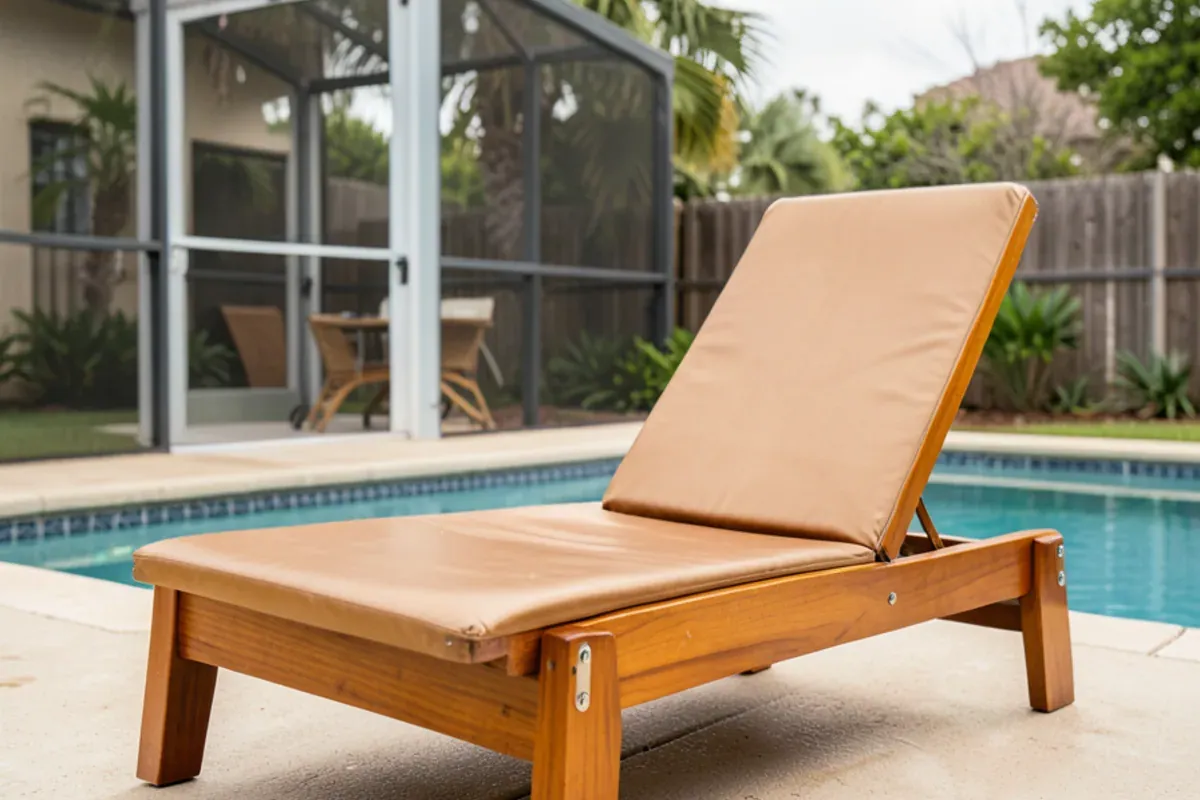
We make replacement slats and parts in the shop and refit them so they match the originals. Teak sets are heavy, so ask about pickup when you call; a fee may apply. Teak work also connects to the shop's marine history, so boat owners with teak brightwork are welcome to ask whether a project fits the schedule. For indoor pieces, see our full furniture refinishing and restoration services.
The bottom line
Weathered teak is one of the more rewarding things we restore, because the wood under the gray is nearly always good. Decide how much upkeep you want, pick the finish that matches, and keep salt and standing water off the slats. If your set needs work, call the shop or send photos, and we will tell you what the restoration involves and whether pickup makes sense.
Sources
- USDA Forest Products Laboratory — Wood Handbook: Wood as an Engineering Material, FPL-GTR-282 (2021)
- USDA Forest Products Laboratory — Exterior Wood in the South: Selection, Applications, and Finishes, FPL-GTR-69 (Cassens and Feist, 1991)
- USDA Forest Products Laboratory — Best of Both Worlds: Clear Exterior Finishes (Daniels et al., 2000)
- USDA Forest Products Laboratory — Iron Stain on Wood, Mark Knaebe, FinishLine (revised 2013)
- USDA Forest Products Laboratory — Mildew and Mildew Control for Wood Surfaces, Bussjaeger et al., Journal of Coatings Technology (1999)
- NOAA Office of Response and Restoration — How to Keep Your Belongings From Becoming Trashed by Hurricanes (2015)