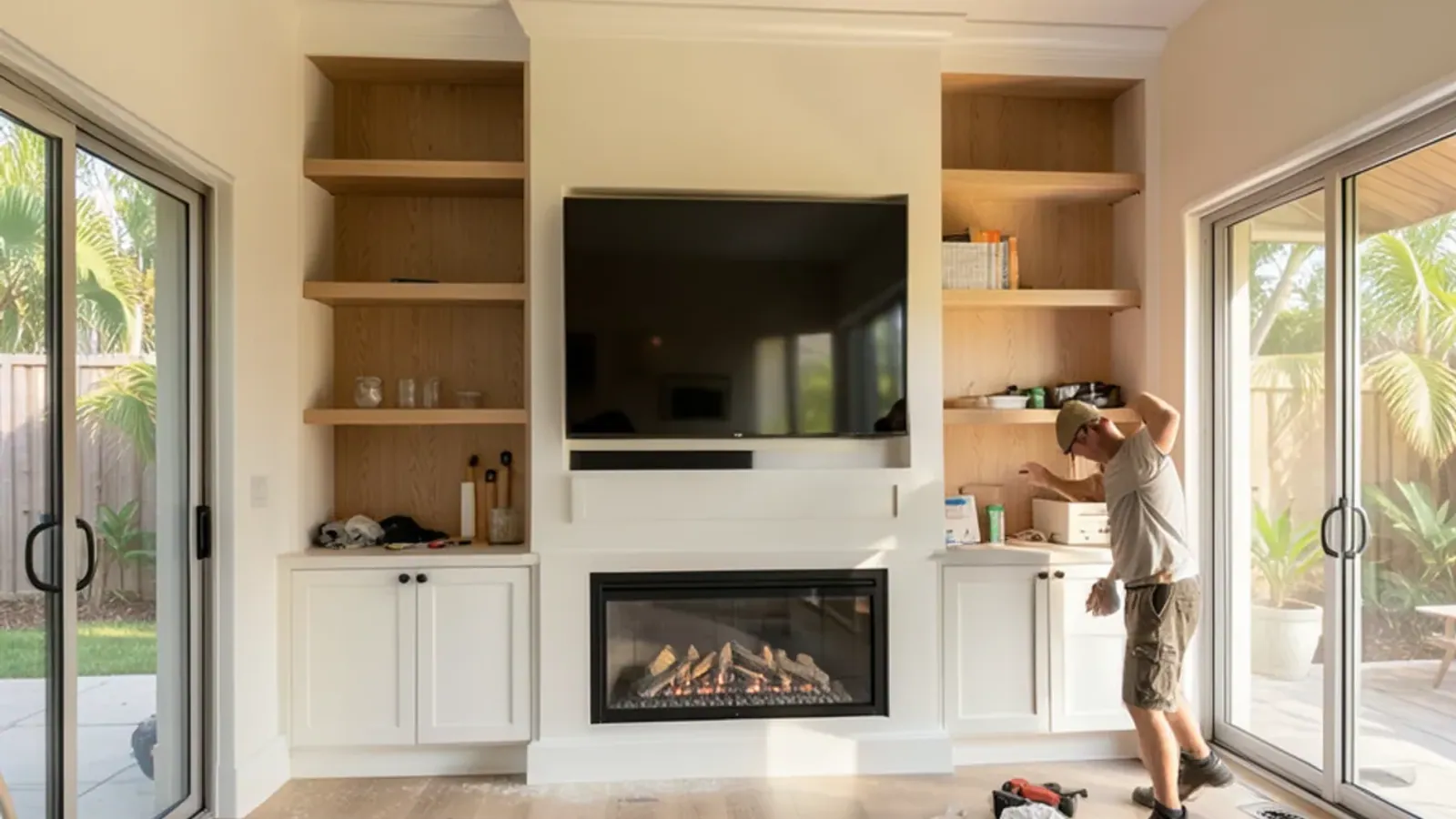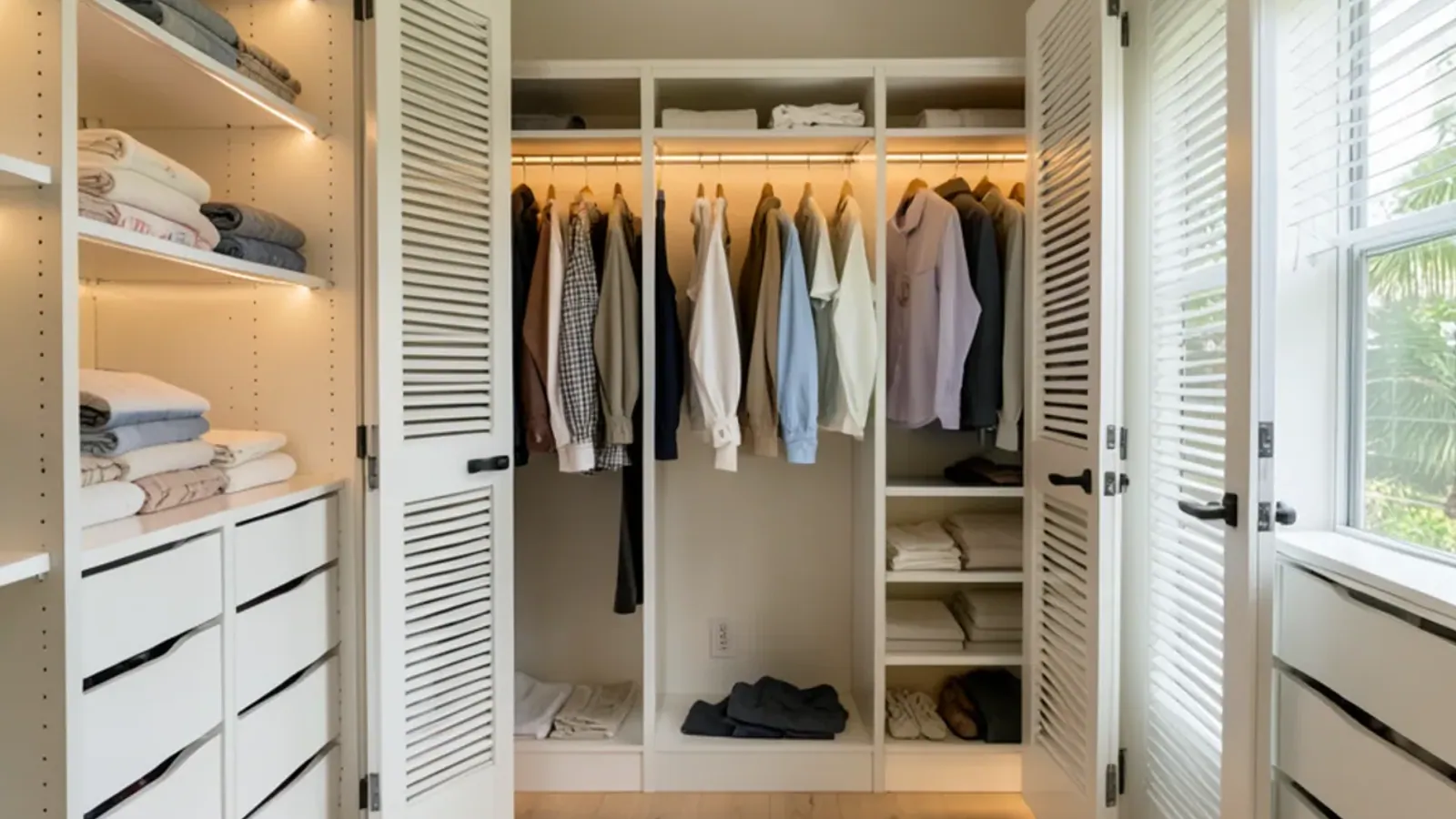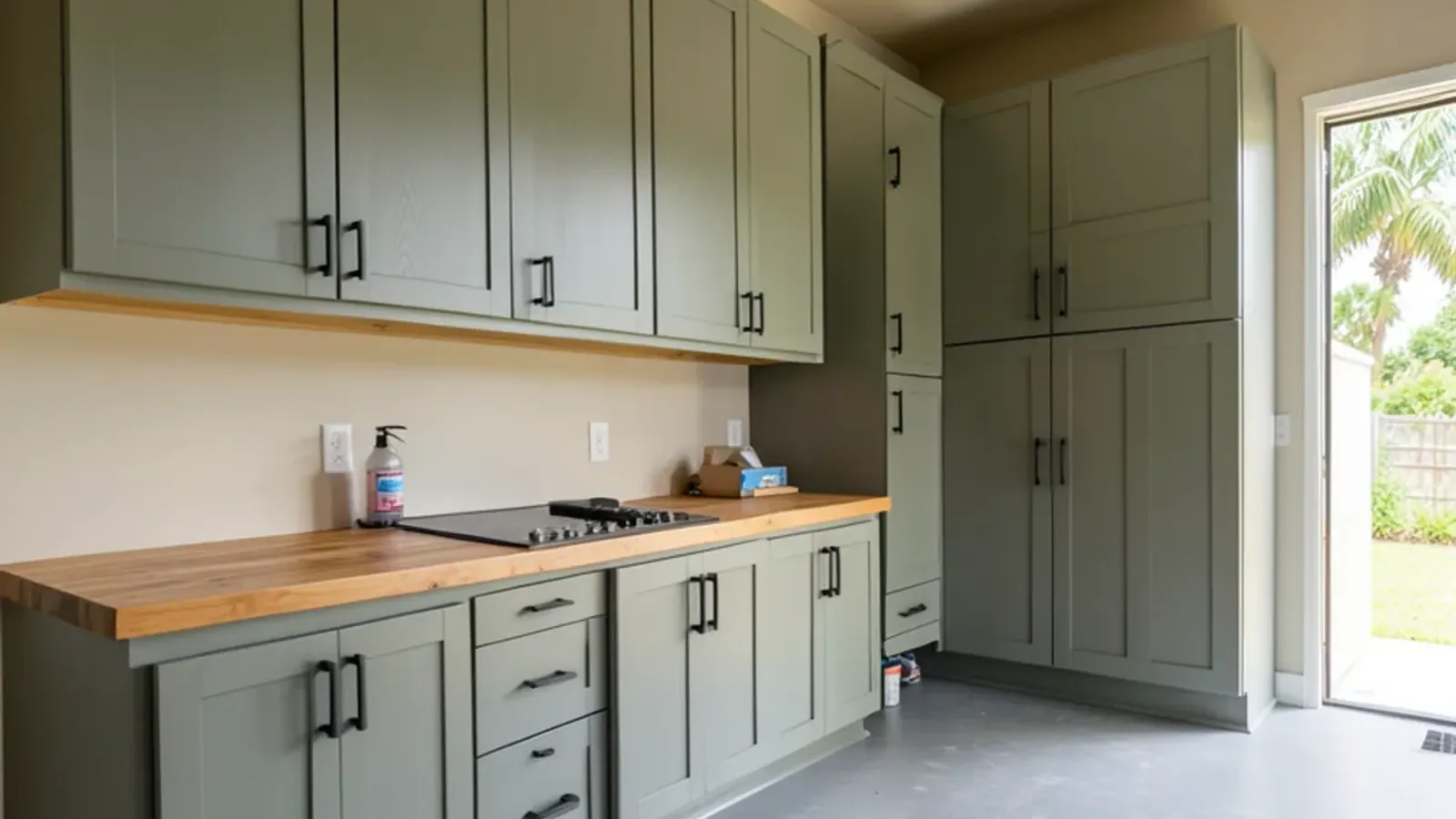
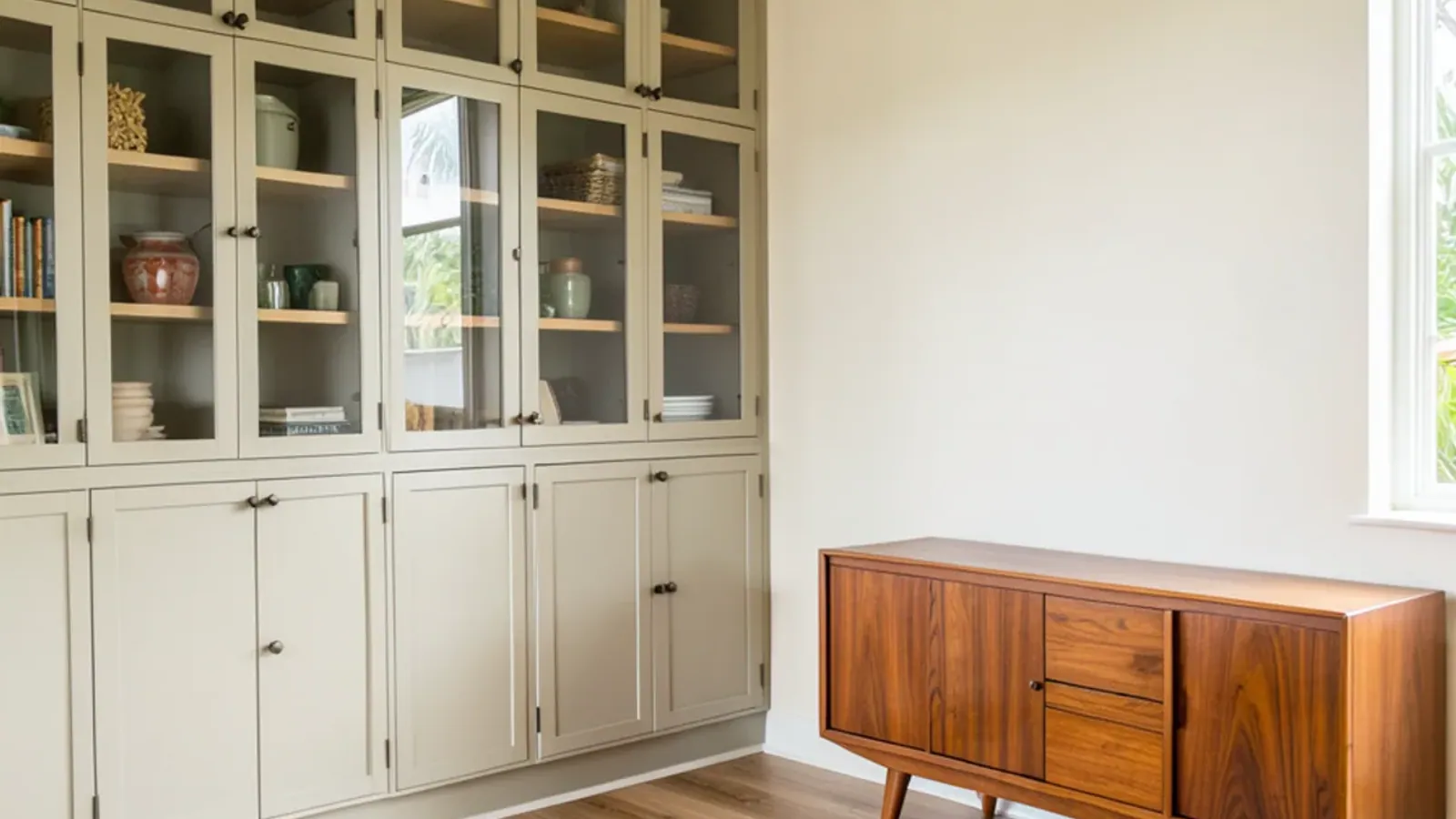
In the built in vs freestanding furniture decision, the short answer is this: choose built-ins where a wall is odd, the storage need is permanent and you plan to stay; choose freestanding pieces where you want flexibility or expect to take the furniture with you. Many rooms end up with a mix of both.
We build both kinds of work at our Lewis Ave shop, so we have no reason to push one over the other. What follows is the comparison we walk through with homeowners before drawing anything.
Built-in vs freestanding at a glance
| Factor | Built-in | Freestanding |
|---|---|---|
| Fit | Scribed to walls, ceilings and floors; fills alcoves, slopes and corners | Standard depths and heights; gaps at walls and above |
| Storage per square foot | High; runs floor to ceiling and wall to wall | Lower; tops and sides go unused |
| Moving | Stays with the house | Comes with you |
| Rearranging | Fixed once installed | Can move to another room or wall |
| Tip-over risk | Fastened to the structure as part of the install | Tall or heavy pieces should be anchored to the wall |
| Trades involved | May need a licensed electrician for lighting or outlets | Usually none |
| What sets cost | Wall length, height, doors and drawers, finish, install time | Size, wood, joinery, finish; no install labor |
Neither column is cheaper by default. A tall, wall-length library unit uses a lot of material and site time, while a single solid walnut sideboard can take more shop hours than several painted cabinets. The comparison is about fit and permanence first.
When does a built-in pay off?
Built-ins earn their keep where a freestanding piece would leave wasted space or look like it wandered in from another house. Typical cases:
- Alcoves and recesses beside a fireplace, under stairs or between windows.
- Rooms with sloped or unusually tall ceilings, where standard bookcases stop well short of the top.
- Home offices that need a desk, file drawers and shelving to line up around cables and outlets.
- Walls where the storage need will not change: a media wall, a library, a mudroom bench.
- Window seats with drawers below, which have no real freestanding equivalent.
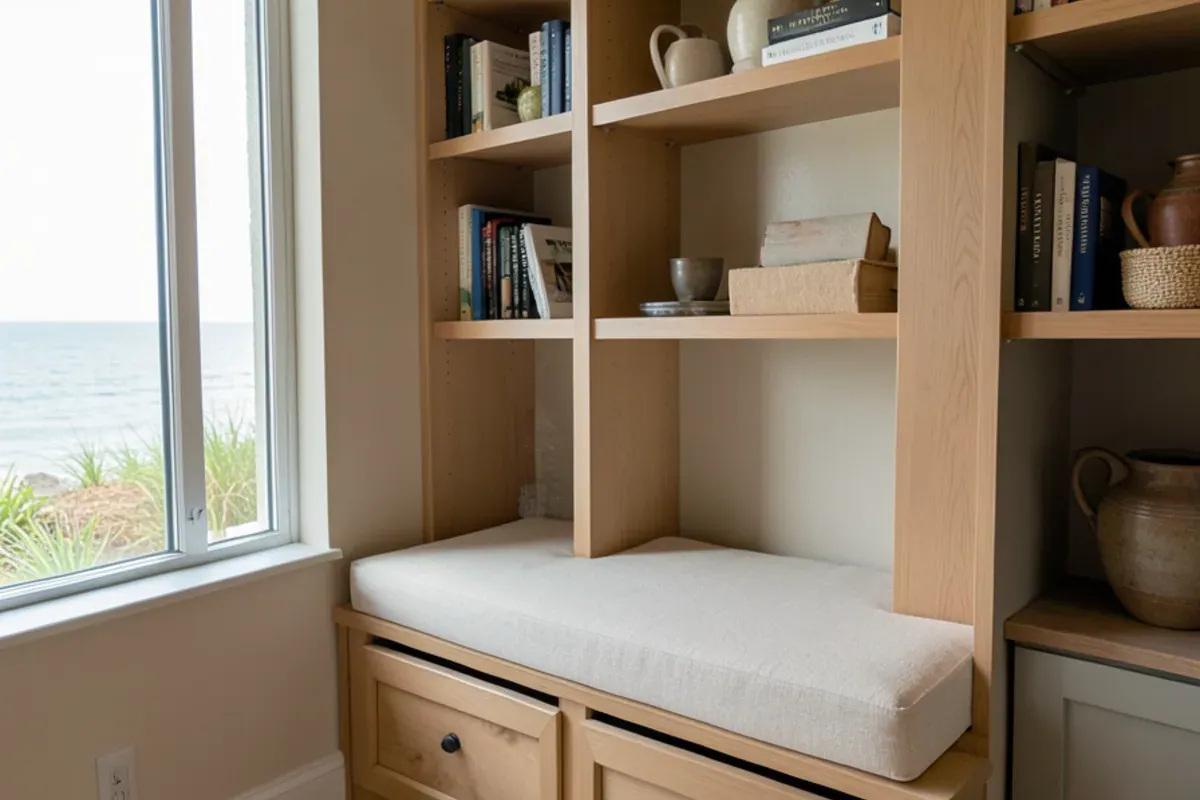
Built-ins also tidy up rooms visually. A run of matched doors reads as part of the architecture, and that calm is hard to achieve with a collection of separate cases. If you are curious about the room types we cover, our built-in bookcases and libraries and home office cabinetry pages show two of the most common.
When is a freestanding piece the smarter choice?
Freestanding furniture wins when circumstances may change. If you might sell within a few years, a fine sideboard or bookcase moves with you while a built-in becomes the next owner's asset. Seasonal residents furnishing a condo they may later trade up from often prefer pieces they can keep. Rooms that change purpose, such as a nursery that becomes a study, benefit from furniture that can be rearranged.
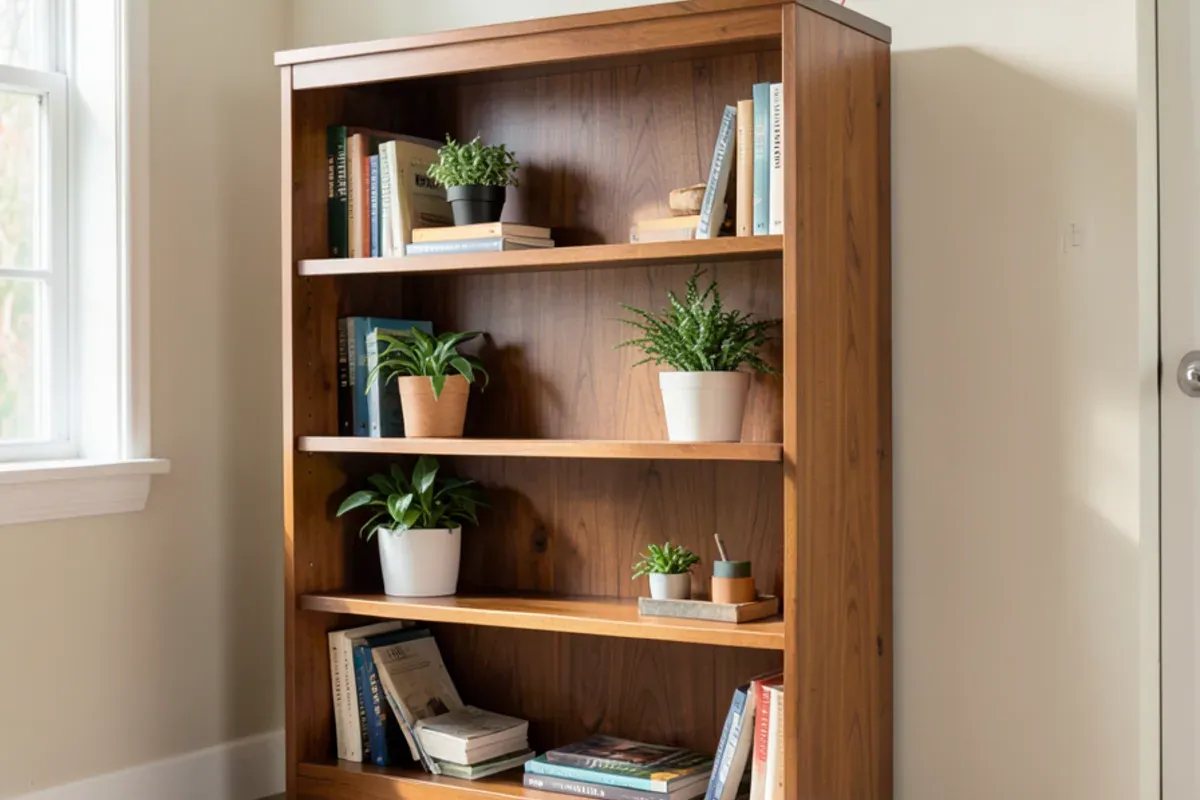
A freestanding piece is also easier to repair or refinish because it can come to a workbench. The trade-off is safety. The U.S. Consumer Product Safety Commission's Anchor It campaign urges anchoring dressers, bookcases and TVs to the wall to prevent tip-overs, especially in homes with young children or visiting grandchildren.
Federal rules now back that up for dressers and chests. Under the CPSC's mandatory standard for clothing storage units (16 CFR part 1261), freestanding units at least 27 inches tall manufactured after September 1, 2023 must pass stability tests without the anti-tip kit installed, including a 60-pound test load hung on an open drawer or door. Built-in units permanently attached to the building fall outside that rule, because the wall does the anchoring. Older freestanding pieces, and heirlooms in particular, still need a strap or bracket into a stud or block.
The middle ground: built-ins made like furniture
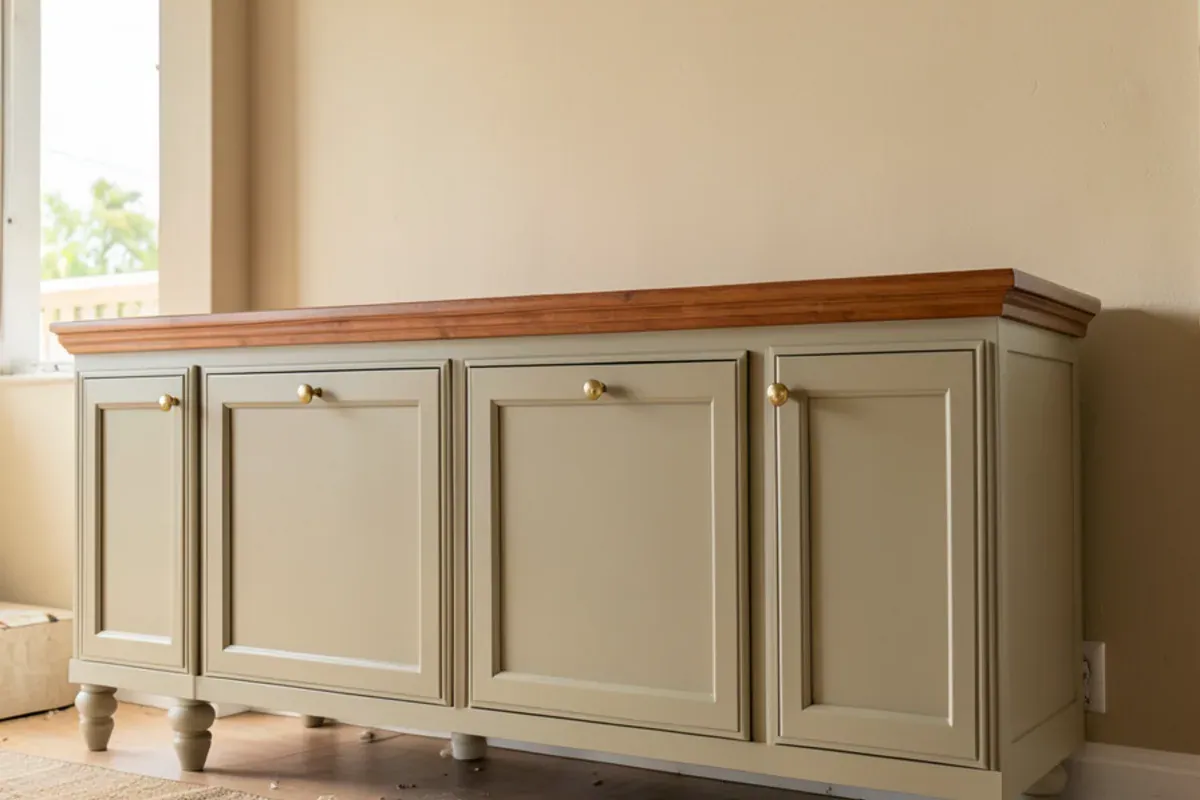
There is a hybrid that suits many Gulf Coast homes. Cabinets are built as separate furniture-grade sections, each with finished sides and its own base, then joined and scribed in place. They look fully built in, yet a section can be unbolted and removed if a room is reconfigured.
Furniture details such as turned feet, a separate cornice or a contrasting top help the hybrid read as a piece of furniture rather than kitchen cabinetry moved into the living room.
How do Florida walls, floors and storms change the choice?
The same built-in behaves differently on a Sarasota exterior wall than on a drywall partition up north. Most of the questions we ask on a site visit are about what the unit will be fastened to and sit on:
- Concrete block exterior walls take masonry anchors rather than stud screws, and a built-in there gets finished backs and a small air gap so the cool, damp face of the block does not mark the cabinet.
- Tile floors are rarely flat over a long run, so a built-in sits on a leveled base that is scribed to the tile, while a freestanding piece simply gets adjustable glides.
- Condo walls and ceilings are often concrete shared with the association, which may need to approve fastening into them before work is scheduled.
- Ground-floor rooms in flood-prone neighborhoods favor pieces that can be lifted or carried upstairs, or built-ins raised on a plinth that can be replaced if water comes in.
Storm season adds one more consideration. A freestanding cabinet can be emptied and moved away from a window or sliding door before a hurricane, and a built-in cannot. That rarely decides the question by itself, but in a room facing the Gulf or the bay we lean toward keeping the window walls clear of tall fixed units.
A room-by-room guide
- Living room: built-in media wall if the TV wall is fixed; a freestanding console if you rearrange often.
- Home office: built-in desk and shelving when cables and outlets set the layout.
- Dining room: a freestanding sideboard is usually the more flexible choice; a built-in buffet suits a deep niche.
- Bedroom: built-in wardrobes where closet space is short; freestanding dressers elsewhere, anchored to the wall.
- Entry and mudroom: built-in bench and lockers, since the need never moves.
- Guest room: freestanding pieces, so the room can change role later.
Gated neighborhoods in Palmer Ranch and newer homes in Lakewood Ranch often have tall ceilings, bonus rooms and long blank walls, which tend to tip the balance toward built-ins. Smaller rooms with several doors and windows often suit freestanding pieces better. The full list of what we build into homes is on the custom built-ins page.
The bottom line
The deciding questions are simple: will the need stay, does the wall have quirks only a scribed unit can fill, and do you plan to stay? Answer those and the choice usually makes itself. Still torn? Give the shop a ring or send a message, and we will happily sketch both versions of the room.
Sources
- U.S. Consumer Product Safety Commission — Anchor It!
- USDA Forest Service, Forest Products Laboratory — Wood Handbook: Wood as an Engineering Material
- Florida Legislature — Chapter 489, Florida Statutes (Contracting)
- U.S. Consumer Product Safety Commission — Clothing Storage Units FAQ (16 CFR part 1261)