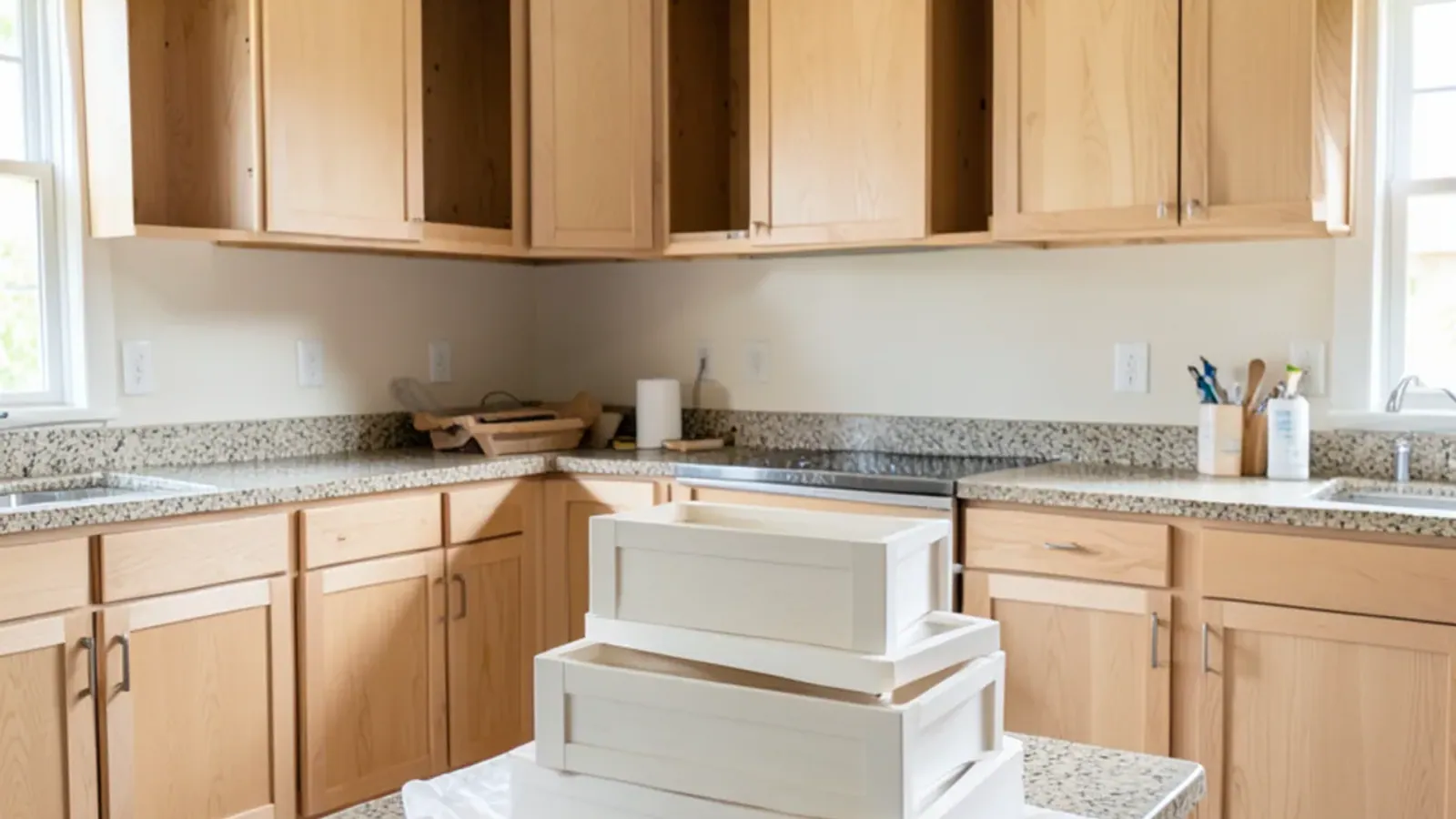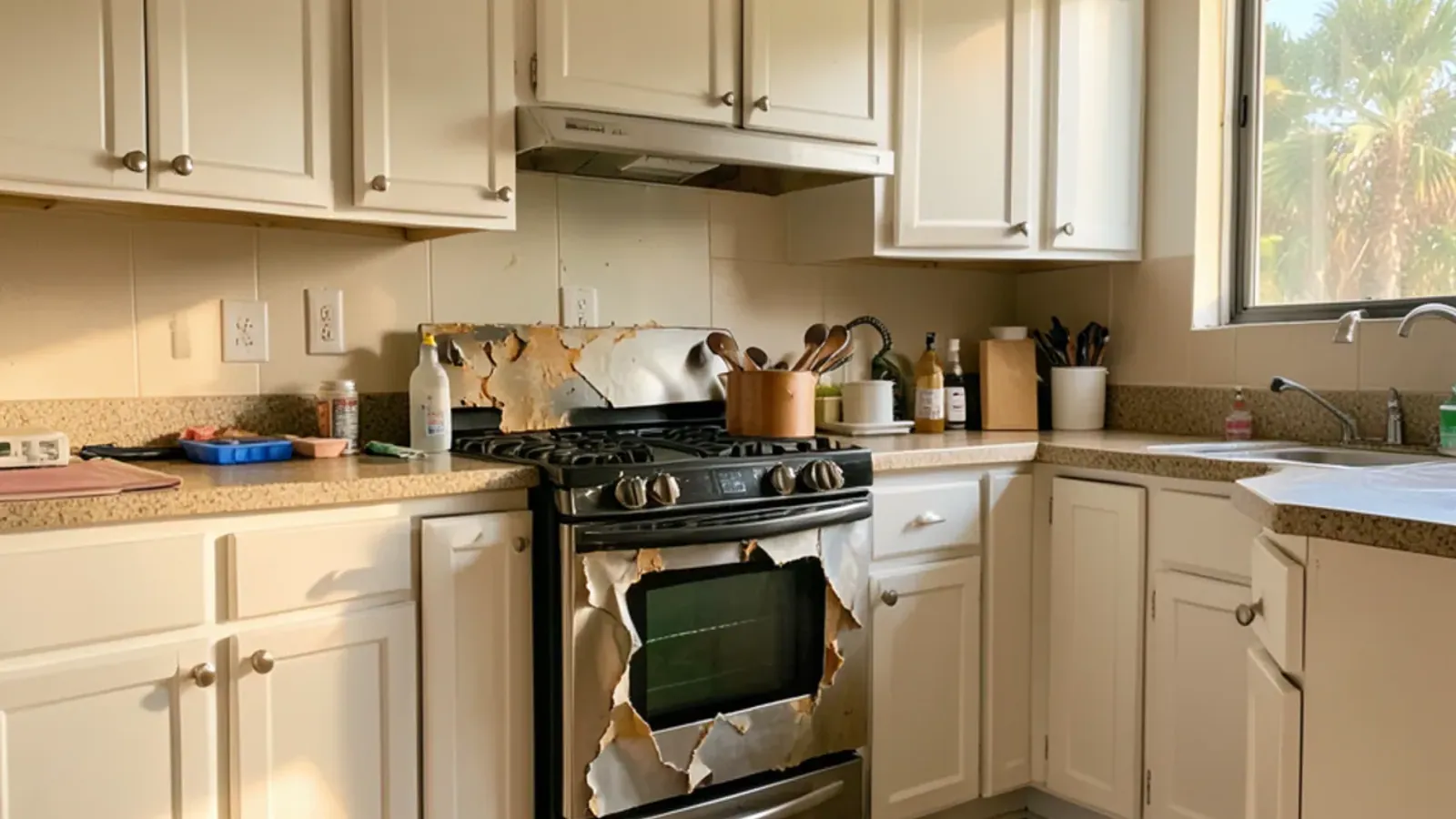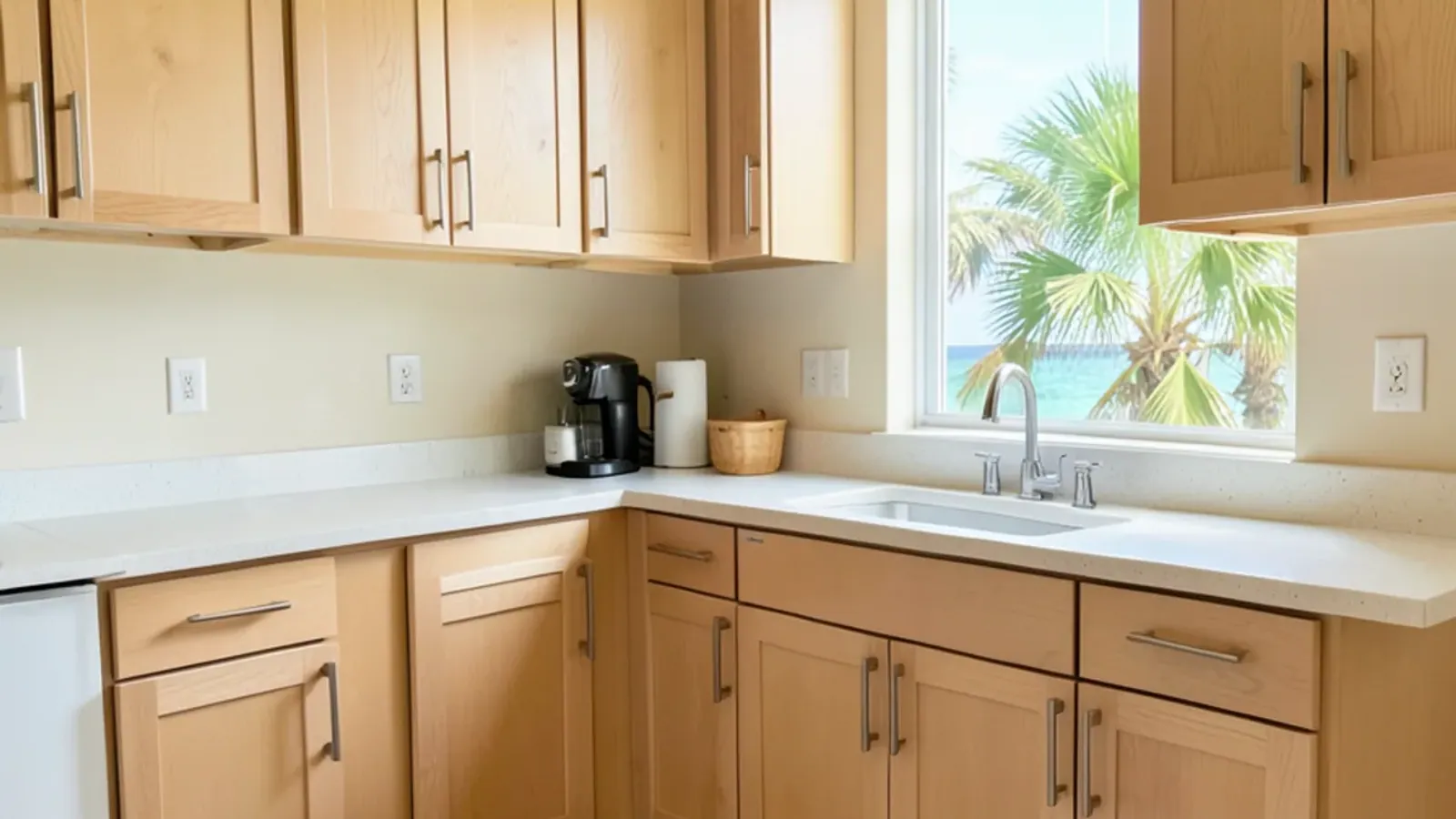
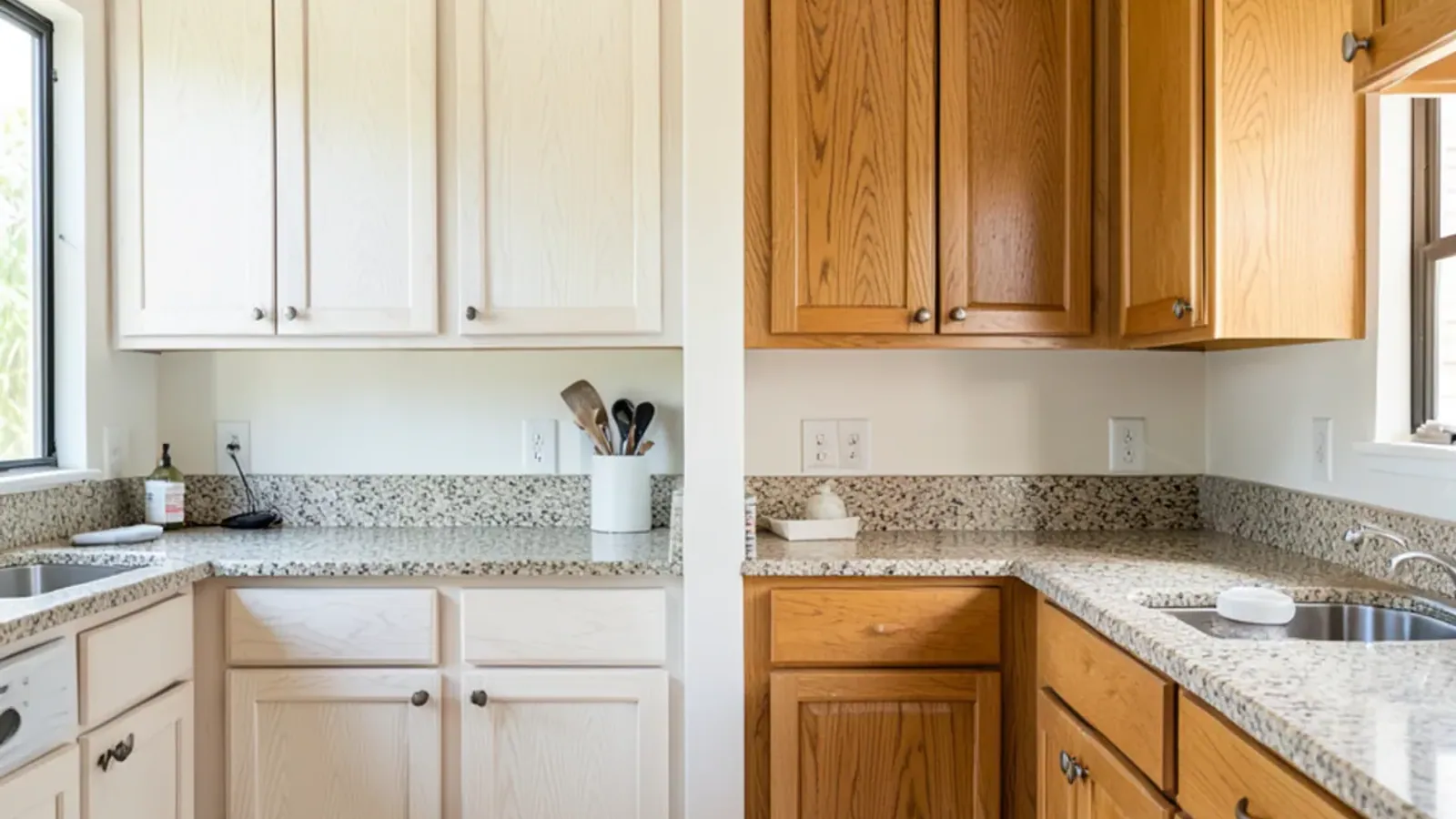
In the cabinet refacing vs replacement decision, the boxes cast the deciding vote. If they are dry, square and built from solid wood or plywood, and the layout already works, refacing gives you a new-looking kitchen while keeping everything that still functions. If water has softened them, or the room needs a different shape, replacement is the honest answer.
We make both calls regularly, sometimes in the same kitchen. Below is the way we work through it on a measure visit, laid out so you can run the same checks yourself before anyone comes to the house.
Three questions that settle the decision
Work through these in order. A clear no on any of the first two usually points to replacement; the third decides how much of the kitchen you can keep.
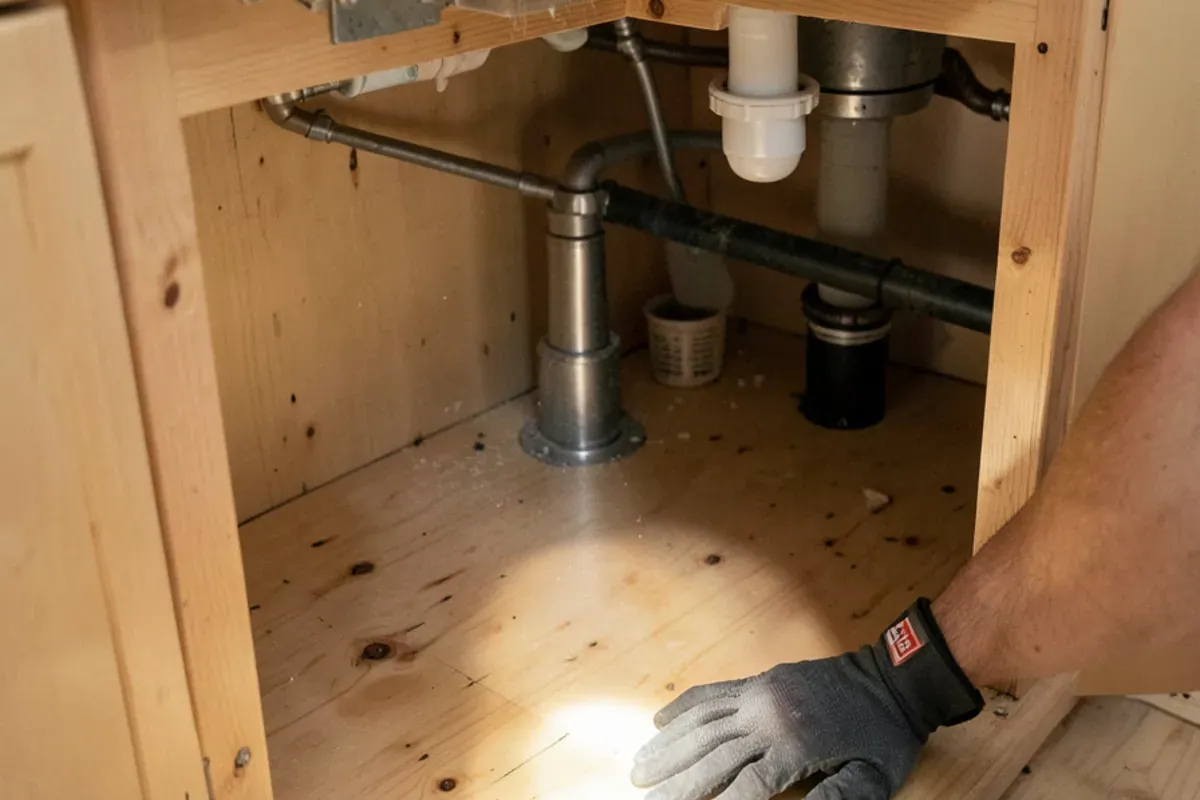
- Are the boxes structurally sound? Open each cabinet. Look for sides that have swollen at the bottom edge, shelves that sag, backs that have pulled away, and face frames that rock when you push them. Press down on the sink-base floor with your palm.
- Does the layout work the way you cook? Note where you wish you had counter space, where two people collide, and whether the fridge, sink and range sit in a sensible triangle. Refacing keeps every box where it is.
- Has water ever been in the cabinets? Think back to past leaks, a dishwasher failure, a roof drip or storm water. Stains, a musty smell or a soft spot are the evidence.
Two yeses and a clean water history make refacing the strong favorite. A failed answer on box condition, limited to one or two cabinets, can still lead to refacing with those boxes rebuilt.
Plywood, particleboard or MDF? Read an exposed edge
You can identify box material without taking anything apart. Find a raw edge: the cut-out for the sink drain, the bottom edge of a side behind the toe kick, or the rim of a shelf-pin hole. Plywood shows thin layers stacked like the pages of a book. Particleboard shows a coarse mass of glued chips, and MDF shows a smooth, dense brown with no grain at all. Staples holding a thin back panel and a printed wood-look paper on the inside faces are both signs of a builder-grade particleboard box.
Plywood and solid wood boxes hold hinge screws for decades and take new veneer well. Dry particleboard can be refaced, but expect it to be the limit on how long the refaced kitchen lasts. When the boxes pass and the frames still look good, cabinet door replacement on its own may be all the kitchen needs.
Refacing vs replacement, side by side
Once you know the condition of the boxes, compare what each route delivers. The table focuses on outcomes rather than price; for the money side, see our breakdown of cabinet refacing cost vs. new cabinets.
| Question | Refacing | Replacement |
|---|---|---|
| Can the door style and color change? | Yes, completely | Yes, completely |
| Can cabinets move or change size? | No, apart from rebuilding a box in place | Yes |
| Can drawers replace doors? | Often, inside the existing box | Yes, planned from scratch |
| Do countertops come off? | Usually not | Yes |
| Are licensed trades involved? | Rarely | Usually a licensed plumber, often a licensed electrician |
| Does a permit apply? | Typically not for fronts alone | Depends on plumbing, wiring or wall changes |
| How long is the kitchen out of use? | Days of on-site work | A longer multi-trade sequence |
Our cabinet refacing service page explains how veneer, overlay and door style are chosen once refacing is the path.
When does water damage rule out refacing?
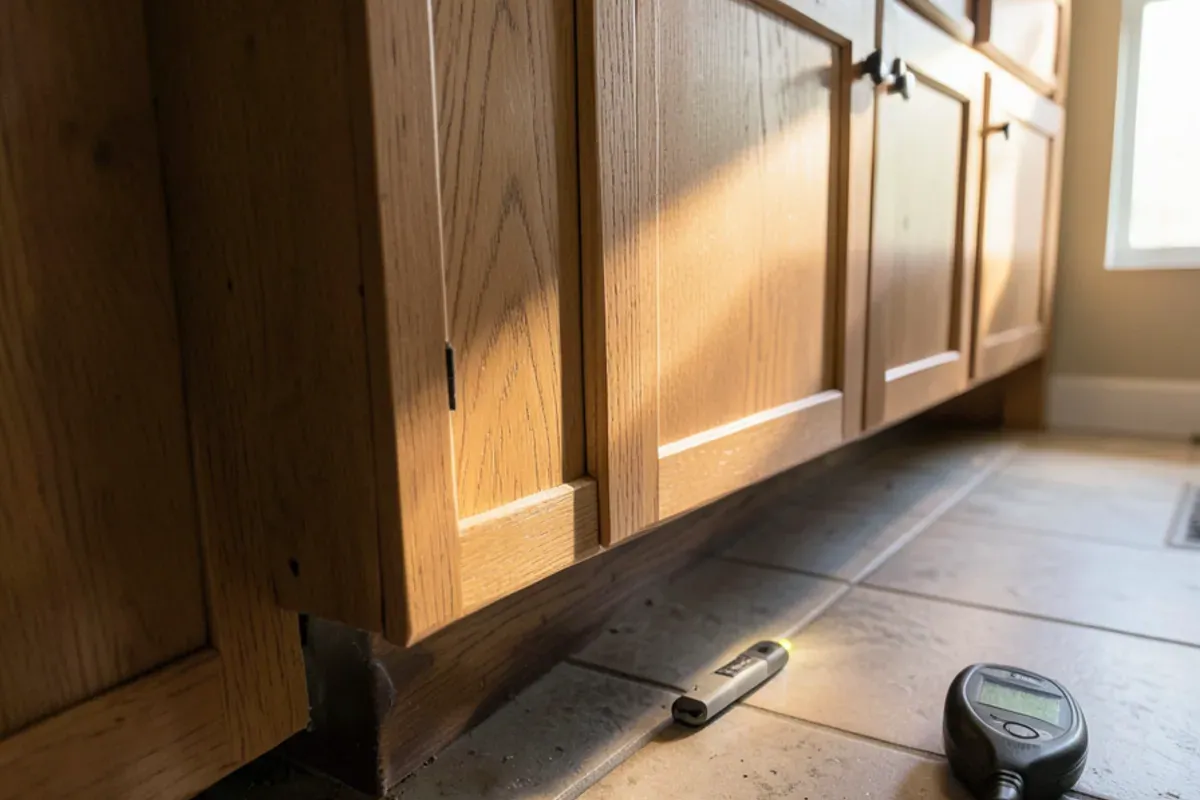
Water is the most common reason a kitchen that looks like a refacing candidate turns into a replacement. Particleboard and fiberboard swell when wet and do not shrink back; the screws that hold hinges lose their grip, and the box can no longer carry new doors safely.
Timing matters too. The EPA advises that damp materials dried within 24 to 48 hours of a leak or spill will, in most cases, not grow mold. A slow drip under a sink can go unnoticed for months, which is why the sink base is where we look first. Hidden mold behind a cabinet back is not something to cover with new fronts.
Does a flood zone change the math?
For homes in a mapped flood zone, the scope of the cabinet work can matter for reasons beyond the kitchen. The National Flood Insurance Program defines a substantial improvement in 44 CFR 59.1 as any reconstruction, rehabilitation or other improvement costing 50 percent or more of the structure's market value before construction starts. A building that crosses that line has to be brought up to the community's current floodplain requirements, which for an older slab-on-grade house can mean elevation.
FEMA's Substantial Improvement/Substantial Damage Desk Reference lists built-in kitchen cabinets, plumbing fixtures and piping, interior finish carpentry, and contractor overhead and profit among the costs that count toward the percentage. A full replacement stacks up several of those lines at once. Refacing touches far fewer of them, because the boxes stay in place and the counters, sink and supply lines stay connected.
- Ask the building department that covers your address how it values the structure and which kitchen costs it counts.
- Ask whether other permitted work on the house, such as storm repairs or a new bath, is reviewed together with the kitchen.
- Get the cabinet scope in writing early, so the improvement figure is known before you settle on refacing or replacement.
This question comes up most along the Manatee River in Bradenton and in low-lying neighborhoods near Sarasota Bay. Only the floodplain administrator can make the determination; our part is to give you a clear written scope for each option.
Can refacing fix a layout you dislike?
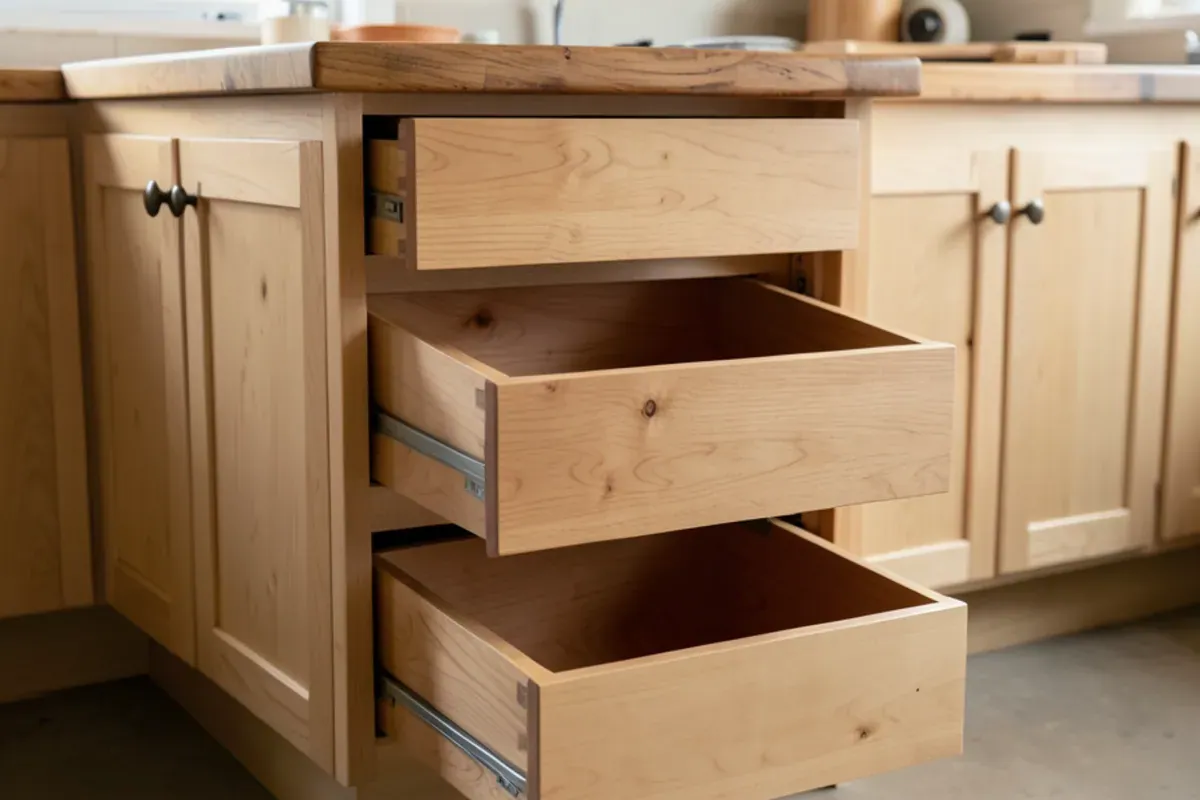
Partly. Refacing cannot move a sink or shift a wall, but it can change how the existing boxes work. A door-and-shelf base can become three deep drawers. A blind corner can get a pull-out. An upper beside the range can turn into an open spice niche. Swapping the over-fridge cabinet for a deeper one is possible if the space allows.
What refacing cannot do is add an island, close up a dead corner, or raise the uppers to the ceiling. If those are on your list, you are describing a new kitchen, and replacing the cabinets will feel like money well spent.
How the age of a Sarasota or Bradenton home tilts the choice
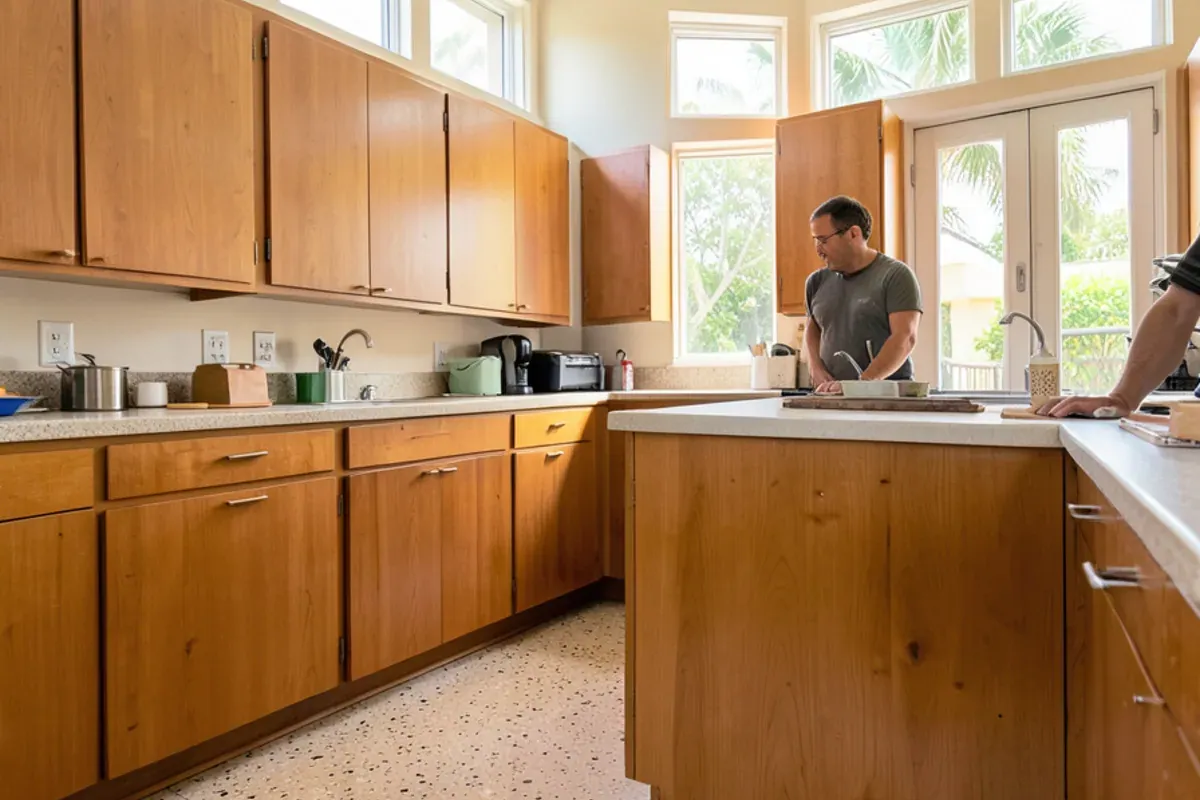
Housing era often predicts what we will find. In Sarasota, Sarasota School mid-century homes and older bungalows sometimes still hold site-built cabinets with solid wood frames that reface beautifully, provided the layout suits modern appliances. Many 1970s and 1980s subdivisions around Bradenton were fitted with builder cabinets whose boxes vary widely: some sturdy, some particleboard that has seen a few dishwasher leaks.
Older homes add one more step. For houses older than 1978, federal lead rules from the EPA call for lead-safe practices whenever hired workers disturb painted surfaces, and tearing out painted cabinets counts just as sanding them does.
The bottom line
Refacing or replacement is less a matter of taste than of what the boxes, the layout and the water history allow. Run the three questions, look under the sink, and the direction usually becomes clear. For a definite answer on your own kitchen, phone us or write through the contact form to book a measure; by the end of that visit you will know which cabinets stay and which ones go.
Sources
- U.S. EPA — A Brief Guide to Mold, Moisture and Your Home
- U.S. EPA — Lead Renovation, Repair and Painting Program
- 44 CFR 59.1 — Definitions, substantial improvement (Cornell LII)
- FEMA P-758 — Substantial Improvement/Substantial Damage Desk Reference, May 2010, Section 4.4.1 (copy hosted by Utah Division of Emergency Management)