Peeling kitchen cabinets almost always point to one of three culprits: heat from an oven or dishwasher, ultraviolet light through a glass door, or years of cooking grease and harsh cleaners softening the topcoat. Solid wood with a worn finish can usually be stripped and refinished; vinyl-wrapped thermofoil doors cannot, and need new fronts instead.
Below, we explain how each cause shows up, how to identify what your doors are made of, and which repair matches the damage. The work ranges from a small touch-up to full cabinet refinishing, and in some kitchens it ends with new doors under our wider cabinet refacing service.
Why are my kitchen cabinets peeling?
Location tells you a lot. Look at where the damage starts before deciding anything else, because the pattern usually names the cause.
Heat beside the range, oven and dishwasher
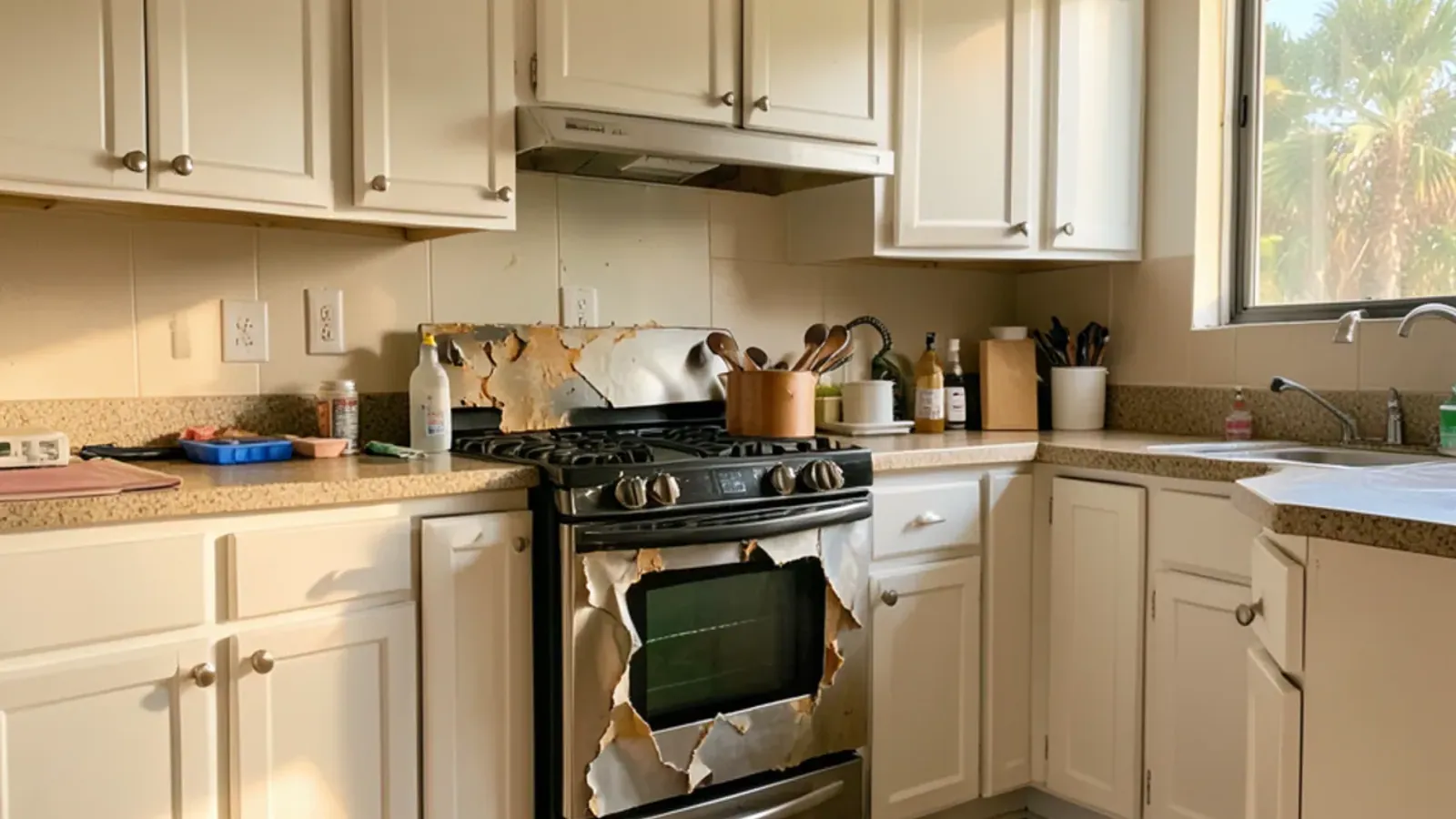
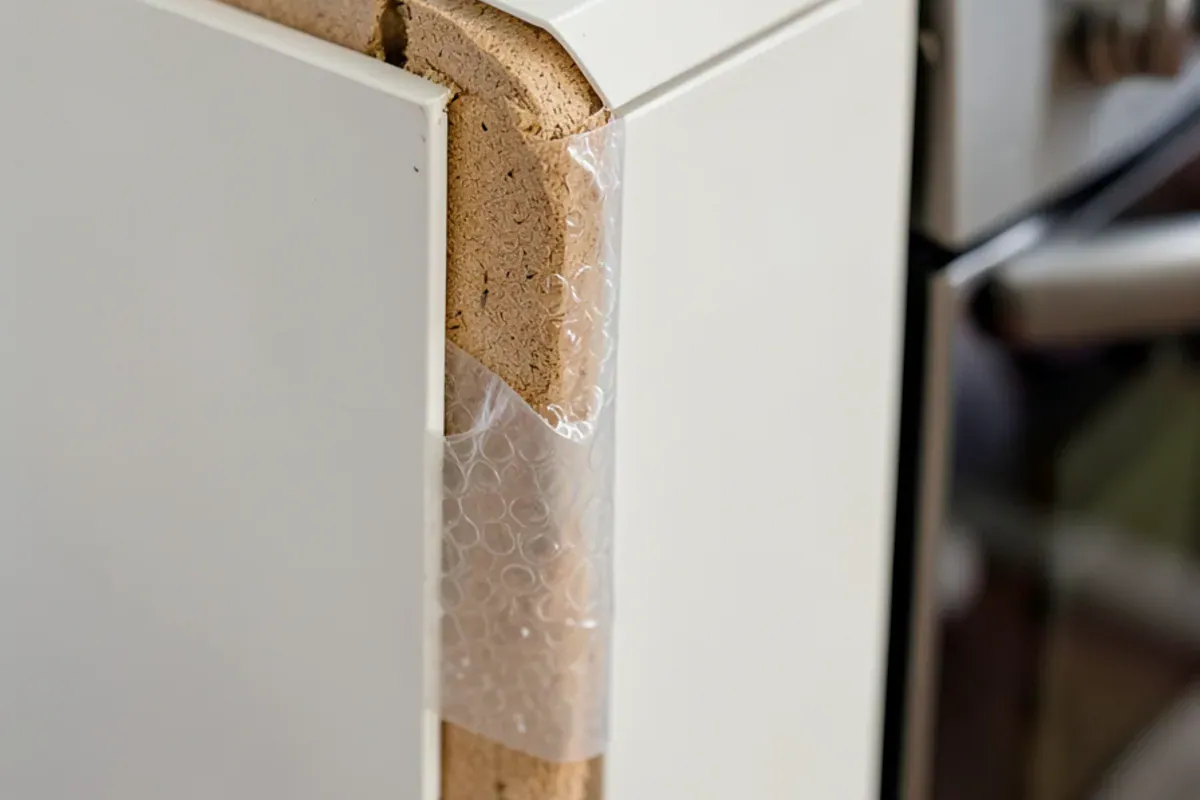
Thermofoil is a thin vinyl skin heat-pressed over a fiberboard core. The glue that holds it softens with heat, so the skin lifts first on doors flanking a wall oven, above a toaster spot, or on the panel beside the dishwasher, where a blast of steam escapes every time the door opens after a cycle. Wood with a lacquer finish reacts differently: it tends to haze, crack or turn white rather than lift in sheets.
Sun through sliders and bay windows
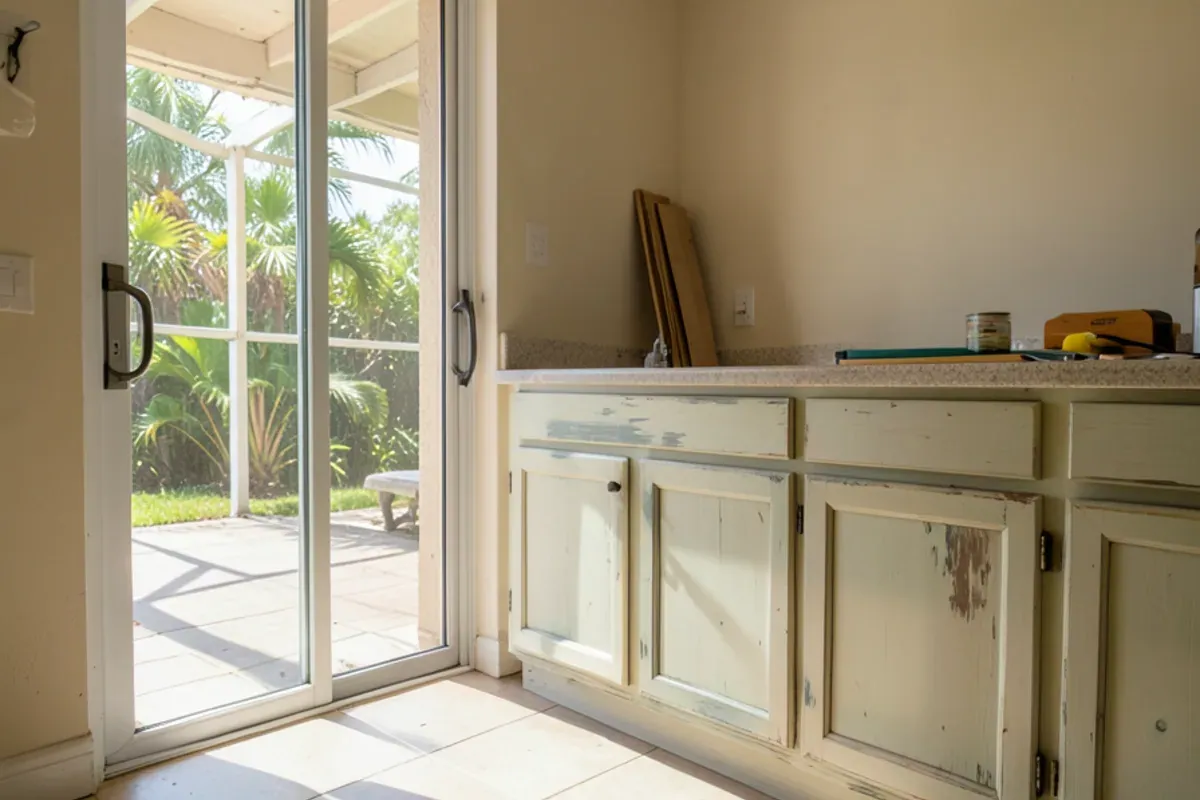
Gulf Coast homes often put the kitchen right beside a lanai slider. Afternoon sun bleaches stain from cherry and oak, turns some clear coats amber, and yellows white thermofoil. The giveaway is a sharp line where a towel, a canister or the edge of a shade blocked the light.
Grease, hand oils and strong cleaners
A sticky film around pulls and above the cooktop is cooking grease and skin oil bonded to the finish. Degreasers and ammonia sprays used to fight it soften many topcoats over time, leaving dull, rough patches that eventually wear through to bare wood.
Read the damage before choosing a repair
Open a door and look at its edge. Wood shows grain running across the end, a crisp corner and often a visible joint where rails meet stiles. Thermofoil shows a smooth wrapped edge with no seam, and a raw edge of brown fiberboard where the skin has come away. Painted wood shows a paint line at the edge and wood beneath any chip.
| What you see | Likely cause | Usual fix |
|---|---|---|
| Vinyl skin bubbling or lifting near heat | Thermofoil adhesive failure | New wood doors and drawer fronts |
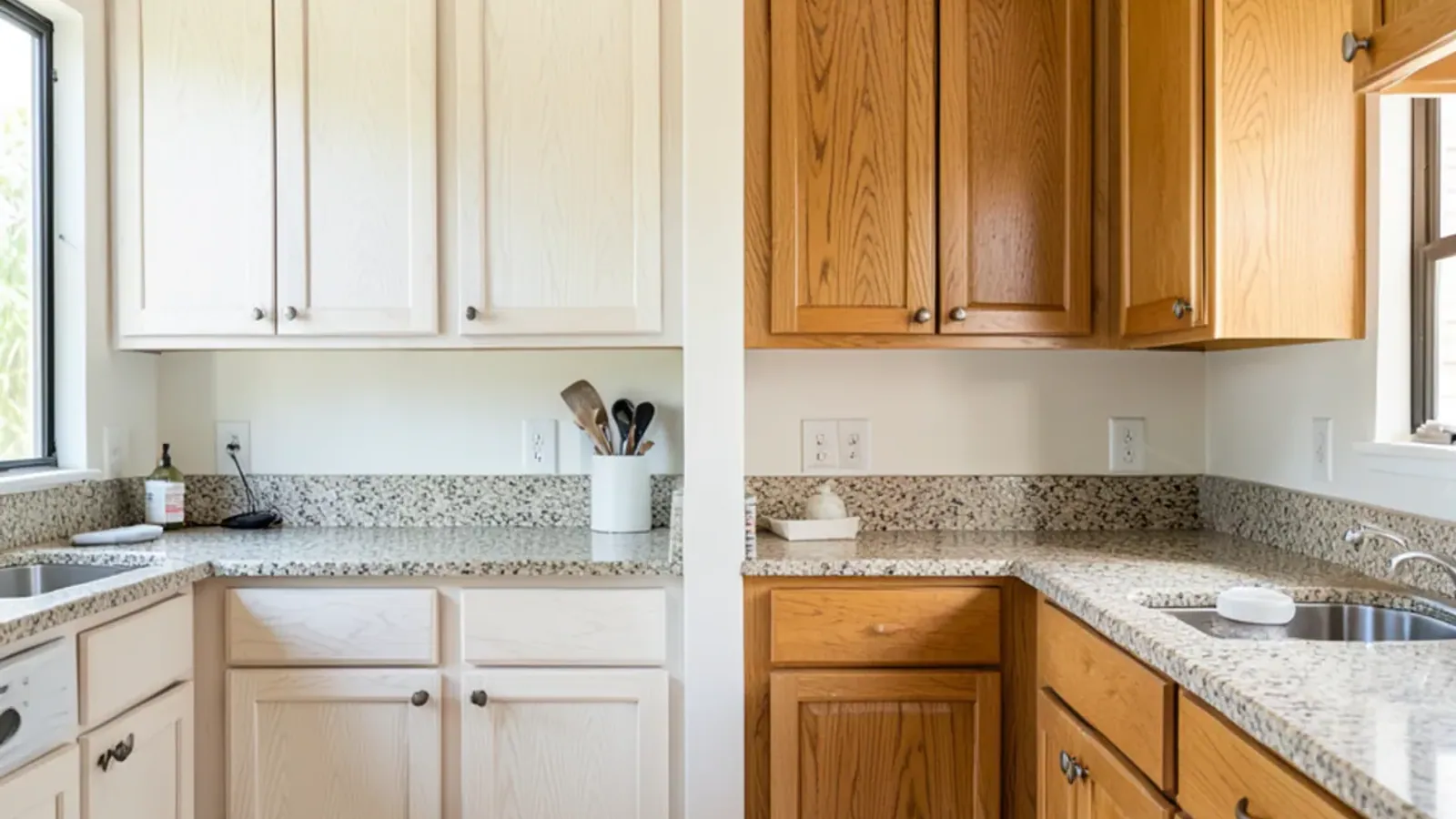
| Bleached or uneven color on sun-facing doors | UV fading of stain and clear coat | Strip, restain and spray a new topcoat |
| Sticky film, dull spots around pulls | Grease and cleaner wear | Deep clean, scuff and recoat, or full refinish |
| Clear coat flaking in sheets on wood | Old lacquer losing adhesion | Full strip and refinish |
| Paint chipping at door edges | Wear on painted wood | Spot repair or a fresh sprayed paint job |
Most kitchens show more than one row. A common combination is faded doors on the slider side with thermofoil peeling beside the oven, which is why a door-by-door look comes before any quote.
Touch up, refinish, paint or reface?
Think of the options as a ladder. Start at the lowest step that actually solves the problem; climbing higher than necessary just spends money.
- Touch-up. Small chips, a scuffed drawer front, one faded door. Color-matched fill and a local topcoat blend the spot, and the job takes an afternoon.
- Refinish. Sound wood with tired, faded or flaking finish across the kitchen. The old coating comes off, color is evened out, and a durable topcoat goes on; the grain stays visible.
- Paint. Sound wood where you want a new color, or where stain repairs would never match. See our cabinet painting page for how the sprayed finish is applied.
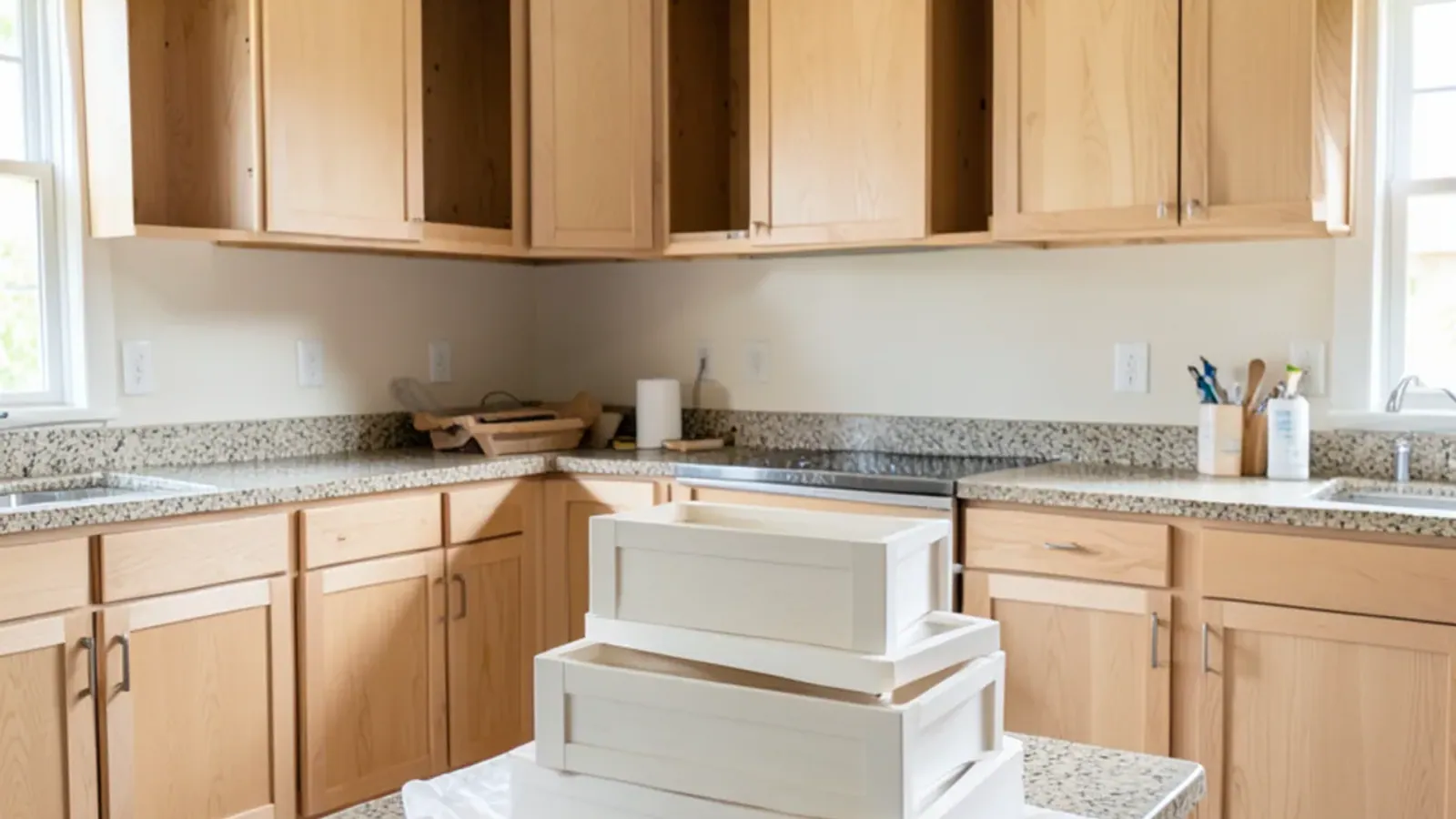
- New fronts. Thermofoil, laminate, cracked panels or veneer sanded through. We build replacement doors and drawer fronts in solid wood to fit your openings; the boxes stay.
Thermofoil only ever goes on the last step. Paint will not bond reliably to the vinyl, and once the skin starts lifting, the fiberboard beneath swells as soon as moisture reaches it.
What a full refinish of wood fronts involves
Label and remove
Each door and drawer front is numbered to its opening and the hinge positions are recorded, so everything returns to the same spot with the same reveal.
Degrease first
Grease left in the pores fights every coat that follows, so fronts are washed with a degreasing cleaner and rinsed before any sanding or stripping starts.
Strip or sand to sound finish
Flaking lacquer comes off completely. A finish that is only dull or faded may need sanding back to a firm layer rather than to bare wood.
Even out the color
Sun-bleached doors are stained or toned to match the shaded ones, checked against a door that sat out of the light.
Seal and topcoat
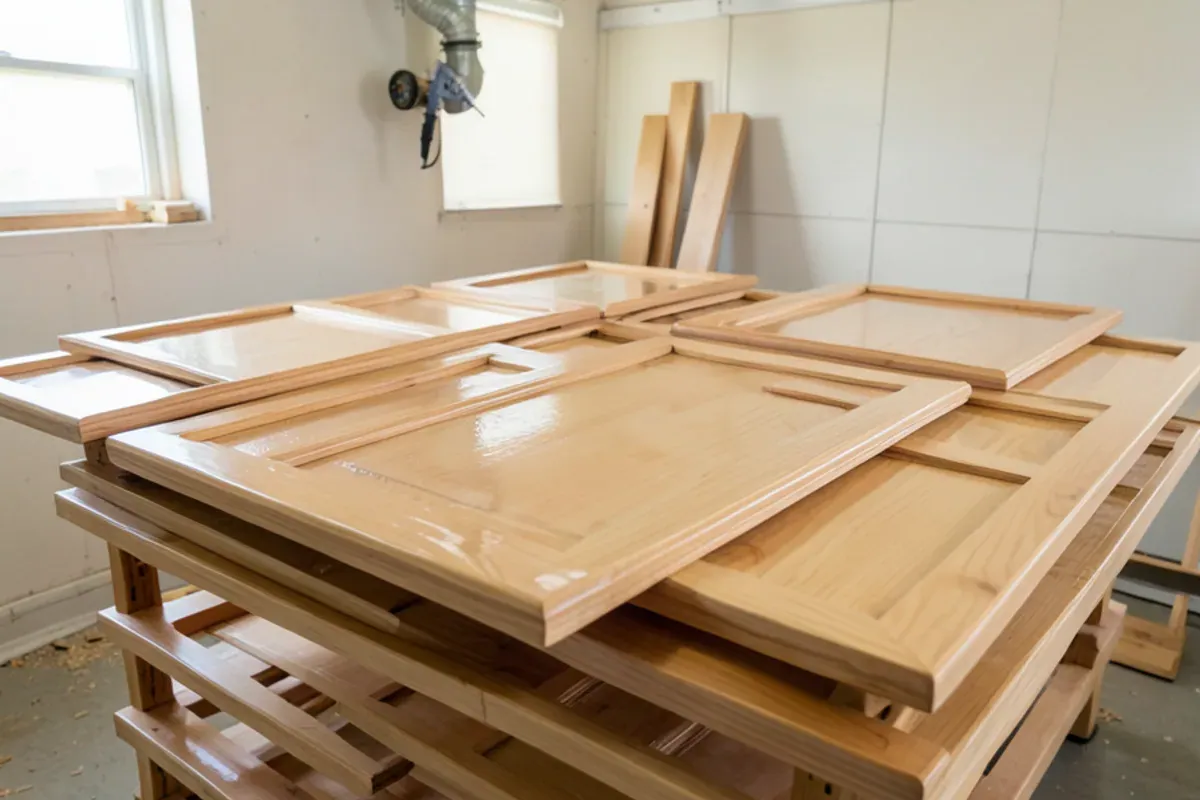
A sealer and durable clear topcoat are sprayed in the booth and left to cure before the fronts are stacked or wrapped.
Refinish frames and rehang
Face frames are cleaned, scuffed and recoated in the kitchen with the room masked off, then the fronts go back up and the hinges are adjusted.
Does an older Venice or Englewood home need a lead check first?
Sanding or stripping painted cabinets in an older house raises one more question. Under the U.S. EPA's Renovation, Repair and Painting Rule, anyone paid to disturb paint in a home built before 1978 has to follow lead-safe work practices. That covers plenty of kitchens in Venice, where the original 1920s planned district still stands, and in the older cottages of Englewood on Lemon Bay.
Clear-finished wood cabinets from the 1980s onward rarely raise the issue. Painted cabinets in a pre-1978 house should be tested before anyone sands them, and the answer shapes the prep method, the containment and the schedule.
The federal rule draws its line at more than six square feet of painted surface disturbed in a room, and stripping or sanding a single kitchen of painted doors and frames easily goes past that. Above the line, the work practice standards set specific limits:
- The work area is sealed off with plastic and marked with warning signs before work starts.
- Open-flame burning or torching of painted surfaces is prohibited.
- Power sanders and grinders are allowed on painted surfaces only with a shroud and a HEPA vacuum attachment that catches dust where it is made.
- Heat guns must run below 1,100 degrees Fahrenheit.
If you do not know when your house was built, the EPA's advice to do-it-yourselfers is to assume lead paint is present until a test says otherwise.
Solvents matter too. The EPA lists paints, varnishes and strippers among household sources of volatile organic compounds and advises plenty of fresh air while they are in use. That is one reason we strip and spray doors in a ventilated booth at the shop rather than at your kitchen table.
The agency's numbers explain the caution. It reports that levels of several organic compounds average 2 to 5 times higher indoors than outdoors, and it names paint strippers among the consumer products that can contain methylene chloride, which it says should be used outdoors or only in a well-ventilated area.
Keeping a fresh finish from failing again
The causes do not go away after the repair, so the plan should address them. Next to a wall oven or range, leave the manufacturer's recommended clearance and consider a heat shield panel on the cabinet side. Run the dishwasher's dry cycle with the door closed rather than cracking it open to let steam roll up the adjacent doors. On the slider side, a UV-filtering window film or simply closing a shade during the hottest afternoon hours slows fading.
For cleaning, a soft cloth with mild dish soap and warm water, wiped dry, does more good than any spray degreaser. Wipe around pulls weekly so grease never builds to the point that it needs scrubbing.
The bottom line
Peeling and fading look alike from across the room, yet the fixes range from an afternoon of touch-up to a new set of doors. Figure out what your fronts are made of, note where the damage starts, and choose the lowest repair that solves it. If you would like a second set of eyes on a door or two, bring a door by the Lewis Ave shop by appointment, or ask us to come look at the whole kitchen. A phone call to the shop sets up either one.