A vacation rental kitchen needs cabinets that shrug off strangers: hard-wearing finishes that wipe clean, hardware that survives being yanked, and fronts that can be repaired between bookings rather than replaced. On Anna Maria Island and Siesta Key, add salt air and humid weeks when the unit sits closed, and the choice of finish matters more than the color.
For many rental owners, cabinet refacing is the practical route. The boxes stay, the counters stay, and the work can fit into the gap between check-out and the next arrival. This guide covers what wears out first, which finishes and hardware hold up, how to schedule the job around the calendar, and the small layout changes that save your cleaning crew time.
What fails first in a rental kitchen?
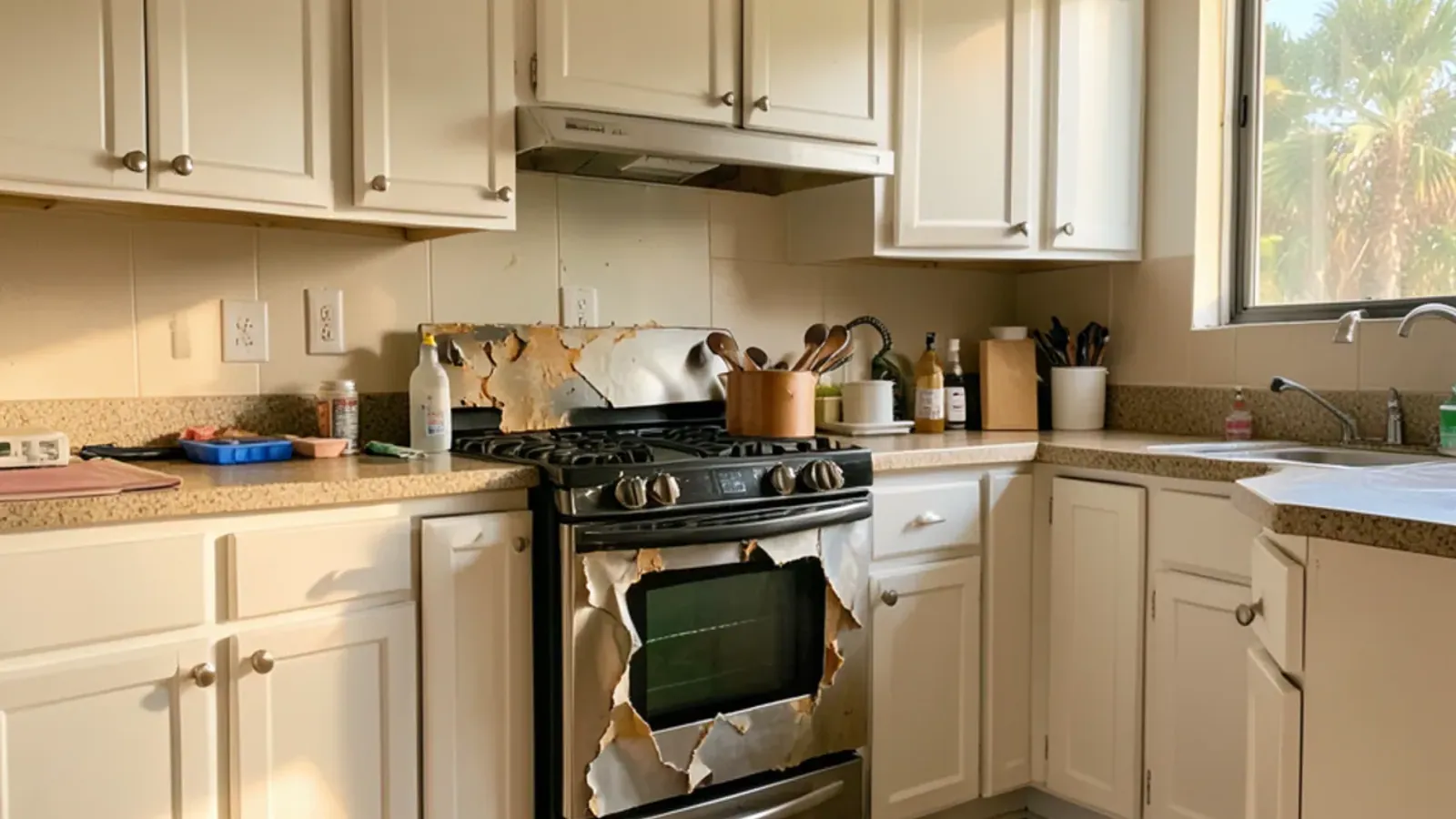
Owners who have run a unit for a few seasons tend to list the same problems. None of them is dramatic on its own; together they make a listing look tired in photos and generate guest complaints.
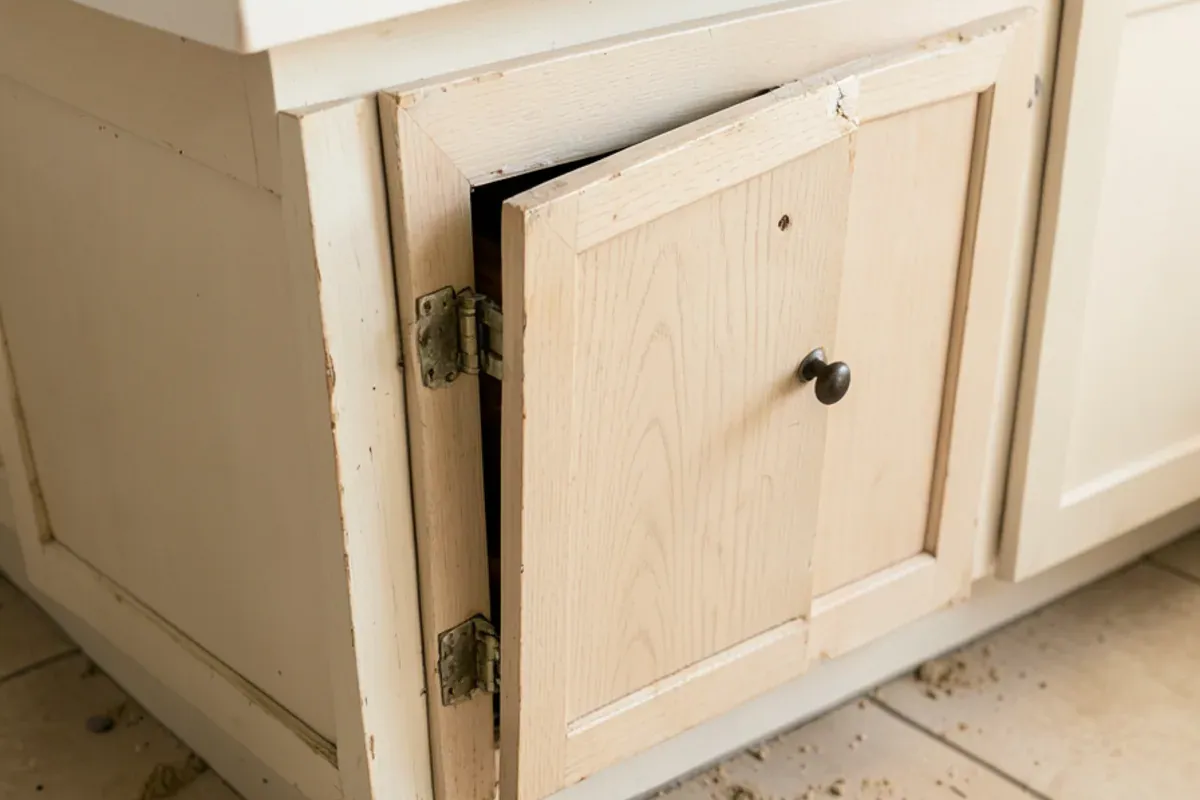
- Hinges pulled loose from particleboard sides after doors are swung wide or used as a step.
- Drawer bottoms dropped out from overloading with pots, beach toys and grocery bags.
- Finish worn through around the sink and trash cabinet, where wet hands and cleaning sprays meet daily.
- Edges peeling on doors beside the dishwasher, which runs far more often than in a typical home.
- Pulls that loosen, spin or snap off, then go missing.
- A musty sink base, often from a slow drip no guest reported.
Most of that list traces back to two things: soft box material where screws bite, and finishes chosen for looks rather than abuse. Both can be addressed without a full tear-out. The musty sink base deserves a spot on every turnover checklist: EPA moisture guidance says wet materials that are dried within a day or two generally avoid mold, yet a rental can sit empty for longer than that.
Finishes that survive guests and salt air
A rental finish should be hard, low-sheen and repairable in place. High gloss shows every fingerprint and scratch in the listing photos; dead-flat finishes hold grease. Satin sits in the useful middle.
| Surface | Holds up to | Weak spot | Repair between stays |
|---|---|---|---|
| Stained hardwood, catalyzed clear coat | Scrubbing, spills, daily wiping | Deep dents on edges | Easy: fill, color and blend |
| Sprayed painted hardwood | Cleaning sprays, sun | Chips on corners near the trash pull-out | Moderate: touch-up from the same batch |
| Thermofoil | Light use | Heat near ovens and dishwashers | Poor: peeled skins cannot be patched |
| Plastic laminate | Stains | Edge banding lifting with moisture | Poor: chipped edges need new parts |
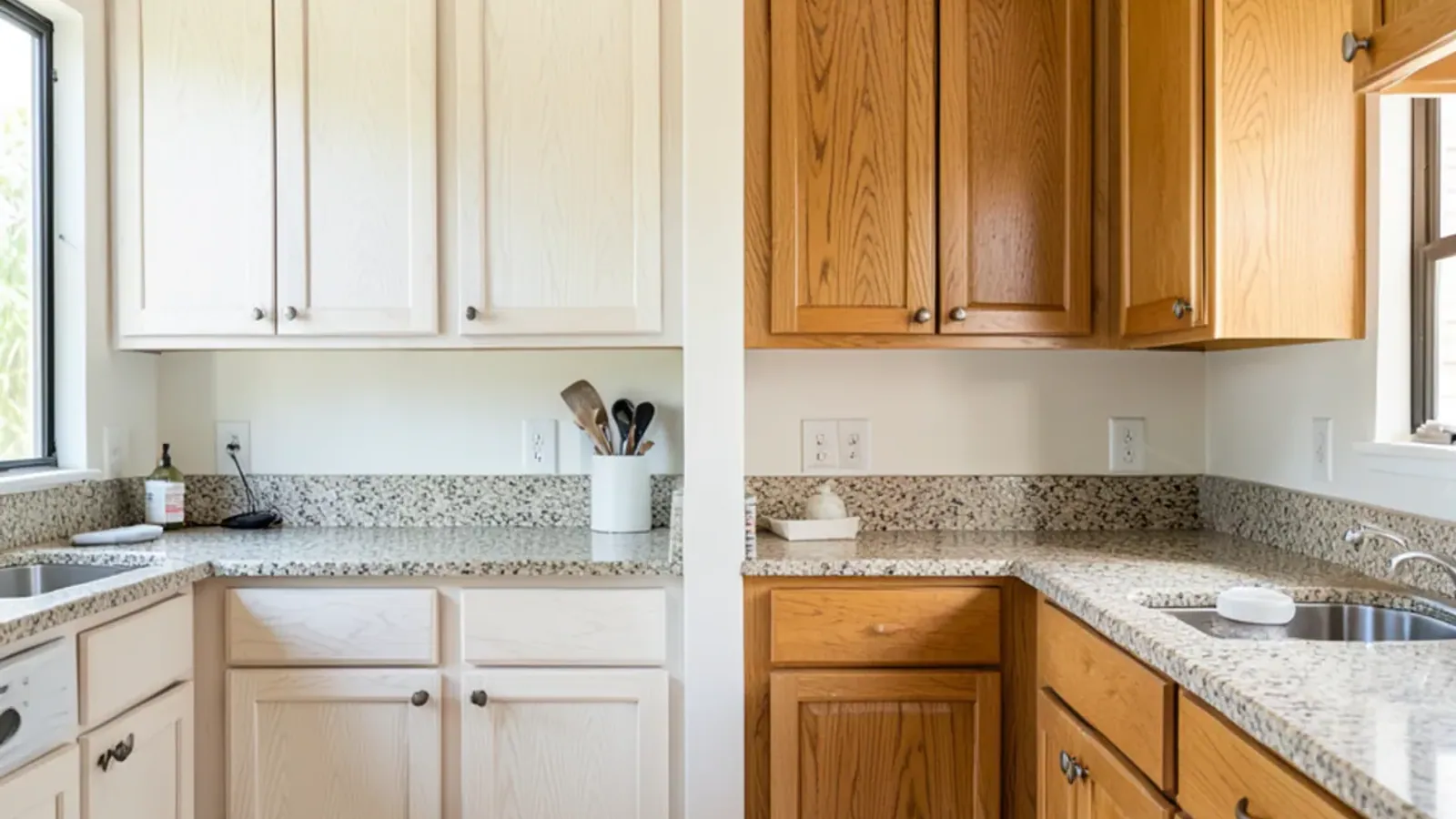
Mid-tone woods such as white oak or hickory hide sand, scuffs and water spots better than pure white or dark espresso. If the listing calls for a white kitchen, a sprayed paint on hardwood is far easier to keep presentable than white thermofoil. Our cabinet painting work leaves a labeled jar of touch-up paint for exactly this reason.
Hardware that takes a beating
Hardware is where rental kitchens most often fail, and it is cheap to get right. We specify heavier components on rental work than we might in an owner-occupied home.
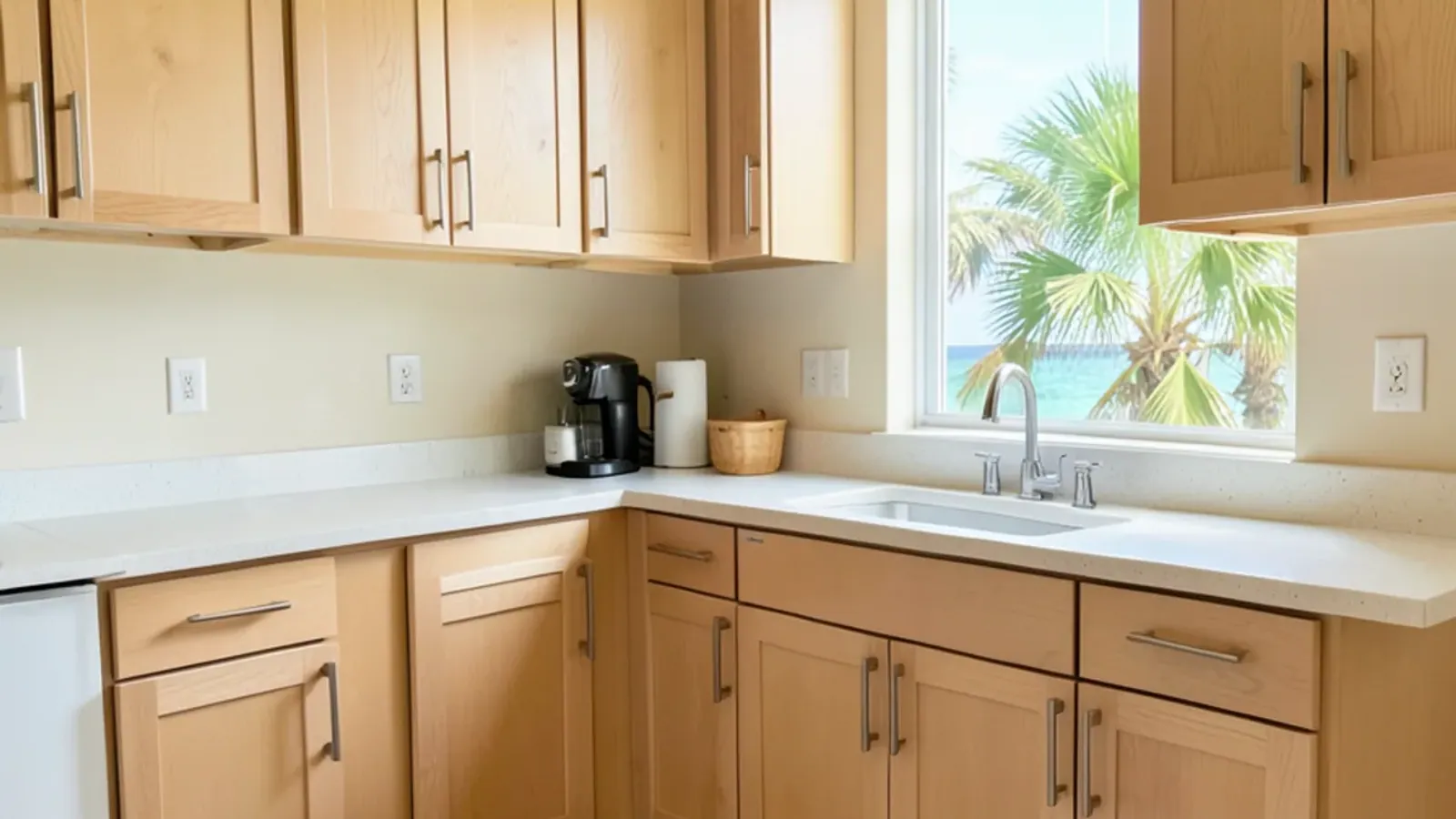
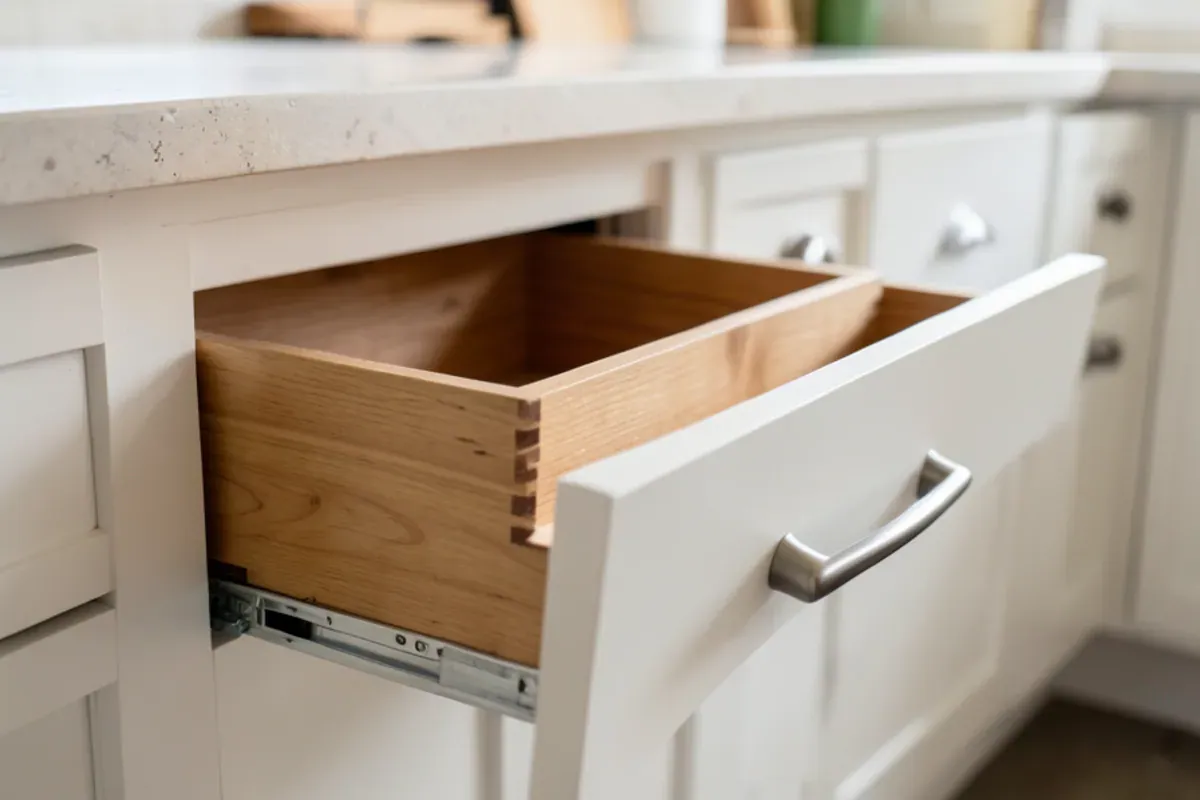
Soft-close hinges with a wide opening angle keep doors from slamming into adjacent fronts. Full-extension, soft-close drawer slides rated well above normal loads cope with guests who stack every pan in one drawer. Pulls should be through-bolted rather than screwed into a thin front, in stainless or solid brass so salt air on the islands does not pit them. Bar pulls are harder to snap off than small knobs, and one pull style used throughout makes replacements simple.
Dovetailed hardwood drawer boxes matter more here than anywhere. A stapled particleboard drawer bottom that would last a decade in a retiree's kitchen can fail in a single busy season.
How do you protect cabinets while the unit sits empty?
A rental that sits closed between bookings, or through the slow weeks of late summer, is at more risk than one in daily use. Shutting the air conditioning off saves power, but humidity then builds in a sealed unit, and it shows first on the cabinet parts nobody looks at: drawer sides, the back of the sink base, and the bottom edge of the panel beside the dishwasher.
The EPA's moisture guidance gives a clear target: hold relative humidity indoors under 60 percent, with 30 to 50 percent as the ideal band, and run air conditioning or a dehumidifier when needed to get there. A thermostat that can hold humidity while the unit is vacant, plus a battery leak sensor on the floor of the sink base, covers the two problems guests are least likely to report.
A cabinet check for every turnover
- Open the sink base, run a hand across its floor and look at the trap and supply lines for drips or white mineral crust.
- Pull each drawer to full extension; a slide that drags or drops usually has a loose screw, not a broken part.
- Tighten any pull that spins, and keep a spare pull and the right screwdriver in the owner's cabinet.
- Shake sand and crumbs out of drawer bottoms before they grind into the finish.
- Note chips and worn spots on a shared list so touch-up happens in one visit, not after a guest's photo.
When a single front is beyond touch-up, it can be rebuilt to match. Because each refaced front is drawn to its own opening, cabinet door replacement for one damaged door is a small shop job rather than a reason to redo the run.
How do you reface a rental between bookings?
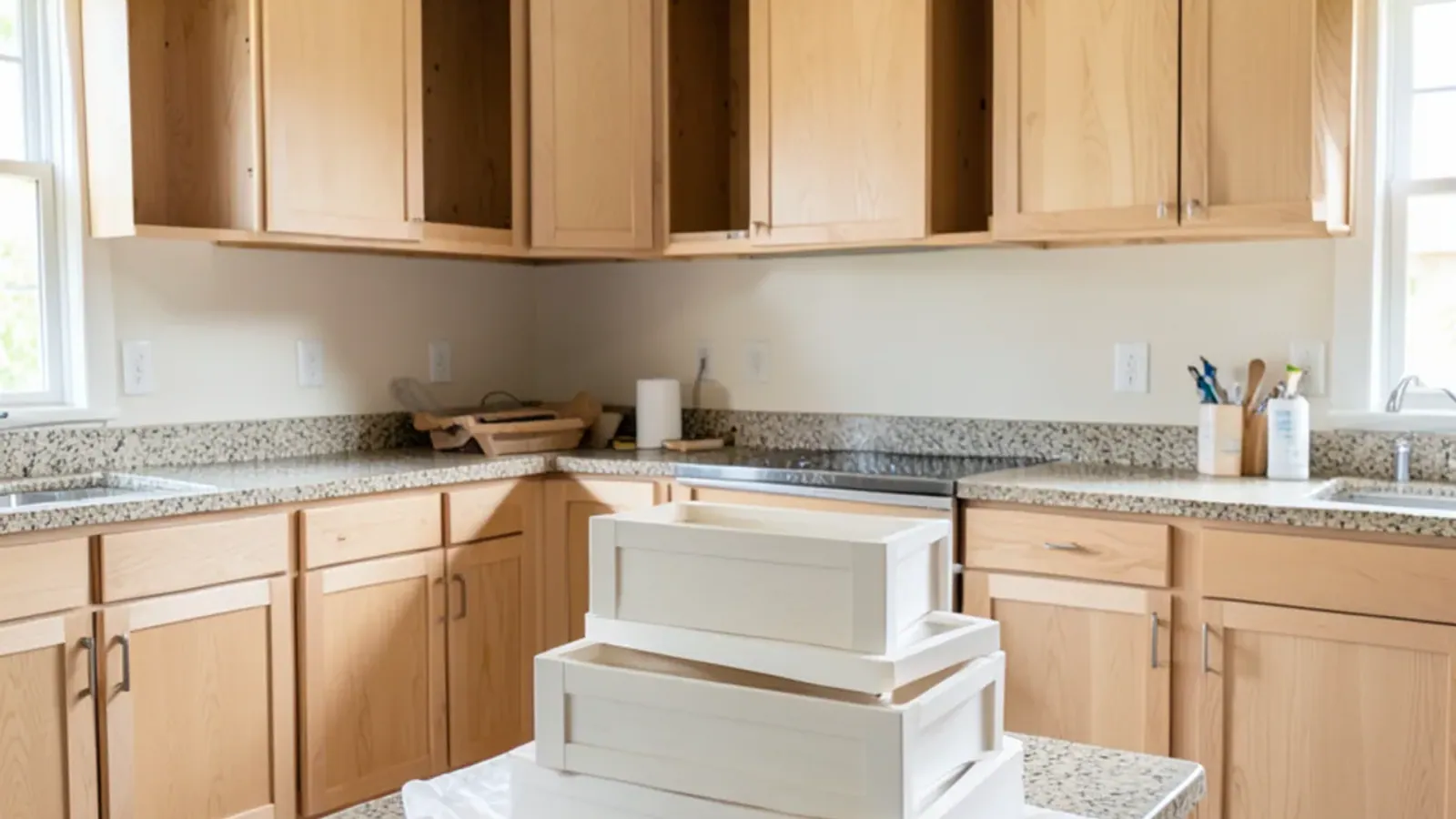
The aim is to keep the kitchen out of service for as few nights as possible. Because refacing keeps counters, sink and appliances connected, most of the work happens at our Lewis Ave shop while the unit keeps earning.
Measure during a turnover
We measure every opening and check each box while the unit is empty, ideally on a cleaning day.
Approve drawings and a 3D model
You see the new fronts, finish and hardware on your own layout and confirm before anything is cut.
Build and finish off site
Every new front, plus any added drawer box, is made and sprayed at the shop while guests keep checking in.
Install in a booked-off window
Veneer goes on the frames and the new fronts are hung and adjusted during a short block you hold open on the calendar.
Hand over for cleaning
We vacuum out the boxes and leave touch-up materials, so the cleaning crew can reset the unit for the next arrival.
Condo units add association rules on work hours, elevator use and parking. Siesta Key has more homes than year-round residents, and its condo towers, packed with seasonal and rental units, tend to enforce exactly those rules. Build the association's notice period into the schedule before you block dates.
Small layout changes that help guests and cleaners
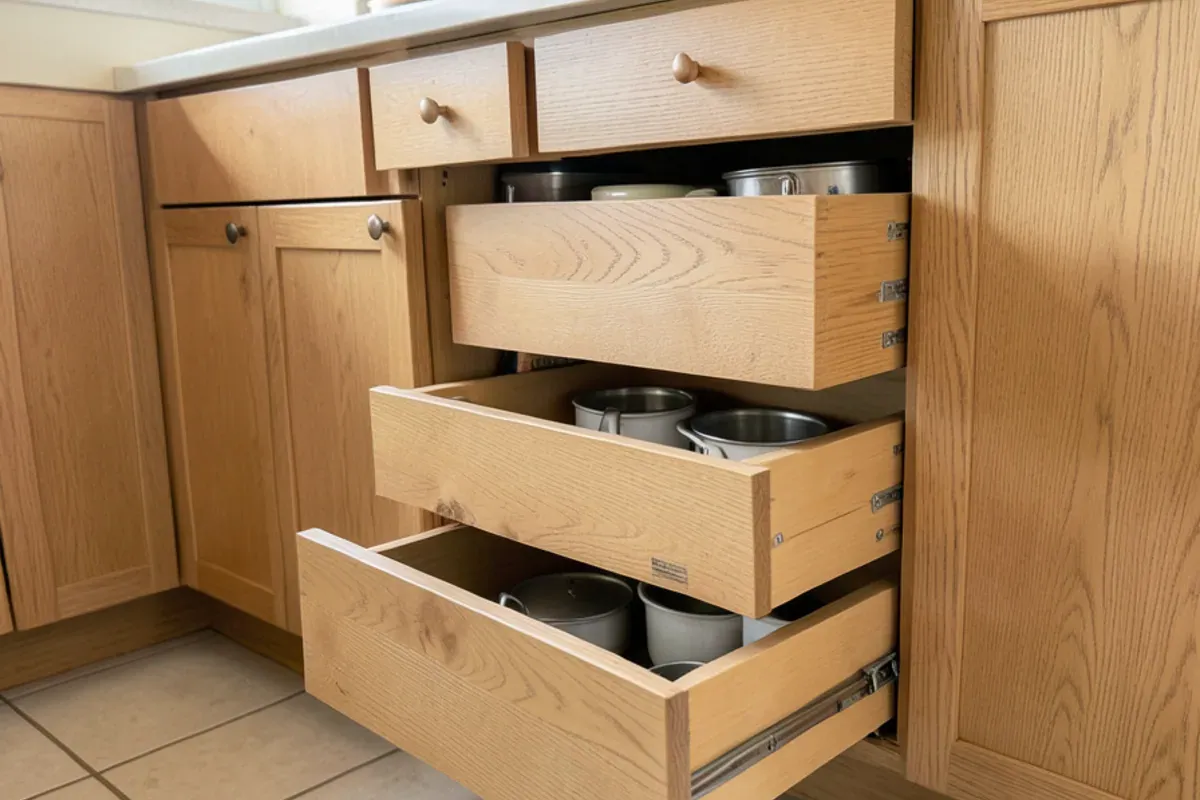
A refacing job is the right moment to rethink a few boxes. Converting a deep base with a single shelf into three drawers puts pots where guests can find them. A pull-out for trash and recycling beside the sink keeps bins off the floor. A lockable tall cabinet that holds spare linens, paper goods and supplies saves the cleaners a trip to the car.
Open shelving looks good in photos but collects salt film and sand, and guests rarely put things back neatly. Glass-front uppers give the same open feel while keeping dust off the dishes.
Rentals also carry a state licensing layer: Florida's Division of Hotels and Restaurants licenses vacation rental condominiums and dwellings. Cabinet work does not change that license, but owners on Holmes Beach and elsewhere on Anna Maria Island should keep city and state paperwork current alongside any remodel.
The state test is about how the unit is used, not how it is built. Under section 509.013 of the Florida Statutes, a dwelling becomes a transient public lodging establishment when it is rented to guests more than three times in a calendar year for periods of less than 30 days or one calendar month, whichever is less, or when it is advertised as a place regularly rented to guests.
The bottom line
A guest kitchen does not need to be fancy; it needs to stay presentable for hundreds of check-ins. Spend on hard finishes, heavy hardware and solid drawer boxes, and keep the existing boxes and counters if they are sound. If your unit is due for a refresh before the next season, tell us your open dates by phone or through our contact form, and the build will be scheduled to land in that gap.
Sources
- Florida DBPR Division of Hotels and Restaurants — Vacation Rental and Timeshare Projects Guide
- U.S. EPA — A Brief Guide to Mold, Moisture and Your Home
- Florida Statutes s. 509.013 — Definitions (transient public lodging establishment)
- Florida Statutes s. 509.242 — Public lodging establishments; classifications (vacation rental)