
Custom Furniture
Live Edge Tables in Sarasota, FL
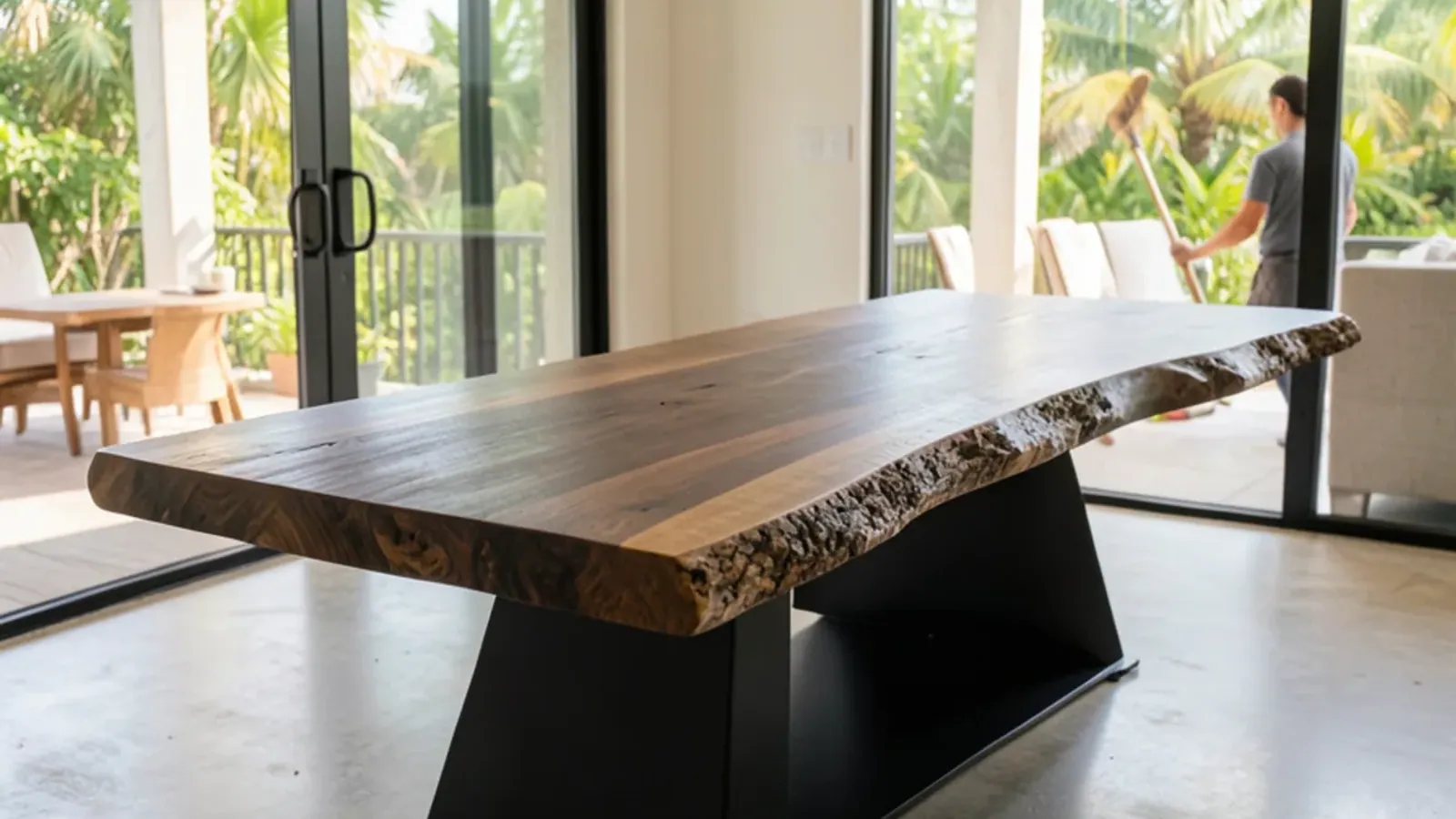
Slab dining, coffee and conference tables that keep the tree's natural edge, flattened, stabilized and finished in our Sarasota shop.
- Built in our Sarasota shop since 2011
- 4.4★ from 52 Google reviews
- 3D model before anything is built
- Solid-wood boxes, dovetail drawers
Every live edge table we build in Sarasota begins with a slab you can see and choose, then goes through flattening, crack stabilization and a finish suited to Florida light. The bark-free natural edge stays as the tree grew it, and the base, whether wood, steel or glass, is drawn to suit the slab's shape and weight.
Live edge work is one branch of our wider custom furniture practice, and it is the one where the material leads the design. A slab with a dramatic crotch figure might become a dining table; a narrower one with a sweeping edge often suits a desk or coffee table. You approve drawings and a 3D model with the actual slab in mind before we cut it.
Choosing the slab: species, figure and flaws worth keeping
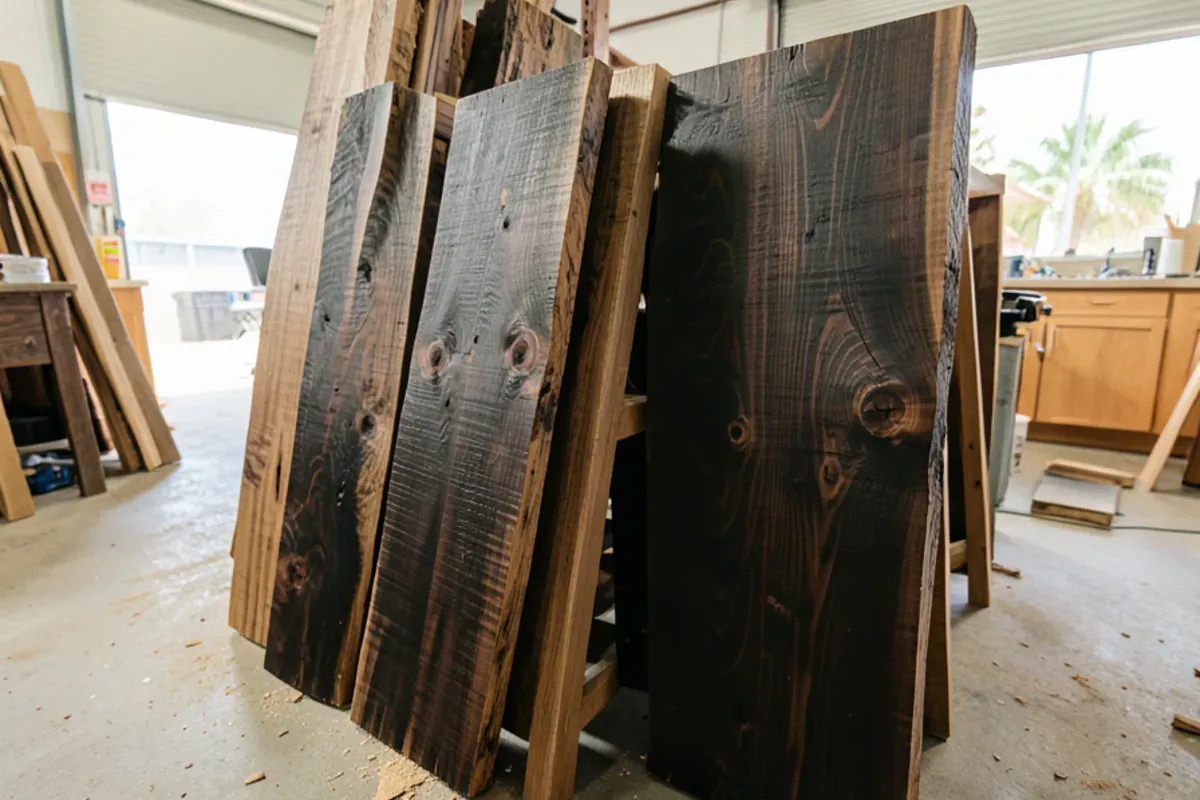
Slabs are not interchangeable. Walnut gives deep browns and creamy sapwood; white oak is lighter and very stable once dry; maple and sycamore bring pale tones with flame or ray figure. Knots, bark inclusions and small checks can stay as character as long as they are stabilized, but a slab with a crack running through its center or heavy insect damage is usually better cut into a smaller piece.
- Look at both faces and the underside edge, not just the photo side.
- Ask where the pith (the tree's center) runs, since boards containing it are more likely to split.
- Check thickness after flattening, which is always less than the rough slab.
- Consider book-matched pairs for widths a single slab cannot reach.
Where slabs come from, and the rules that follow them
Imported slabs carry paperwork. The U.S. Lacey Act, as amended in 2008, bars trade in wood harvested in violation of the law, and most imported wood products need a plant import declaration filed with USDA APHIS. Some tropical species also travel under CITES permits. We do not use restricted or endangered species, so ask us for a species’ origin when you choose. A conference table with hardwired floor power is electrical work for a licensed electrician; plug-in grommet units need none.
How do we keep a live edge slab from cracking or cupping?
Most slab failures come from wood that was not dry enough, or from a top that was locked down so it could not move. We address both:
- Dryness: we measure moisture with a meter and do not start on a slab that is still drying toward indoor conditions.
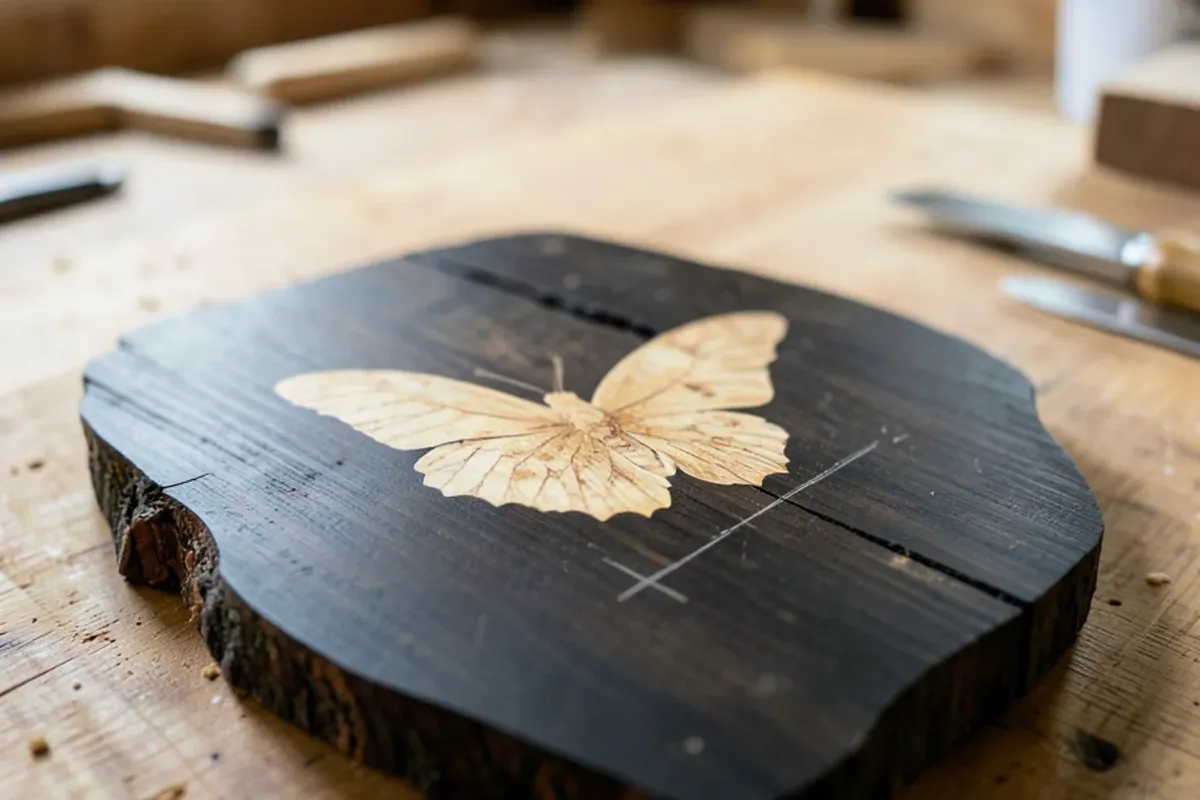
- Stabilization: existing checks get butterfly keys inlaid across them, and voids are filled with clear or tinted epoxy.
- Flattening: both faces are surfaced so the slab is not left with stress on one side.
- Restraint: steel channel recessed into the underside resists cupping, fastened through slotted holes so the wood can still expand and shrink.
- Balanced finish: top, underside and edges get the same coats, so moisture moves through each face at the same rate.
Bases in wood, steel or glass
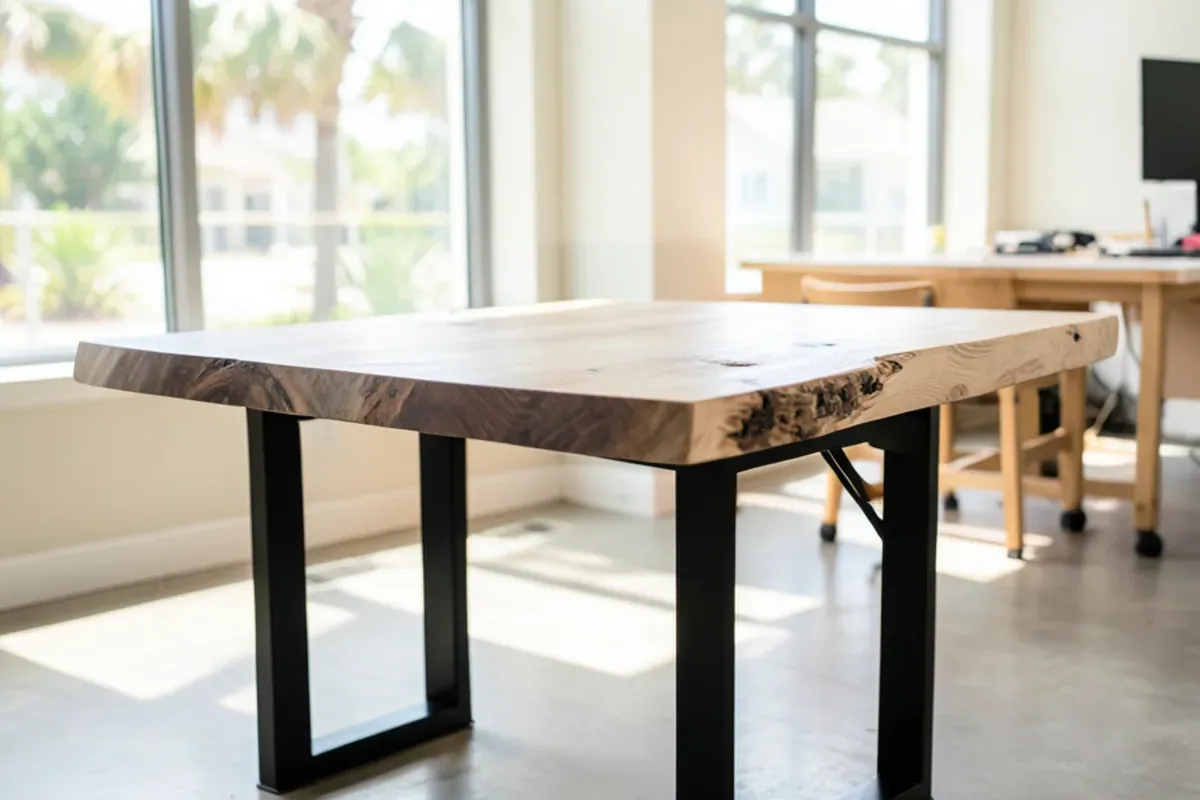
The base decides whether a slab table reads rustic, industrial or gallery-like. A wood trestle in a contrasting species feels warm and traditional. Steel bases, in trapezoid, U-shape or X-shape profiles, keep a heavy top visually light and are made by a metal fabricator to our drawings, then powder-coated. Glass panel bases let the slab appear to float, which suits coffee tables and entry pieces in bright coastal rooms.
Whatever the material, the base has to carry real weight. A thick walnut dining slab can weigh several hundred pounds, so we size steel, joinery and leveling feet to match.
Live edge dining table, coffee table, desk or conference table?
| Table | What to plan for | Base ideas |
|---|---|---|
| Live edge dining table | Width for place settings, legroom under steel or trestle | Trestle, steel U-legs, double pedestal |
| Live edge coffee table | Low height, edges people will brush against | Glass panels, short steel frames, hairpin legs |
| Live edge desk | Flat writing area, cable path, drawer under the top | Steel legs with a wood drawer box |
| Live edge conference table | Seat count, power and data grommets, joining two slabs | Twin steel bases or a glass and steel combination |
Conference tables for offices and boardrooms are handled with our commercial furniture process, which covers cable management and scheduling. Slabs rarely suit full sun or rain, so for an open pool deck we point people toward our outdoor furniture in ipe or teak instead.
Whatever the type, the commission covers the same ground: slab reservation and a moisture reading, drawings traced from the real outline, keys or fills, a base made to those drawings, grommet or drawer cutouts, an even finish on every face, leveling feet set on your floor and care notes for that finish.
Is an epoxy river table right for your space?
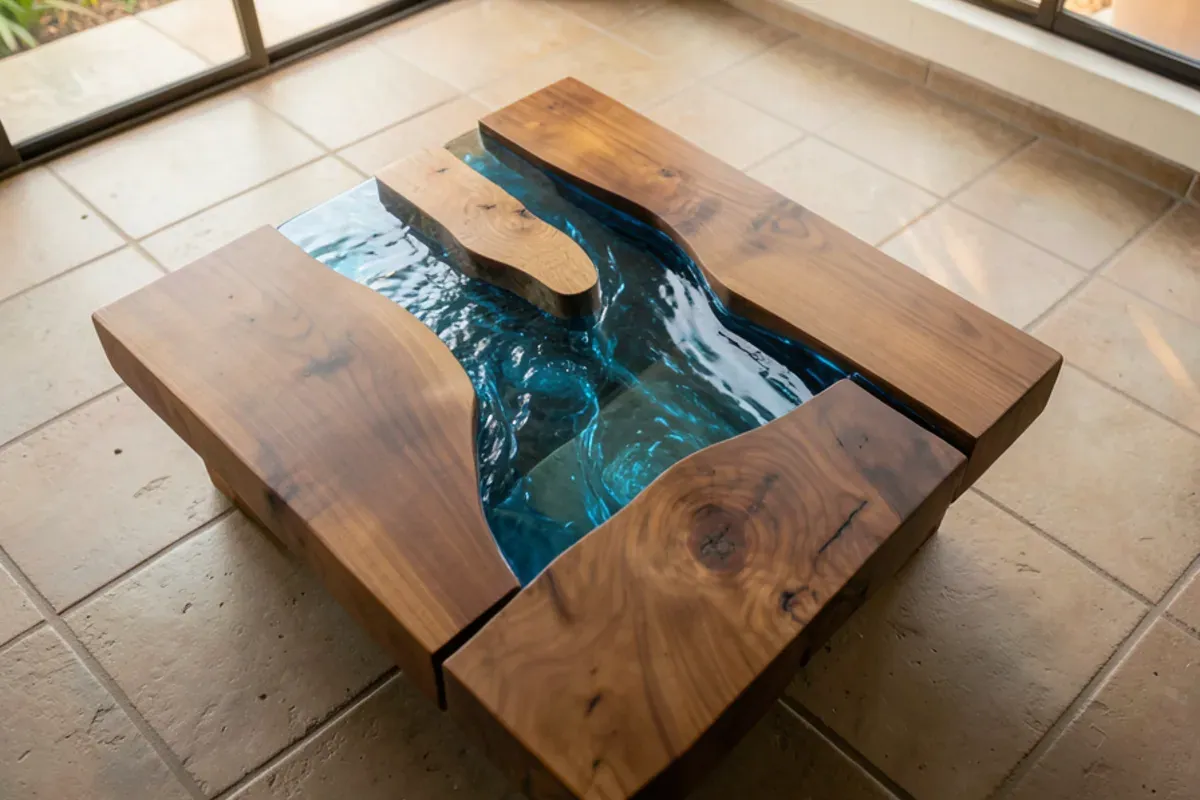
A river table sets two slab halves apart and fills the gap with cast resin. It can be striking, but it has trade-offs worth weighing before you commit.
- Resin is heavy and costly, and a deep pour cures slowly to avoid overheating and cracking.
- Clear epoxy tends to yellow under strong UV, so a river table in front of a west-facing slider will change color.
- Hot pans can mark resin faster than a well-finished wood surface.
- Wood and resin move at different rates, so the slab still needs to be dry and properly restrained.
Many clients choose a lighter touch: tinted epoxy only in natural voids and cracks, which keeps the focus on the wood.
From slab rack to your floor
Choose and reserve
Pick a slab at the shop by appointment or from photos, and we check its moisture.
Draw around the slab
We trace the slab's real outline into drawings and a 3D model, with base and overhangs placed to suit it.
Flatten and stabilize
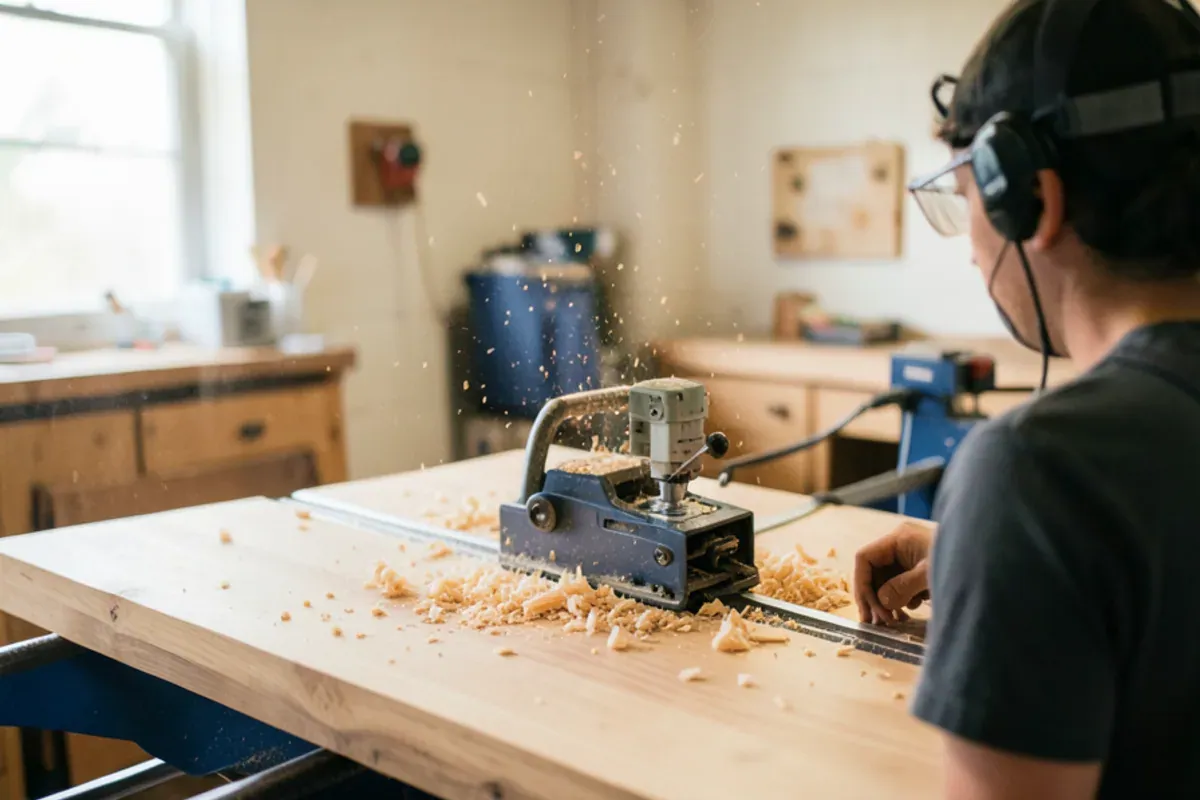
The slab is surfaced on both faces, cracks are keyed or filled, and ends are cut square or left natural.
Sand and finish
Edges are cleaned of bark and soft wood, then the whole slab is sanded and finished evenly.
Fit the base
Steel or wood bases are attached with hardware that allows seasonal movement.
Deliver and level
We place the table, set leveling feet and go over care for the finish.
Pricing a slab table
Slab tables vary more in cost than board-built tables because the raw material varies so much. The main drivers:
- Species, width and figure of the slab, plus whether a book-matched pair is needed
- Amount of stabilization: keys, epoxy fill or a full river pour
- Base material and whether it is fabricated to order
- Finish system and table size
- Delivery weight and access
Drying is the hidden cost inside a slab. Indoor furniture slabs are commonly brought to roughly 6 to 8 percent moisture content, and air drying alone takes about a year per inch of thickness before any kiln time, so a thick, wide, dry walnut slab is scarce stock. A slab with checks needs more keys and fill hours than a clean one, and a steel base adds a fabricator’s time and powder coat to the bill.
Weighing a slab against a classic board top? Our comparison of live edge vs. traditional dining tables covers cost, care and style side by side.
Why SRQ Woodworks
Why homeowners choose us for live edge tables
See the slab before you commit
Shop visits by appointment let you choose the actual slab for your table.
Drawn around your slab
Working drawings and a 3D model follow the slab's real outline before we cut.
Built for Florida humidity
Moisture checks, balanced finishing and slotted steel keep slabs flat in Gulf Coast homes.
One Sarasota shop
Flattening, keys, epoxy and finishing all happen at our Lewis Ave shop. Only steel bases go out, to a metal fabricator working from our drawings.
Led by Graham Custer since 2011
Our owner and president has run the Lewis Ave shop since 2011 and reviews each slab’s drawings before the first cut.
Reviews
Customers on our custom furniture work
4.4★ average from 52 reviews on Google. Quotes are from public Google reviews, shortened where marked.
“I cannot say enough fabulous things about Graham and his team at SRQ Woodworks. I was in need of 10+ desks, many tables, a conference table, and a reception desk. … He listened to my vision and literally made it come true and then some.”
Request a quote
Start your live edge tables project
Call first if you can: a quick conversation about the room, the timing and what you have in mind is the fastest way to a measure and drawings. Or send the form and the shop will call you back.
Where we work
Slab tables leave our shop for homes and offices across the area, including beach homes on Siesta Key, newer houses and offices in Lakewood Ranch, waterfront homes in Bradenton and condos in downtown Sarasota.
- Live Edge Tables in Siesta Key, FLBright Siesta Key condos suit glass-based slab coffee tables, with clear epoxy kept out of strong Gulf-facing sun.
- Live Edge Tables in Lakewood Ranch, FLLakewood Ranch offices and newer homes often pair a walnut slab with a black steel base for a clean modern look.
- Live Edge Tables in Bradenton, FLManatee River waterfront homes in Bradenton can show off a wide slab in rooms facing the water.
- Live Edge Tables in Sarasota, FLDowntown Sarasota condo towers need slab tables planned in two halves or with a removable base for elevator trips.
- Live Edge Tables in Osprey, FLBayfront Osprey homes on Little Sarasota Bay often want a natural-edge dining slab that echoes the shoreline.
- Live Edge Tables in Nokomis, FLNokomis is the gateway to Casey Key, whose estate homes have room for a book-matched pair of slabs.
- Live Edge Tables in Desoto Lakes, FLA few minutes from Lewis Ave, so picking your slab off the rack in person is easy.
- Live Edge Tables in Laurel, FLGated Laurel Road communities built since the 2000s have open plans where a slab desk or console anchors a room.
FAQ
Live Edge Tables questions
Can I pick the slab for my live edge table?
Yes, and we encourage it. Book a visit to the shop at 1121 Lewis Ave and look at slabs in person, or we can send photos and measurements of both faces if you cannot visit. Once you choose, we check the slab's moisture and trace its outline into the drawings and 3D model so the table is designed around that exact piece.
How do you keep a live edge slab from cracking or cupping?
We start with dry wood, confirmed with a moisture meter, then flatten both faces and stabilize existing checks with butterfly keys or epoxy. Steel channel set into the underside resists cupping, fastened through slotted holes so the slab can still move. Finishing all faces equally slows moisture exchange in humid Sarasota summers.
Do you build live edge conference tables for offices?
Yes. Conference tables are often two book-matched slabs joined along a straight seam, set on steel or glass and steel bases. We plan power and data grommets, seat spacing and how the top comes apart for delivery through office doors and elevators. Our commercial furniture process covers scheduling with your building and team.
Can a live edge table go on my lanai?
A screened, covered lanai is workable if the table is out of direct sun and rain and the finish is maintained. An open pool deck is a different story: sun, rain and pool water will check and gray a slab quickly. For fully exposed spots we usually recommend ipe or teak outdoor furniture instead.
How thick should a live edge dining slab be?
Most dining slabs finish somewhere around one and three-quarters to two and a half inches thick after flattening. Thinner slabs look lighter but need more support underneath, while thicker ones are heavier to move. We will show you the finished thickness on the drawings and recommend base spacing to suit it.
Living Well Crafted
Planning live edge tables? Talk it through with the shop.
- Built in our Sarasota shop since 2011
- 4.4★ from 52 Google reviews
- 3D model before anything is built
- Solid-wood boxes, dovetail drawers